Sourdough Holiday Cranberry Orange Discard Bread
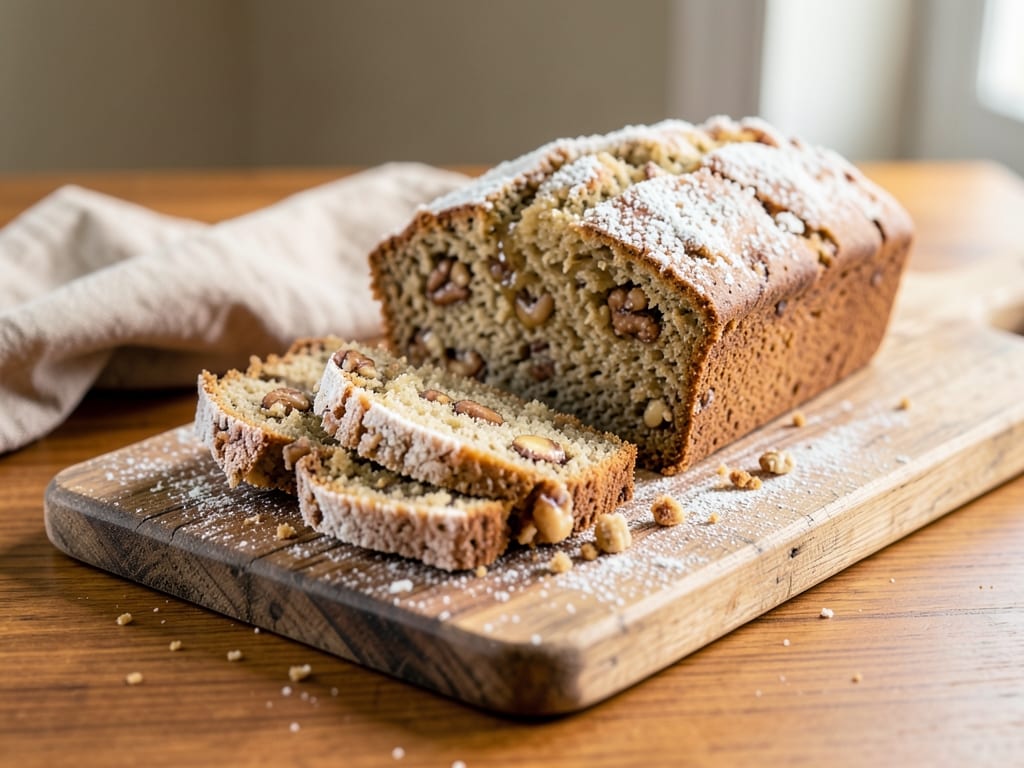
A tender, tangy-sweet quick bread that captures holiday flavors with tart cranberries and bright orange. Made with sourdough starter discard for complexity without long fermentation. The bread is studded with fresh or frozen cranberries and fragrant orange zest, baked until golden with a moist crumb that stays tender for days. Perfect for breakfast, toast, or gifting.
- Prep
- 20 min
- Cook
- 55 min
- Wait
- 1 hr 10 min
- Total
- 2 hr 25 min
- Makes
- 1 loaf (10–12 slices)
Steps
Before you start
- Ensure your sourdough starter discard is at room temperature (unfed, just discarded before feeding your starter)
- Preheat your oven to 350°F (175°C)
- Gather all ingredients and have them ready (mise en place)
Prepare and preheatOven 350°F / 175°C
- Position the oven rack to the middle and preheat to 350°F (175°C).
- Lightly grease a 9×5-inch (23×13 cm) loaf pan and line the bottom with parchment paper to make the finished loaf easy to remove.
- Set aside.
+ Show details− Hide details
Ready when: Oven reaches 350°F (175°C)
Tip: Parchment paper on the bottom prevents sticking and makes removal effortless.
Whisk dry ingredients
- In a medium bowl, whisk together 1.75 cups (220 g) all-purpose flour, 0.75 cup (150 g) granulated sugar, 1.5 teaspoons (6 g) baking powder, and 0.5 teaspoon (2.5 g) fine sea salt until evenly combined.
- Set aside.
+ Show details− Hide details
Ready when: Mixture is uniform with no visible clumps of sugar or baking powder
Mix wet ingredients
- In a large bowl, whisk together 1 cup (240 ml) unfed sourdough discard, 2 large eggs, 6 tablespoons (85 g) melted and cooled butter, 0.25 cup (60 ml) fresh orange juice, and 1 teaspoon (5 ml) vanilla extract until smooth and well combined with no streaks of egg.
+ Show details− Hide details
Ready when: Wet mixture is smooth and uniform in color
Tip: Cooling the melted butter slightly (to warm, not hot) prevents it from cooking the eggs.
Fold together wet and dry
- Pour the wet mixture into the bowl with the dry ingredients.
- Using a rubber spatula, fold gently until just combined; the batter will be thick and lumpy with some flour streaks visible.
- Stop folding as soon as no traces of dry flour remain—do not overmix, which toughens the crumb.
+ Show details− Hide details
Ready when: No visible dry flour remains; batter is thick, lumpy, and not smooth
Tip: Lumpy batter is the goal—it yields a tender, moist crumb. Overmixing develops gluten and results in a tough loaf.
Coat cranberries with flour
- In a small bowl, toss 1.5 cups (150 g) fresh or frozen cranberries (do not thaw if frozen) and 1.5 teaspoons (3 g) orange zest with 1 tablespoon of the measured flour.
- This light coating prevents the cranberries from sinking to the bottom during baking.
+ Show details− Hide details
Ready when: Cranberries and zest are evenly and lightly coated with flour
Tip: Frozen cranberries stay firm and add beautiful color; never thaw them as they'll bleed and stain the batter.
Fold in cranberries and zest
- Gently fold the cranberry mixture into the batter using a rubber spatula, distributing the fruit evenly throughout.
- Be gentle during this step—vigorous stirring releases moisture from the berries.
+ Show details− Hide details
Ready when: Cranberries and zest are distributed throughout without visible pockets of plain batter
Transfer to pan and bakeOven 350°F / 175°C
- Pour the batter into the prepared loaf pan and smooth the top gently with a spatula.
- Place in the preheated 350°F (175°C) oven and bake for 50–60 minutes, until a toothpick inserted in the center comes out with just a few moist crumbs clinging to it.
- The top should be deep golden brown (some dark spots from cranberries are expected), and the bread should spring back slightly when lightly pressed.
+ Show details− Hide details
Ready when: Top is deep golden brown, toothpick has a few moist crumbs (not wet or completely clean), bread springs back gently when pressed
Tip: Sourdough discard breads brown deeper than standard quick breads. If the top browns too quickly, tent loosely with aluminum foil for the final 10–15 minutes.
Cool in pan and on rack
- Let the loaf cool in the pan for 15 minutes, then run a thin knife around the edges and turn out onto a wire cooling rack.
- Cool completely (about 45 minutes) before slicing.
- This allows the crumb to firm up and set.
+ Show details− Hide details
Ready when: Loaf is cool to the touch and firm enough to slice cleanly without crumbling
Tip: Slicing warm bread causes it to crumble and fall apart. Wait until completely cool for neat, attractive slices.
Good to know
Tips
- Don't overmix the batter—lumpy batter yields a tender, moist crumb. Stop folding as soon as you see no dry flour.
- Coating the cranberries lightly in flour is key to preventing them from sinking to the bottom. This simple step makes a visible difference.
- Sourdough discard breads brown more deeply than standard quick breads due to the tangy starter. If the top browns too quickly, cover with aluminum foil.
- Let the loaf cool completely before slicing. Warm bread will crumble; cooling allows the crumb to set and firm up for clean slices.
Make ahead
Dry ingredients can be mixed and stored in an airtight container for up to 1 day. Sourdough discard should be used within 24 hours of discard day for best results. Mix batter and bake the same day for optimal texture.
Storage & reheating
Room temperature: up to 2 days in an airtight container. Refrigerator: up to 5 days, wrapped in plastic wrap. Freezer: up to 3 months, wrapped in plastic wrap and then aluminum foil. Thaw at room temperature before serving. To reheat, warm individual slices in a toaster or toaster oven at 300°F (150°C) for 2–3 minutes until warmed through.
Substitutions
- fresh or frozen cranberries → Dried cranberries (same amount, chopped coarsely). Soak chopped dried cranberries in 2–3 tablespoons warm orange juice for 10 minutes before folding in. Reduce the fresh orange juice in the wet ingredients by 2 tablespoons since dried fruit absorbs more liquid.
- orange zest → Lemon zest (same amount). Use equal amount. The flavor will be brighter and more tart; the bread will be less sweet.
- sourdough starter discard (unfed) → Full-fat Greek yogurt or sour cream (replace 1/4 cup discard with 1/4 cup yogurt). This yields a richer, slightly denser crumb while reducing tanginess. Add the yogurt with the other wet ingredients.
- all-purpose flour → Whole wheat pastry flour (up to 1/2 cup of the measured flour). Substitute up to half the all-purpose flour. The bread will be nuttier and have a slightly denser crumb.