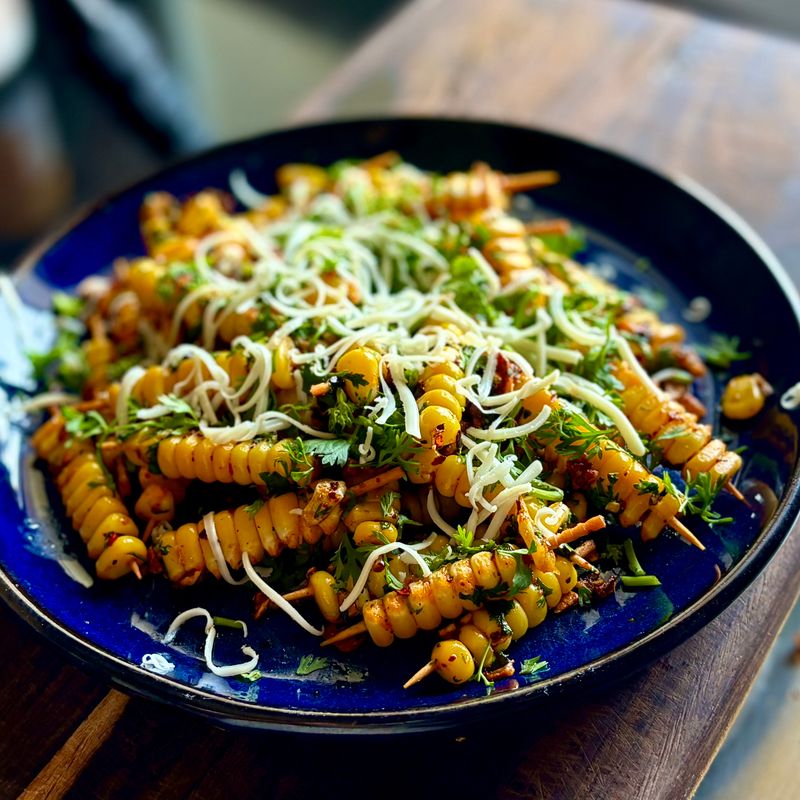
Sourdough Colombian Cilantro and Roasted Corn Cheese Rolls
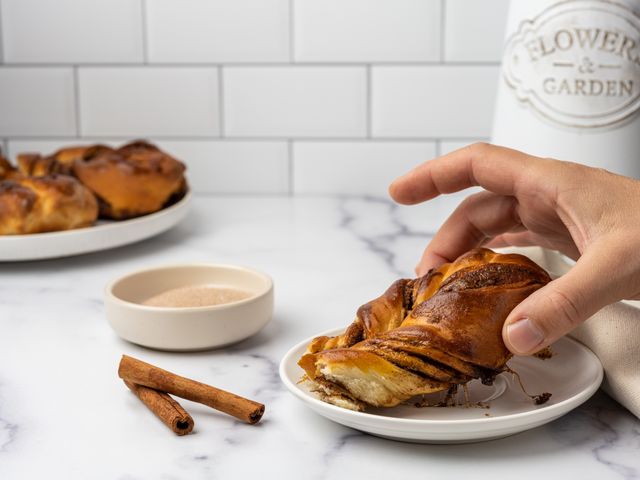
Tender sourdough rolls infused with fresh cilantro, roasted corn kernels, and crumbly queso campesino, combining the tangy complexity of sourdough with Colombian flavors. These are soft inside with a gentle crust, perfect alongside soups, stews, or as a breakfast bread.
- Prep
- 30 min
- Cook
- 25 min
- Wait
- 3 hr 15 min
- Total
- 4 hr 10 min
- Makes
- 8 rolls
Steps
Before you start
- Remove sourdough starter from refrigerator 30 minutes before mixing to bring to room temperature
- Measure and bring all water to 75°F (24°C) for proper fermentation
- Preheat oven to 375°F (190°C) 15 minutes before baking rolls
- Have fresh cilantro finely chopped and roasted corn kernels at room temperature
Mix dough
- In a large mixing bowl, combine 180 ml (¾ cup) active sourdough starter, 240 ml (1 cup) cool water (75°F / 24°C), and 400 g (3¼ cups) bread flour.
- Stir by hand or with the dough hook attachment on low speed for 3 minutes until all flour is hydrated and a shaggy mass forms.
- Let rest for 20 minutes (autolyse phase).
+ Show details− Hide details
Ready when: All flour is absorbed and dough holds together
Tip: Cool water slows fermentation, giving you better control over rise times
Add salt and knead
- Sprinkle 9 g (1½ teaspoons) fine sea salt over the dough and knead on medium-low speed for 8 minutes (or by hand for 10 minutes) until the dough becomes smooth, elastic, and slightly tacky.
- The dough should pass the windowpane test: a small piece stretches thin without tearing.
- Temperature should reach around 75–78°F (24–26°C).
+ Show details− Hide details
Ready when: Dough is smooth, elastic, and passes the windowpane test
Tip: Watch dough temperature; if it climbs above 78°F, knead slower to avoid overheating
Bulk ferment
- Transfer dough to a clean bowl, cover with a damp towel or plastic wrap, and let ferment at 72–75°F (22–24°C) for 3–4 hours.
- Perform 4 sets of stretch-and-fold (every 30 minutes for the first 2 hours): wet your hand, grab the dough from the side, stretch it up and fold it over itself, rotate bowl 90°, repeat.
- Dough is ready when it increases by about 50% and holds some air when poked.
+ Show details− Hide details
Ready when: Dough has increased 50%, feels airy, and springs back slowly when poked
Tip: The stretch-and-folds build strength without intense kneading; cold fermentation develops sourdough tang
Prepare filling mixture
- While dough ferments, in a small bowl combine 30 g (¾ cup) finely chopped fresh cilantro, 150 g (1 cup) roasted corn kernels (patted dry to remove excess moisture), and 170 g (6 oz) crumbled queso campesino.
- Mix gently with a fork until evenly distributed.
- Set aside at room temperature.
+ Show details− Hide details
Ready when: Filling is evenly mixed
Tip: Pat corn kernels dry so excess moisture doesn't make dough soggy
Shape rolls
- Turn fermented dough onto a lightly floured work surface.
- Gently shape into a rough rectangle about 12×8 inches (30×20 cm), being careful not to deflate it.
- Distribute the cilantro-corn-cheese filling evenly across the surface, leaving a ½-inch (1.25 cm) border on all sides.
- Starting from one long side, roll the dough tightly into a log, pinching the seam as you seal it.
+ Show details− Hide details
Ready when: Dough is shaped into a tight roll with filling evenly distributed
Tip: Don't press too hard when shaping; you want to keep the air pockets for a light crumb
Cut rolls
- Using a bench scraper or sharp knife, cut the dough log into 8 equal pieces (each about 1½ inches / 4 cm wide).
- Use a gentle sawing motion and wipe the blade clean between cuts to avoid dragging filling out.
- Arrange rolls cut-side up in a 9×13-inch (23×33 cm) baking pan, spacing them evenly.
+ Show details− Hide details
Ready when: 8 equal rolls are arranged in the pan
Tip: Cutting with gentle pressure keeps the cheese from smearing; cutting and up exposes the beautiful spiral
Final rise
- Cover the pan loosely with a damp towel or plastic wrap and let the rolls proof at room temperature (72–75°F / 22–24°C) for 1.5–2 hours, until they are puffy and nearly touching each other.
- They should increase by about 50% and spring back slowly (not fully) when poked gently.
+ Show details− Hide details
Ready when: Rolls are puffy, nearly touching, and spring back slowly when pressed
Tip: Avoid proofing in a warm spot; sourdough flavor develops better at room temperature
Preheat ovenOven 375°F / 190°C
- While rolls finish proofing, preheat your oven to 375°F (190°C).
- Position a rack in the center of the oven.
+ Show details− Hide details
Ready when: Oven is fully preheated
Tip: Use an oven thermometer to ensure accuracy; every 25°F matters for even browning
Bake rollsOven 375°F / 190°C
- Place the pan in the preheated 375°F (190°C) oven and bake for 22–25 minutes, until the rolls are deep golden brown on top and the internal temperature reaches 200–205°F (93–96°C) when measured in the center of a roll.
- The bottoms should also be golden and sound hollow when tapped.
+ Show details− Hide details
Ready when: Rolls are deep golden brown, internal temperature 200–205°F (93–96°C), bottoms hollow-sounding
Tip: If tops brown too quickly, loosely tent with foil for the final 5 minutes; rotate pan halfway through for even browning
Finish and cool
- Remove the pan from the oven and brush the warm rolls with 30 g (2 tablespoons) melted unsalted butter.
- If desired, sprinkle with thinly sliced fresh scallions for a bright finish.
- Let the rolls cool in the pan for 5–10 minutes, then transfer to a wire rack or serve while still warm.
+ Show details− Hide details
Ready when: Rolls are brushed with butter and slightly cooled
Tip: The butter adds richness and helps soften the crust; scallions add a fresh, onion-like brightness
Good to know
Tips
- Keep water cool (75°F / 24°C) to slow fermentation and develop deeper sourdough flavor over 3–4 hours; warm fermentation (80°F+) speeds up the process but reduces tang
- Perform stretch-and-folds every 30 minutes during the first 2 hours of bulk fermentation to build structure without intense machine kneading; this creates an open, airy crumb
- Pat corn kernels completely dry before mixing into filling; excess moisture can weaken the dough structure and create sticky pockets
- These rolls are best enjoyed warm or reheated; the crumbly cheese melts slightly and cilantro's aroma is most vibrant within the first day of baking
Make ahead
Shaped rolls can be refrigerated for up to 16 hours after shaping (Step 6). In the morning, remove from refrigerator 1–2 hours before baking to bring to room temperature and complete the final rise. Alternatively, prepare through Step 5, refrigerate the dough overnight, and proceed with cutting and final proofing the next day.
Storage & reheating
Store cooled rolls in an airtight container at room temperature for 2 days. Refrigerate for up to 5 days in a sealed container; reheat in a 300°F (150°C) oven for 8–10 minutes until warmed through. Freeze baked rolls in a freezer bag for up to 3 months; thaw at room temperature and reheat in a 325°F (160°C) oven for 10–12 minutes. Do not freeze shaped unbaked rolls as the cheese can separate during thawing.
Substitutions
- queso campesino or queso fresco → queso cotija or crumbled feta cheese. Use 170 g (6 oz); both have a salty, crumbly texture similar to queso campesino, though feta will be slightly sharper
- roasted corn kernels → fresh corn kernels, lightly pan-roasted, or frozen corn (thawed and drained). Ensure kernels are dry before adding to dough to prevent excess moisture; use 150 g (1 cup)
- fresh cilantro → fresh parsley, mint, or a mix of both. Use 30 g (¾ cup) total; parsley is milder, mint adds a cool herbaceous note. Cilantro's citrusy flavor won't be replicated exactly
- bread flour → all-purpose flour (unbleached preferred). All-purpose flour produces a slightly softer crumb; use the same weight (400 g / 3¼ cups) but expect slightly less gluten development and a tender result