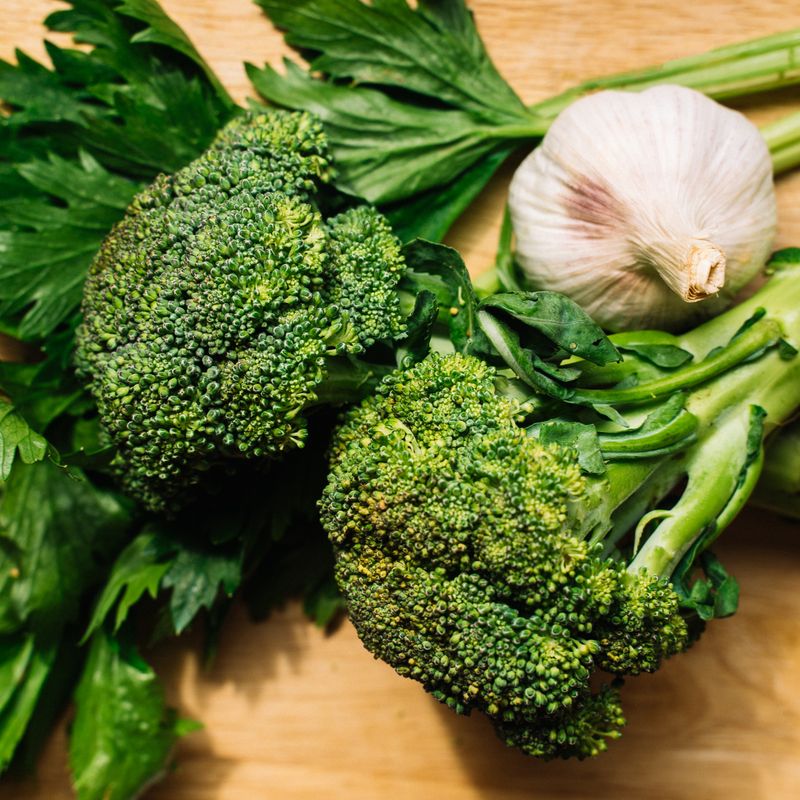
Sourdough Charred Broccoli and Crispy Garlic Pissaladière
A rustic French-inspired flatbread topped with caramelized onions, charred broccoli, crispy garlic, crème fraîche, and finished with anchovies and olives. Sourdough's tangy flavor complements the deep, sweet caramelized vegetables and briny toppings in this elegant yet approachable tarte flambée.
- Prep
- 25 min
- Cook
- 45 min
- Wait
- 2 hr
- Total
- 3 hr 10 min
- Makes
- One 14-inch flatbread, cut into 4 pieces
Steps
Before you start
- Remove sourdough dough from the fridge 1½ hours before baking so it reaches room temperature and becomes easier to stretch
- Preheat your oven to 500°F (260°C) for at least 20 minutes
- Have all toppings prepped and ready to go—once the dough is stretched, you'll work quickly
Caramelize the onions
- Heat 3 tablespoons (45 ml) of olive oil in a 12-inch skillet over medium heat.
- Add the sliced yellow onions, stirring well to coat.
- Cook for 30–35 minutes, stirring occasionally (every 5–7 minutes) and scraping the bottom as the onions soften and release their juices.
- The onions are done when they are deep golden-brown, jammy, and significantly reduced in volume.
- They should smell sweet and caramel-like.
- Season with a pinch of sea salt and black pepper about halfway through cooking to draw out moisture.
- Reserve in a bowl.
+ Show details− Hide details
Ready when: Onions are deep golden-brown, jammy, and reduced by about two-thirds
Tip: Stir frequently in the final 10 minutes to prevent sticking and ensure even caramelization. Low heat takes longer but gives sweeter, more uniform color.
Char the broccoli
- About 15 minutes before you plan to bake, heat 2 tablespoons (30 ml) of olive oil in a baking sheet or large skillet over medium-high heat.
- Once the pan is hot (the oil should shimmer and move easily), add the broccoli florets in a single layer.
- Don't stir for the first 3–4 minutes; let them sit and char on one side until some florets have blackened spots and the undersides are deep golden.
- Toss the florets and cook for another 2–3 minutes until they are tender-crisp with charred edges on multiple sides.
- Season with sea salt and black pepper.
- Set aside to cool slightly.
+ Show details− Hide details
Ready when: Broccoli is tender-crisp with dark charred spots on florets
Tip: Don't move the broccoli too early—the char develops only with direct contact and heat. The florets should be slightly crisp on the outside and tender inside, not mushy.
Crisp the garlic
- In the same skillet or a fresh one, heat the remaining 1 tablespoon (15 ml) of olive oil over medium heat.
- Add the sliced garlic cloves in a single layer.
- Cook for 2–3 minutes, stirring gently every 30 seconds or so, until the garlic slices are pale golden and crispy at the edges.
- Watch carefully—garlic burns quickly.
- Once fragrant and light brown, transfer to a paper towel-lined plate immediately to stop the cooking and drain excess oil.
- Season lightly with salt.
+ Show details− Hide details
Ready when: Garlic slices are pale golden and crispy at edges, fragrant
Tip: Remove garlic from the pan while still slightly underdone—carryover heat will crisp them further. If they darken too much, they'll taste bitter.
Stretch and shape the dough
- Place the room-temperature sourdough dough on a lightly oiled sheet pan or pizza pan (14×10 inches / 36×25 cm).
- Using your fingertips and palms, gently press the dough outward, working from the center toward the edges, until it fills the pan and is roughly ¼-inch thick.
- If the dough is elastic and springs back, let it rest for 2–3 minutes under a kitchen towel, then continue stretching.
- You may not need to stretch it to all the way to the very edges—aim for a rustic, slightly uneven shape.
+ Show details− Hide details
Ready when: Dough fills the pan and is roughly ¼-inch thick
Tip: Don't use a rolling pin—gentle finger pressure preserves the airy crumb. If the dough tears, pinch it closed or patch with a scrap.
Spread crème fraîche base
- Using an offset spatula or the back of a spoon, spread the crème fraîche evenly over the stretched dough, leaving a ½-inch border around the edge.
- The layer should be thin and glossy, about ⅛-inch thick (roughly 120 ml total).
- Don't overload—too much crème fraîche will make the crust soggy.
+ Show details− Hide details
Ready when: Crème fraîche is spread in an even, thin layer
Tip: Cold crème fraîche is easier to spread without tearing the dough. Work quickly but gently to avoid overworking the dough.
Layer the toppings
- Distribute the caramelized onions evenly over the crème fraîche layer.
- Scatter the charred broccoli florets across the surface, spacing them so you can see the crème fraîche and onions underneath.
- Arrange the drained anchovy fillets in a crosshatch or scattered pattern—this is both traditional and visually striking.
- Sprinkle the crispy garlic slices evenly over the top, then scatter the Niçoise olives throughout.
+ Show details− Hide details
Ready when: All toppings are arranged in a single, even layer
Tip: Avoid piling toppings too heavily in one spot. A light hand makes for better texture and crispier crust.
Bake until golden and crispOven 500°F / 260°C
- Transfer the topped flatbread to a preheated 500°F (260°C) oven (either directly on a rack or on a sheet pan, depending on your oven).
- Bake for 12–15 minutes until the crust is deep golden-brown, slightly charred at the edges, and sounds crispy when tapped on the bottom.
- The crème fraîche may have a few browned spots, and the onions and garlic should look caramelized and crisped.
+ Show details− Hide details
Ready when: Crust is deep golden-brown with slight char at edges, bottom is crispy
Tip: If the top is browning too quickly but the bottom isn't crisp, slide the flatbread directly onto the oven rack to allow air circulation underneath. Every oven is different, so check at 12 minutes.
Finish and serve
- Remove the pissaladière from the oven and let it rest for 1–2 minutes on the pan.
- If desired, sprinkle with fresh thyme leaves and lemon zest for brightness and herbaceous notes.
- Drizzle lightly with a few drops of extra-virgin olive oil if the surface looks dry.
- Cut into 4 pieces (or smaller pieces if serving as an appetizer) and serve warm or at room temperature.
+ Show details− Hide details
Ready when: Pissaladière has rested and is ready to cut and serve
Tip: Lemon zest and fresh thyme are optional but highly recommended—they add brightness and cut through the richness of the crème fraîche and anchovies.
Good to know
Tips
- For the most authentic pissaladière experience, arrange the anchovies in a traditional crosshatch pattern—it looks elegant and ensures every slice gets at least a small piece.
- If your oven runs hot, you may only need 10–12 minutes of baking time. Use an oven thermometer to verify your temperature—a 500°F oven is crucial for a crisp, charred crust.
- The crispy garlic will continue to crisp as it cools on the paper towel. Don't overdo the cooking; it should still have a slight chew when it hits the pan.
- Sourdough dough ferments differently depending on room temperature and hydration. If the dough feels too sticky to stretch after coming to room temperature, flour your hands lightly and let it rest another 15–20 minutes.
Make ahead
Caramelize the onions up to 2 days ahead and store in an airtight container in the fridge. Char the broccoli up to 1 day ahead. Crisp the garlic up to 6 hours ahead and store in an airtight container at room temperature (it will become crunchier as it cools). Assemble and bake the flatbread fresh when you're ready to serve.
Storage & reheating
This flatbread is best eaten fresh and warm on the day it's made. Leftovers keep in an airtight container in the fridge for up to 2 days. Reheat in a 350°F (175°C) oven for 5–8 minutes until warmed through and the crust is crispy again. Do not freeze after baking—the crème fraîche and sourdough do not reheat well from frozen.
Substitutions
- anchovy fillets in oil → Omit entirely or use 2 tablespoons of capers (rinsed and drained) for a briny, salty note without the anchovy flavor. Anchovies add authentic pissaladière character but are optional if you dislike them. Capers provide a similar briny punch.
- crème fraîche, cold → Use Greek yogurt (full-fat, plain) or ricotta mixed with a tablespoon of heavy cream for a tangier spread. Crème fraîche's richness is key to the dish, but these alternatives provide a similar creamy base with slightly different flavor profiles.
- broccoli crowns → Substitute cauliflower florets, broccolini, or even thinly sliced zucchini or eggplant, charred the same way. Any vegetable that chars and caramelizes well works here. Adjust cooking time by 1–2 minutes for softer or harder vegetables.
- sourdough dough (fully fermented, ready to bake) → Use store-bought pizza dough or a high-hydration white bread dough, allowed to ferment at room temperature for 1–2 hours before shaping. Sourdough's tang is the signature flavor here, but any good-quality dough will yield a tasty flatbread. Fermentation time varies based on dough type.
More flatbreads
See all →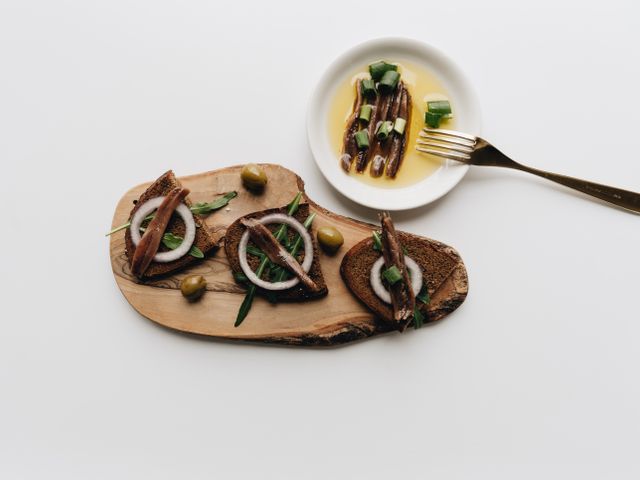

Find more like this
- Meal
- Lunch
- Cuisine
- French
- Main ingredient
- Broccoli
- Diet
- HalalSugar-Free