Sourdough Breton Buckwheat Crêpes
Thin, delicate crêpes made with sourdough discard and buckwheat flour, honoring the Breton tradition. The sourdough adds subtle tang and complexity while buckwheat brings a distinctive nutty, earthy flavor and naturally gluten-free base. Perfect for savory fillings like ham, cheese, and eggs, or sweet toppings like jam and crème fraîche.
- Prep
- 15 min
- Cook
- 20 min
- Wait
- 30 min
- Total
- 1 hr 5 min
- Makes
- 12–14 crêpes
Steps
Before you start
- Have your sourdough discard at room temperature (not cold from the fridge)
- Gather all ingredients and measure them out before mixing—crêpe batter should be used within 30 minutes of resting for best results
- Set out a clean kitchen towel or paper towels near your crêpe pan
Combine dry ingredients
- In a medium mixing bowl, whisk together buckwheat flour, all-purpose flour, and salt.
- Mix thoroughly to distribute the salt evenly and break up any clumps in the buckwheat flour, which can be dense.
+ Show details− Hide details
Ready when: Flour mixture is even and lump-free
Tip: Buckwheat flour is prone to clumping; whisking breaks it up for a smoother batter.
Whisk wet ingredients
- In a small mixing bowl, whisk together sourdough discard, eggs, milk, water, and melted butter until well combined and no lumps of sourdough remain.
- The mixture should be relatively smooth.
+ Show details− Hide details
Ready when: Wet ingredients are completely blended with no visible chunks of sourdough
Tip: Whisk the sourdough thoroughly—it should be broken into small, uniform particles for an even batter texture.
Combine wet and dry
- Pour the wet ingredients into the dry ingredients and whisk gently until just combined.
- A few small lumps are fine; overmixing will develop gluten and make the crêpes tough rather than tender.
+ Show details− Hide details
Ready when: Batter is mostly smooth with a few small streaks of dry flour visible
Tip: Stop mixing as soon as you no longer see dry flour. Lumps will smooth out during resting.
Rest batter
- Let the batter rest at room temperature for 30 minutes.
- This resting period allows the buckwheat flour to fully hydrate and the sourdough to meld with the other ingredients, resulting in a thinner, more delicate crêpe with better flavor.
+ Show details− Hide details
Tip: Do not skip this step—it's essential for tender, thin crêpes. The batter will thicken slightly as it rests.
Heat pan and test
- Place an 8-inch nonstick crêpe pan or skillet over medium-high heat.
- Once hot, lightly butter the pan using a folded paper towel or pastry brush, using just a small amount of butter so the crêpes don't fry.
- Test the pan by dipping a finger in water and flicking drops onto the surface—they should sizzle immediately.
- The pan should be hot but not smoking.
+ Show details− Hide details
Ready when: Pan is hot enough that water droplets sizzle and evaporate immediately
Tip: A properly heated pan is crucial for thin crêpes—too cool and they'll be thick and rubbery; too hot and they'll brown before spreading.
Cook first crêpe
- Using a ¼-cup ladle, pour batter into the center of the hot pan.
- Immediately tilt and rotate the pan in a circular motion so the batter spreads evenly into a thin, even layer.
- Tilt quickly—within 2–3 seconds—before the batter sets.
- If you miss a spot or have a thin patch, you can tap more batter onto it while tilting.
+ Show details− Hide details
Ready when: Batter spreads into a thin, nearly transparent disk with no thick globs; surface is mostly set
Tip: Practice your tilting motion with the first crêpe—tilt confidently and quickly, or the batter will cook before spreading evenly.
Cook first side
- Let the crêpe cook undisturbed for 60–90 seconds, until the bottom is light golden with a few darker spots and the top looks set and slightly matte (not wet).
- The edges will start to lift away from the pan slightly.
+ Show details− Hide details
Ready when: Bottom is light golden-brown; top is matte and no longer shiny; edges begin to curl slightly
Tip: Buckwheat crêpes are darker naturally due to the flour's color—light golden is the target, not pale.
Flip and cook second side
- Using a rubber spatula or crêpe spreader, slide the spatula under the crêpe and flip it quickly and confidently.
- Cook the second side for 30–45 seconds, until it's also light golden and set.
- The second side cooks faster than the first.
+ Show details− Hide details
Ready when: Second side is light golden and set; crêpe is no longer wet on either side
Tip: Flip with confidence—hesitation can tear the crêpe. The buckwheat flour makes crêpes slightly more delicate than wheat flour, so a firm, quick flip works best.
Stack and repeat
- Transfer the finished crêpe to a plate.
- Lightly butter the pan again if it looks dry, and repeat with the remaining batter.
- Use a ¼-cup ladle each time to keep portion sizes consistent.
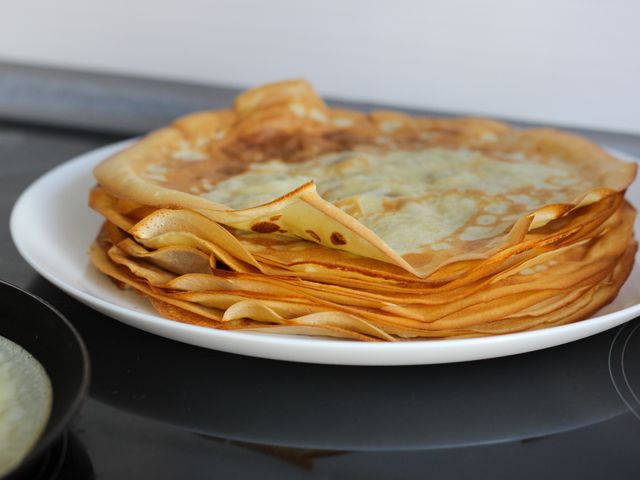
- Stack finished crêpes on the plate as you cook—they'll stay warm and pliable.
+ Show details− Hide details
Ready when: All batter is used and 12–14 crêpes are cooked and stacked
Tip: Re-butter the pan between every 2–3 crêpes to keep them from sticking. You may need to adjust the heat slightly as the pan cooks—if crêpes are browning too fast, turn heat down to medium.
Serve warm
- Serve crêpes warm.
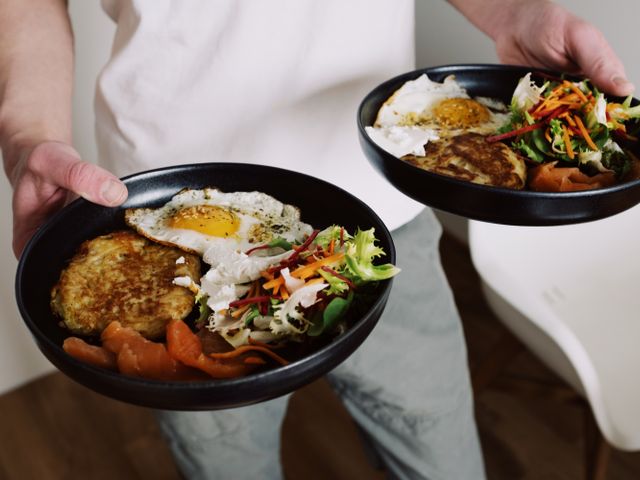
- For savory crêpes, fill with sautéed mushrooms and ham, topped with a fried egg and grated Gruyère cheese.
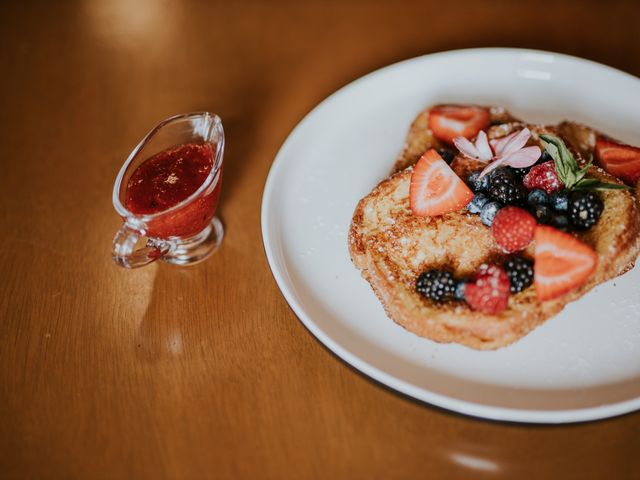
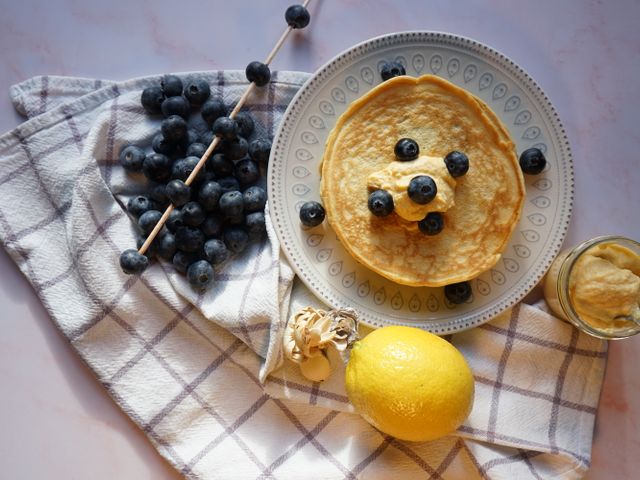
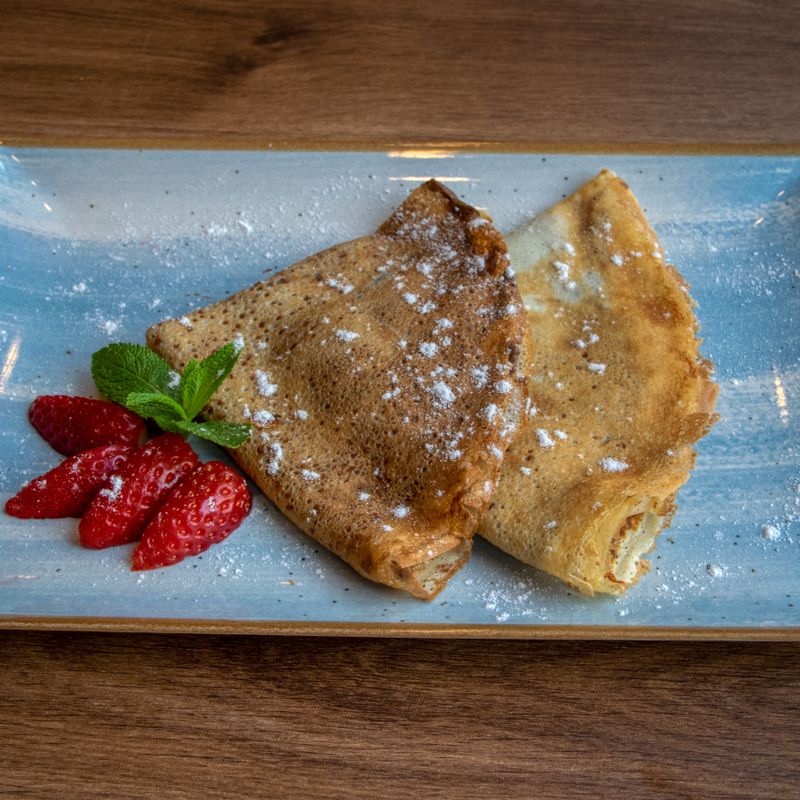
- For sweet crêpes, serve with jam, honey, fresh berries, or a dollop of crème fraîche and powdered sugar.
- Buckwheat's earthy flavor pairs especially well with apple compote, dark chocolate, and caramelized apples.
+ Show details− Hide details
Tip: Crêpes are best eaten within a few minutes of cooking, while they're still warm and pliable. If they cool and stiffen, you can gently reheat them in a warm skillet.
Good to know
Tips
- Sourdough discard acts as a leavening agent (through its fermented bubbles) and adds subtle tang. Use discard that has recently been fed or is actively bubbly; dead or refrigerated discard will not contribute the same texture.
- Buckwheat flour is denser and absorbs liquid differently than wheat flour—the rest period is essential to allow it to hydrate fully. If batter seems too thick after resting, whisk in a tablespoon or two of milk.
- Temperature control is critical for thin, tender crêpes: medium-high heat is ideal. If crêpes are too thick or rubbery, the pan was too cool; if they brown too quickly and tear, the heat is too high.
- Crêpes made with sourdough are best eaten warm or at room temperature the same day. As they cool, the buckwheat's starch sets and they become slightly less delicate, though they're still delicious.
Make ahead
Batter can be made up to 4 hours ahead and stored in an airtight container in the refrigerator. If chilled, let it return to room temperature and whisk in a splash of milk to restore the correct consistency before cooking. Cooked crêpes can be stacked and wrapped in plastic wrap, then refrigerated for up to 3 days or frozen for up to 2 months (layer them with parchment paper).
Storage & reheating
Room temperature (stacked on a plate, uncovered): up to 2 hours. Refrigerator (wrapped in plastic wrap): up to 3 days. Freezer (layered with parchment paper in an airtight container): up to 2 months. To reheat: gently warm in a skillet over medium heat for 30–45 seconds per side, or thaw overnight in the fridge and warm in a dry skillet.
Substitutions
- sourdough discard, at room temperature → 0.5 cup (120 ml) sourdough discard plus 0.5 cup (120 ml) sour cream or crème fraîche. If you lack sourdough discard, sour cream adds tang and richness. The flavor will be less complex but still excellent.
- buckwheat flour → all-purpose flour or white whole wheat flour. Buckwheat is naturally gluten-free, but you can substitute all-purpose flour for a more neutral flavor and slightly less earthy taste. The crêpes will be lighter in color.
- whole milk → buttermilk or a mix of milk and sourdough discard. Buttermilk adds tang and tenderness. If using buttermilk, reduce the water to 2 tablespoons (30 ml).
- unsalted butter, melted → neutral oil such as grapeseed or vegetable oil. Oil won't brown in the pan as butter does, resulting in lighter-colored crêpes with a slightly less rich flavor.