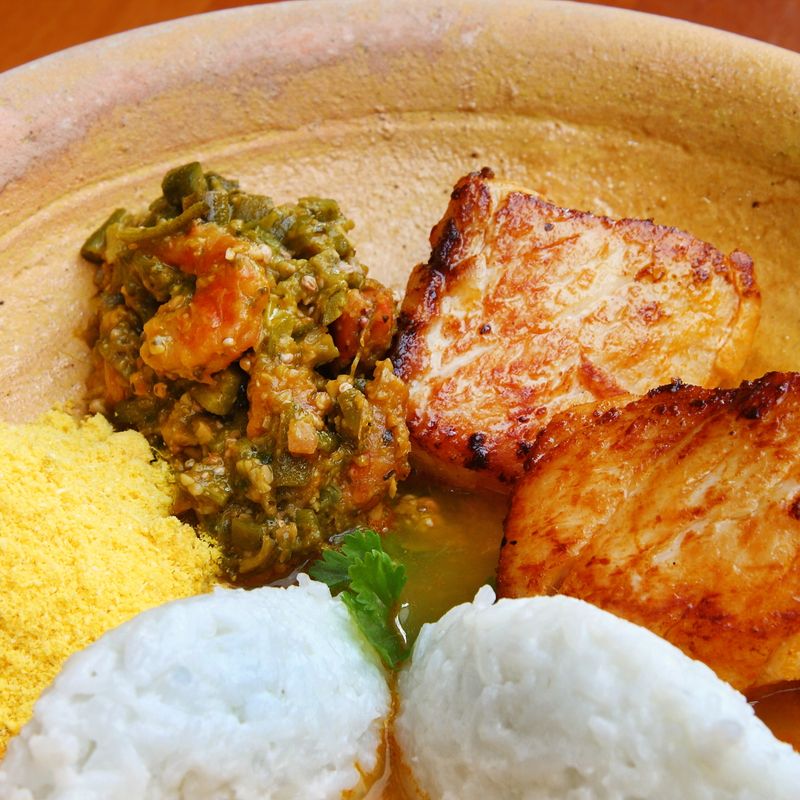
Sicilian Sardine and Wild Fennel Couscous with Saffron
A sun-soaked Sicilian couscous celebrating the sea and the island's wild fennel. Tender sardines, wilted fennel fronds, and saffron-infused pearl couscous create a dish with layered, delicate flavors—herbaceous, briny, and gently perfumed. This stovetop main is quick enough for weeknights yet elegant enough for guests.
Steps
Before you start
- Measure out the saffron and warm broth before you start cooking—saffron blooms best in hot liquid
- If using fresh sardines, ask the fishmonger to clean and bone them
- Have fennel fronds and parsley chopped and ready by the stove
Bloom the saffron
- Pour the warm fish broth into a medium saucepan (off heat).
- Crumble the saffron threads directly into the broth and stir gently.
- Let sit for 5 minutes so the saffron releases its color and delicate anise-like flavor into the liquid.
- The broth should turn a pale golden hue.
+ Show details− Hide details
Ready when: Broth is uniformly golden-yellow and fragrant
Tip: Do not let broth boil while blooming saffron—high heat can make it taste bitter and lose color.
Sauté the aromatics
- Heat 2 tablespoons (30 ml) of the olive oil in a large shallow skillet over medium heat.
- Add the diced onion and a pinch of salt.
- Cook, stirring occasionally, for 4–5 minutes until the onion softens and turns translucent.
- Add the minced garlic and cook for another 30 seconds until fragrant.
+ Show details− Hide details
Ready when: Onion is soft and translucent, garlic is golden and fragrant
Tip: Keep the heat at medium to avoid browning the garlic, which would turn it bitter.
Build flavor with tomato and wine
- Stir in the tomato paste and cook for 1 minute, stirring constantly, until it deepens in color and caramelizes slightly.
- Pour in the white wine and scrape up any browned bits from the bottom of the pan with a wooden spoon.
- Simmer for 2 minutes to reduce the wine slightly and cook off its raw alcohol.
+ Show details− Hide details
Ready when: Wine has reduced by about one-third and no raw alcohol smell remains
Tip: Scraping the pan déglazes it and incorporates flavorful browned bits into the sauce.
Toast the couscous
- Increase the heat to medium-high.
- Add the remaining 1 tablespoon (15 ml) of olive oil to the pan, then add the pearl couscous.
- Stir constantly for 2–3 minutes until the couscous is lightly toasted and fragrant, with a slightly nutty aroma.
+ Show details− Hide details
Ready when: Couscous is pale golden and smells nutty
Tip: Toasting the couscous deepens its flavor and helps each grain stay separate when cooked.
Add saffron broth and bring to a boil
- Pour the saffron-infused broth into the skillet with the toasted couscous.
- Stir well to combine.
- Bring to a boil over medium-high heat, then reduce the heat to medium-low and cover the skillet with a lid.
+ Show details− Hide details
Ready when: Liquid is boiling and steam forms under the lid
Tip: Use a tight-fitting lid to trap steam, which cooks the couscous evenly.
Simmer couscous until tender
- Reduce heat to medium-low and simmer gently, covered, for 8–10 minutes until the couscous is tender and has absorbed most of the broth.
- The liquid should be almost completely absorbed but the couscous should still feel moist.
+ Show details− Hide details
Ready when: Couscous grains are tender and fluffy, broth is mostly absorbed
Tip: If the couscous still seems too wet after 10 minutes, remove the lid and cook for another minute or two. If it seems dry, the heat was too high; lower it further.
Arrange sardines over couscous
- Gently nestle the cleaned sardine fillets on top of the hot couscous in a single layer.
- Scatter the chopped wild fennel fronds over and around the sardines.
- Sprinkle with a pinch of sea salt and the red pepper flakes (if using).
- Cover the skillet again and cook for 2 minutes just until the sardines are gently warmed through.
+ Show details− Hide details
Ready when: Sardines are opaque and flake easily when pressed; fennel is bright green and wilted
Tip: Sardines are delicate and cook very quickly. Add them at the end to avoid overcooking, which makes them dry and separates their flesh.
Rest and finish
- Remove the skillet from heat and let rest, covered, for 3 minutes.
- This allows flavors to meld and the sardines to finish cooking gently through carryover heat.
- Uncover and taste; season with additional salt and black pepper as needed.
- Fluff the couscous gently with a fork.
+ Show details− Hide details
Ready when: Dish is aromatic and cohesive; sardines are fully opaque
Tip: Resist the urge to stir during the rest—this keeps the couscous fluffy and the sardines intact.
Garnish and serve
- Transfer the couscous to a serving platter or individual bowls, keeping the sardines on top.
- Scatter the fresh parsley over the top.
- Serve immediately with lemon wedges on the side so each diner can brighten the dish to taste.
+ Show details− Hide details
Tip: A squeeze of fresh lemon over each serving adds brightness and cuts through the richness of the sardines and olive oil.
Good to know
Tips
- Wild fennel is a delicacy in Sicily and grows along coastal areas; if you forage for it, harvest only the tender fronds. If you can't find it fresh, specialty Italian markets and some farmers' markets carry it in spring and early summer, or you can order it online. Cultivated fennel fronds are a reliable substitute.
- Pearl couscous (also called Israeli couscous) is larger and chewier than regular couscous and won't turn to mush—it's perfect for this dish. If you only have regular (fine) couscous, use 1 cup (180 g) and reduce the broth to 2 cups (480 ml), as fine couscous absorbs less liquid.
- The saffron is essential to the Sicilian character of this dish. If you're using saffron, buy it from a trusted source and store it in an airtight container away from light and heat; it stays potent for several years.
- For a restaurant-quality presentation, spoon the couscous into bowls and lean the sardine fillets against the grain at an angle, then scatter the garnish around them and finish with a light drizzle of your best olive oil.
Make ahead
You can prepare the aromatics, chop the fennel, parsley, and lemon, and measure the spices up to 4 hours ahead. Do not bloom the saffron or cook the couscous until you're ready to serve, as the dish is best eaten fresh and warm.
Storage & reheating
Best eaten the day it's made. Leftovers can be refrigerated in an airtight container for up to 2 days. Reheat gently in a covered skillet over low heat with a splash of water or broth (the couscous will absorb moisture), or serve cold as a grain salad with extra lemon and olive oil. Do not freeze, as the sardines and fennel lose texture.
Substitutions
- wild fennel fronds (or regular fennel fronds) → Regular fennel bulb (use the tender fronds and finely shaved bulb). Cultivated fennel is milder and sweeter than wild fennel but still gives you that characteristic anise note. Use about the same volume of tender fronds and julienned or shaved bulb.
- fresh sardines, cleaned and boned → Fresh anchovies, small mackerel fillets, or even drained canned sardines. If fresh sardines are unavailable, large anchovies have a similar delicate, briny flavor. If using canned sardines (packed in oil or salt), rinse and drain them, and add them at the very end just to warm through to avoid breaking them apart.
- saffron threads → A pinch of turmeric plus a strand of ground cumin. Saffron's exact flavor is hard to replicate, but turmeric gives warmth and color while cumin adds earthiness. You won't get saffron's delicate floral notes, but the dish will still be fragrant and golden.
- fish or seafood broth → Vegetable broth or light chicken broth. Use the same amount. Fish broth adds authentic briny depth, but vegetable or chicken broth will give you a gentler, lighter version. You might add 1 teaspoon of anchovy paste or fish sauce to deepen the savory notes.


