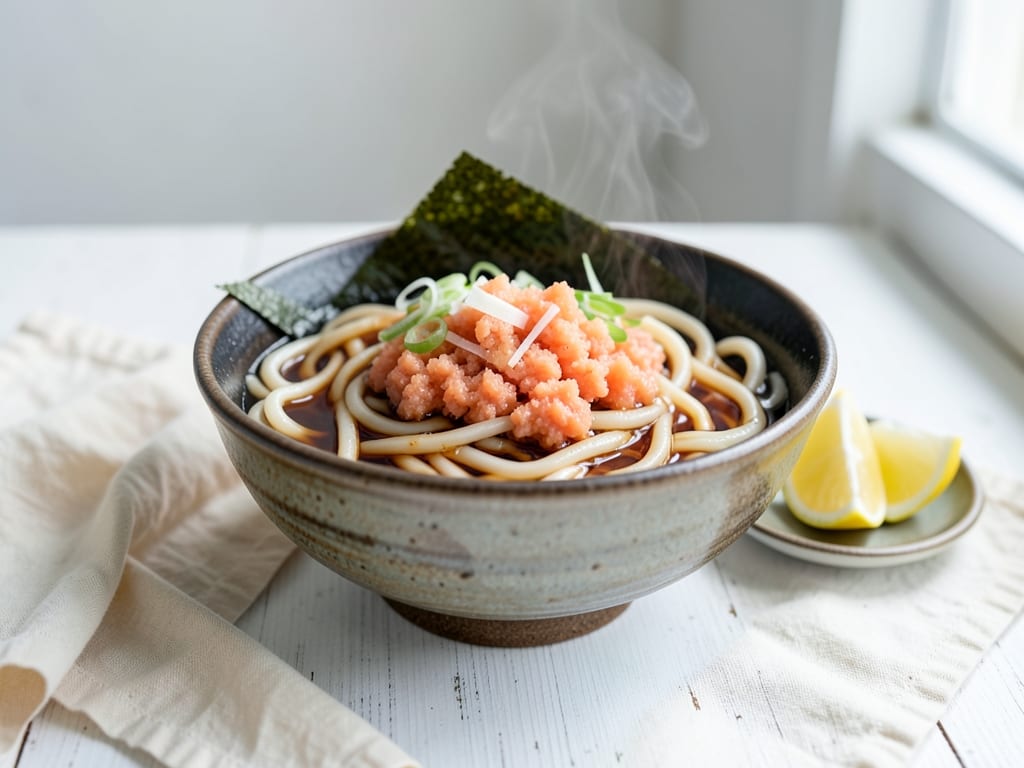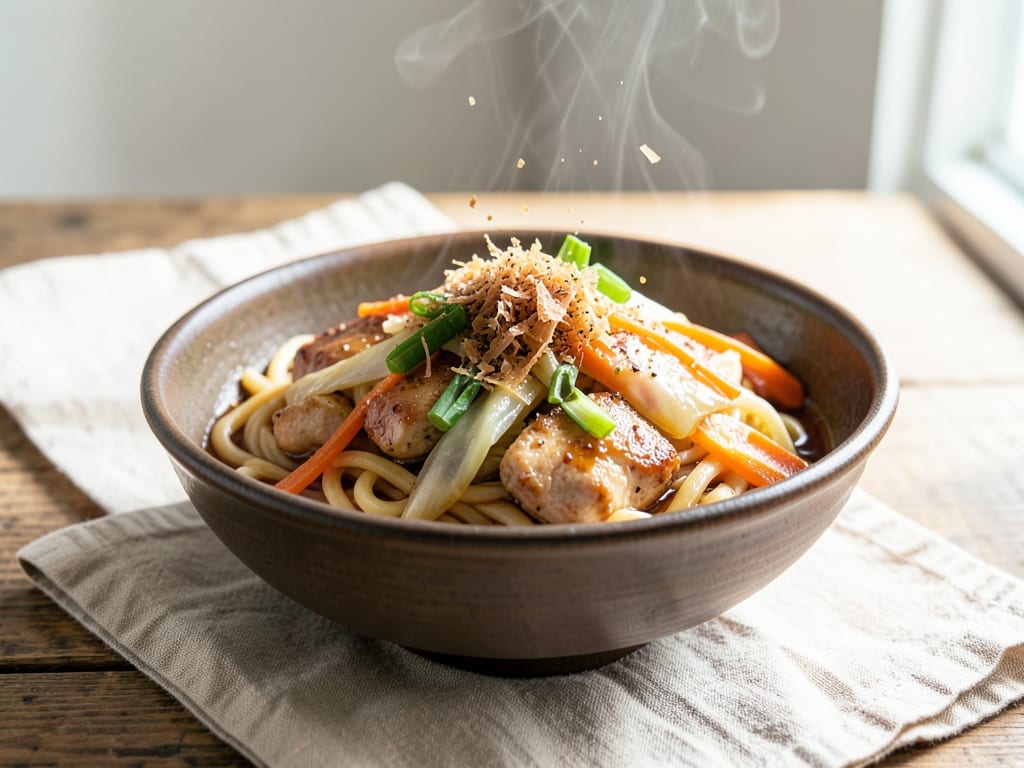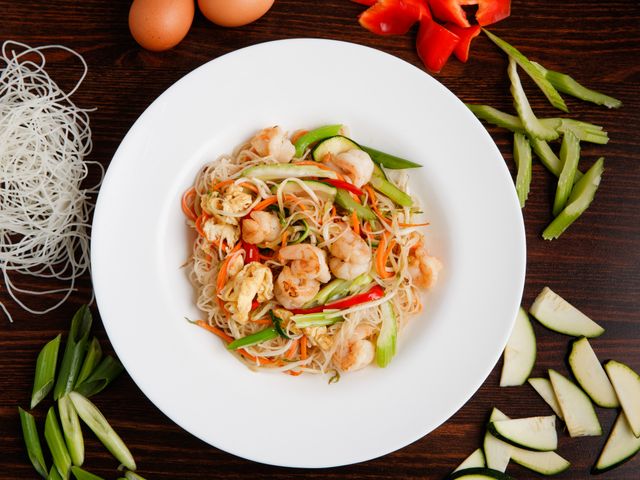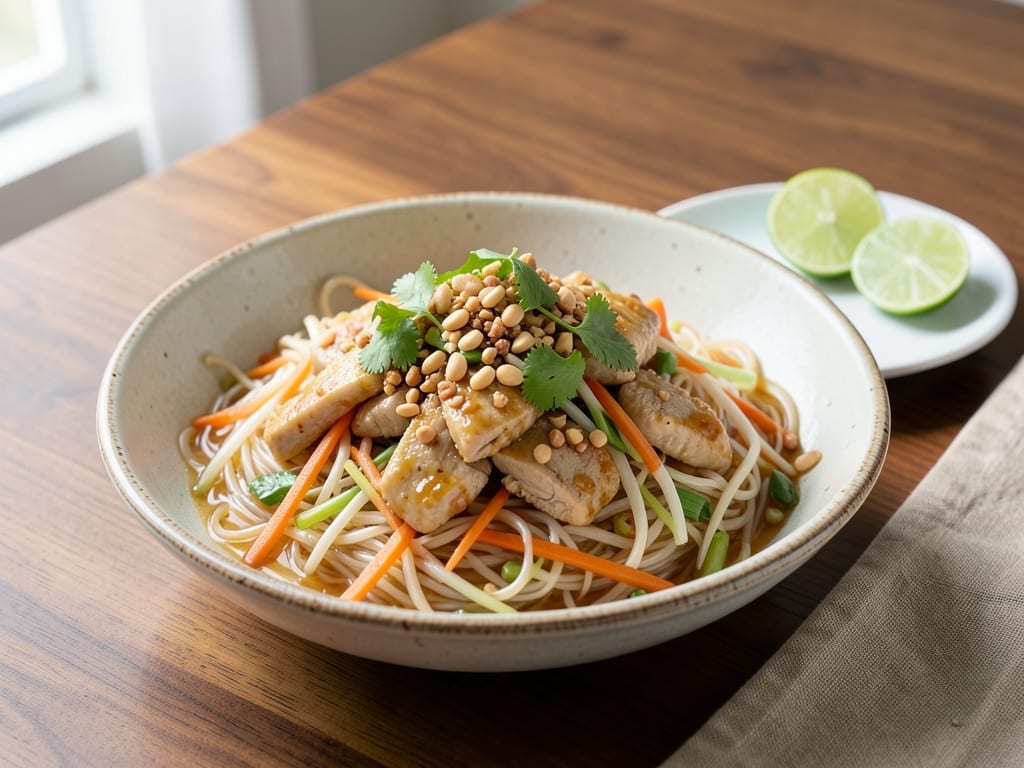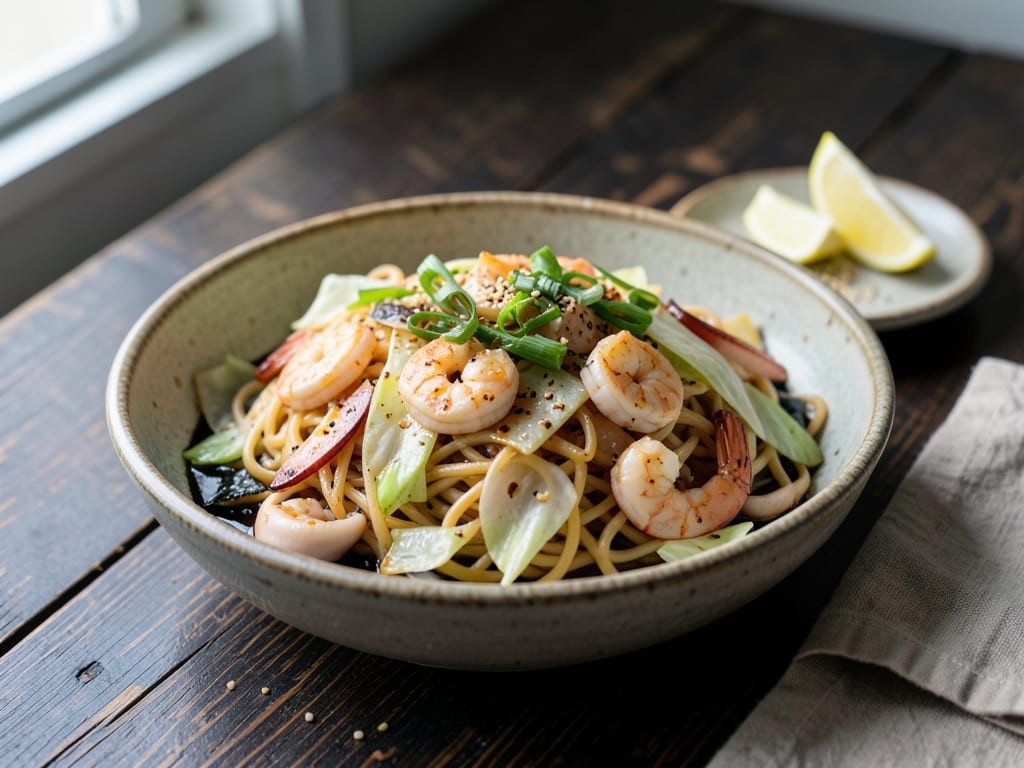
Seafood Yakisoba with Shio Sauce
Chewy yakisoba noodles stir-fried on a hot griddle with shrimp, squid, and cabbage, then tossed in a light, savory shio (salt) sauce with toasted sesame oil, garlic, and a squeeze of lemon. Cleaner and brighter than the usual brown sauce version.
- Prep
- 25 min
- Cook
- 15 min
- Wait
- 10 min
- Total
- 50 min
- Makes
- 4 generous servings
Steps
Before you start
- Have everything chopped, measured, and within reach before turning on the heat; the stir-fry takes only about 10 minutes.
- Pat the shrimp and squid very dry with paper towels, or they will steam instead of sear.
- Mix the shio sauce in a small bowl ahead of time so you can pour it in all at once.
- Use a large flat griddle, cast-iron skillet, or carbon-steel wok so the noodles are not crowded.
Marinate the seafood
- In a large bowl, toss the dried shrimp and squid with the sake, cornstarch, and ¼ tsp salt until evenly coated.
- Let sit 10 minutes while you prep everything else.
+ Show details− Hide details
Ready when: Seafood looks evenly coated with no pooled liquid
Tip: Pat seafood very dry first; wet seafood will steam and turn rubbery.
Mix the sauce
- In a small bowl, stir together the stock, 1 tsp salt, mirin, sesame oil, and white pepper until the salt dissolves completely, about 30 seconds.
+ Show details− Hide details
Ready when: No salt granules visible at the bottom of the bowl
Loosen the noodles
- Open the noodle packs and separate the strands by hand, running them under warm tap water for 10 seconds if they are stuck together.
- Drain well and shake dry.
- Set the cut vegetables, garlic, and lemon wedges beside the stove.
+ Show details− Hide details
Ready when: Noodles are in loose, separate strands
Tip: Don't microwave the noodles first; they get soft and mushy in the pan.
Sear the seafood
- Heat a large griddle or 12-inch skillet over high heat for 2 minutes.
- Add 1 tbsp neutral oil, then the shrimp and squid in a single layer.
- Cook undisturbed for 1 minute, then stir and cook 1 to 2 minutes more.
- Transfer to a plate.
+ Show details− Hide details
Ready when: Shrimp are pink and curled into a loose C; squid is opaque white and just firm
Tip: Slightly undercook; the seafood returns to the pan later. Overcooked squid turns tough.
Stir-fry the vegetables
- Add 1 tbsp oil to the same pan.
- Stir-fry the carrot, onion, and scallion whites for 1 minute, then add the cabbage and garlic.
- Cook 2 to 3 minutes, tossing often.
+ Show details− Hide details
Ready when: Cabbage is wilted at the edges with some browned spots but still crisp in the center; garlic smells fragrant, not burnt
Tip: Push the vegetables to the side to make room if the pan is crowded.
Fry the noodles
- Push the vegetables aside, add the remaining 1 tbsp oil to the cleared space, and add the noodles.
- Let them sit 30 seconds to pick up color, then toss with the vegetables for 2 minutes.
+ Show details− Hide details
Ready when: Noodles are hot, bouncy, and lightly browned in spots
Tip: Use two chopsticks or a spatula and tongs to lift and fold rather than stir, so the noodles don't break.
Add sauce and seafood
- Return the seafood and any juices to the pan.
- Re-stir the sauce, pour it evenly over everything, and toss constantly for 1 to 2 minutes until the liquid is absorbed.
+ Show details− Hide details
Ready when: Pan looks nearly dry, noodles are glossy and evenly seasoned, shrimp are fully opaque
Tip: Taste a noodle; if it needs more salt, add a pinch rather than more sauce.
Finish and serve
- Turn off the heat.
- Fold in the scallion greens and sesame seeds.
- Divide among 4 plates, top with nori if using, and serve right away with a lemon wedge to squeeze over each portion.
+ Show details− Hide details
Ready when: Scallion greens are bright green and just wilted
Good to know
Tips
- Keep the heat high and don't crowd the pan; if your skillet is small, cook in two batches.
- Season gradually: shio sauce is simple, so the quality of your salt and sesame oil matters.
- Cut the cabbage in squares rather than shreds so it stays juicy and sturdy against the noodles.
- Cook the seafood just to the point of doneness in step 4, since it finishes in the sauce.
Make ahead
Slice the vegetables, marinate the seafood, and mix the sauce up to 1 day ahead; refrigerate separately in covered containers. Cook just before serving.
Storage & reheating
Best eaten immediately. Refrigerate leftovers in an airtight container up to 2 days. Reheat in a hot skillet with 1 tbsp water for 2 to 3 minutes, tossing until steaming. Not recommended to freeze because the seafood turns rubbery.
Substitutions
- cleaned squid tubes → sea scallops or extra shrimp. Halve scallops if large; cook about 1 minute per side.
- sake → dry white wine or water. Water works fine; the flavor will be slightly less rounded.
- fresh yakisoba noodles (steamed, packaged) → fresh ramen noodles or par-cooked lo mein. Boil ramen 1 minute less than the package says, drain well, and toss with a little oil.
- chicken stock or dashi → dashi or water. Dashi adds a more seafood-forward flavor; with water, add an extra pinch of salt.