Roasted Yautía and Garlic Mojo Dip
A creamy, tangy Caribbean dip built on roasted yautía (malanga), garlicky mojo oil, and bright sour orange juice. The roasted root vegetable becomes buttery and naturally sweet, balanced by sharp citrus, fresh cilantro, and aromatic garlic. Serve warm or at room temperature with plantain chips, yuca chips, or crusty bread.
- Prep
- 15 min
- Cook
- 35 min
- Wait
- 10 min
- Total
- 1 hr
- Makes
- About 1½ cups (360 ml)
Steps
Before you start
- Preheat your oven to 400°F (200°C)
- Have sour orange juice on hand (or substitute fresh lime and orange juice mixed)
- Gather all ingredients before you begin; the roasting window is quick
Prepare and roast yautíaOven 400°F / 205°C
- Toss the yautía cubes on a medium baking sheet (16×12 inch / 41×30 cm) with 3 tablespoons (45 ml) of olive oil, sea salt, and black pepper.
- Spread in a single layer.
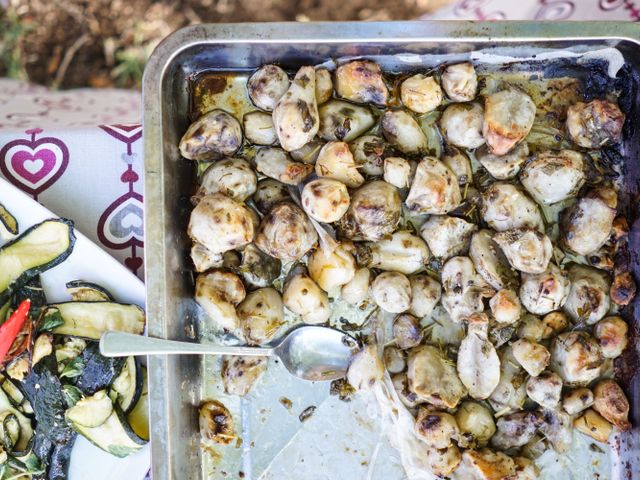
- Roast in a preheated 400°F (200°C) oven for 30–35 minutes, stirring halfway through, until the edges are golden brown and the flesh is completely tender when pierced with a knife.
+ Show details− Hide details
Ready when: Edges are golden brown and yautía is easily pierced with a knife
Tip: Don't skip stirring halfway through; uneven roasting leads to inconsistent texture in the dip.
Toast garlic in mojo oil
- While the yautía roasts, warm the remaining 5 tablespoons (75 ml) of olive oil in a small saucepan over medium-low heat.
- Add the 6 peeled garlic cloves and cook gently for 5–7 minutes, swirling the pan occasionally, until the garlic is soft, pale golden, and fragrant.
- Do not let it brown or burn.
- Remove from heat and set aside to cool slightly (about 5 minutes).
+ Show details− Hide details
Ready when: Garlic is soft, pale golden, and fragrant but not browned
Tip: Low heat is essential; high heat will bitter the garlic and ruin the mojo's bright flavor.
Crush garlic and build mojo
- Using a mortar and pestle (or small food processor), crush the cooled garlic cloves into a paste.
- Add a generous pinch of sea salt and the fresh cilantro leaves; crush or pulse until the cilantro is finely chopped and integrated.
- Pour in the sour orange juice and stir to combine.
- This is your mojo base.
+ Show details− Hide details
Ready when: Cilantro is finely chopped and the mixture is smooth and aromatic
Tip: If using a food processor, pulse in short bursts to avoid over-processing and losing the cilantro's vibrant color.
Transfer roasted yautía to bowl
- Scoop the hot roasted yautía from the baking sheet into a medium mixing bowl.
- Let it cool for 3–5 minutes so it's still warm but cool enough to handle.
+ Show details− Hide details
Ready when: Yautía is warm but cool enough to touch
Mash and emulsify the dip
- Pour the garlic-cilantro mojo (including the oil) over the warm yautía.
- Using a wooden spoon, mash the yautía until creamy and mostly smooth, leaving a few small chunks for texture if you like.
- The warm yautía will emulsify the oil and create a rich, creamy consistency.
- Stir in the cumin and red pepper flakes (if using).
- Taste and adjust salt and pepper as needed.
+ Show details− Hide details
Ready when: Dip is creamy with a few small chunks; oil is incorporated and color is golden-green from cilantro
Tip: Warm yautía mashes more easily and emulsifies better with the oil; cold root vegetable won't create the same silky texture.
Finish and serve
- Transfer the warm dip to a serving bowl.
- Drizzle with a little extra olive oil and a sprinkle of cilantro or a pinch of red pepper flakes for garnish.
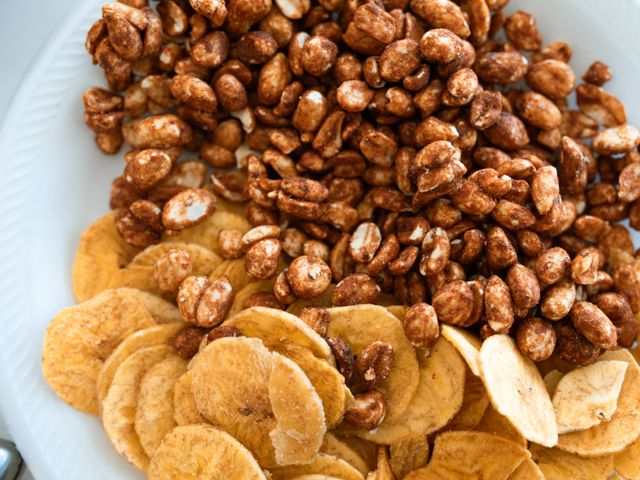
- Serve warm or at room temperature with plantain chips, yuca chips, cassava bread, or crusty bread for dipping.
+ Show details− Hide details
Tip: The dip thickens as it cools; if you prefer it thinner, stir in a tablespoon or two of warm water or extra sour orange juice.
Good to know
Tips
- Yautía can be starchy on the outside after peeling; rinse the cut cubes in cool water and pat dry before roasting to prevent excess browning on the surface.
- Mojo's signature flavor depends on slow-cooked, infused garlic oil. Rush the heat or brown the garlic, and you'll lose the delicate, aromatic character that defines this dip.
- For a chunky dip, mash the yautía less; for a smooth, silky version, use a hand blender or food processor (cool the mixture to room temperature first if using electric appliances).
- Sour orange (naranja agria) is available fresh at Caribbean and Latin American markets, or in bottled form at specialty grocers. It's worth seeking out for its authentic, slightly bitter-bright flavor—lime alone is too sharp.
Make ahead
Roast the yautía up to 1 day ahead and store in an airtight container in the refrigerator. Make the mojo base up to 4 hours ahead. Combine and serve the finished dip within 2 hours of assembly for the best texture and bright cilantro flavor.
Storage & reheating
Room temperature: up to 2 hours. Refrigerator: up to 3 days in an airtight container. Reheat gently in a saucepan over low heat, stirring occasionally, or microwave in 30-second intervals, stirring between, until warm. Do not freeze; the yautía's texture becomes grainy when thawed. The dip can separate slightly upon cooling; stir in a tablespoon of warm water or fresh sour orange juice to restore creaminess.
Substitutions
- fresh sour orange (naranja agria) juice → Fresh lime juice mixed with fresh orange juice (2 parts lime to 1 part orange) or 2 tablespoons fresh lime juice plus 1 tablespoon white wine vinegar. Sour orange is traditional; this combination mimics its tart, slightly bitter edge. Adjust to taste.
- yautía (malanga), peeled and cut into 1-inch (2.5 cm) cubes → Malanga, yuca (cassava root), or taro root in the same quantity. All three are starchy Caribbean roots; yautía has a subtle nuttiness, while yuca is lighter and taro is earthier. Cooking time may vary slightly; roast until very tender.
- fresh cilantro leaves, packed → Fresh parsley (Italian flat-leaf) or a mix of parsley and fresh basil. Cilantro is essential to the Caribbean mojo flavor, but parsley or basil will give you a fresh, herbaceous dip with a slightly different profile.
- extra-virgin olive oil, divided → Avocado oil. A milder, slightly buttery alternative that works well if you prefer less pronounced olive flavor. Use the same quantity.