Roasted Fingerling Potatoes with Balsamic Vinegar
Tender fingerling potatoes roasted until caramelized and crispy at the edges, finished with a glaze of aged balsamic vinegar and fresh garlic. A simple Italian-inspired side dish that works alongside grilled meats, roasted chicken, or as part of a vegetable platter.
- Prep
- 10 min
- Cook
- 30 min
- Wait
- 5 min
- Total
- 45 min
- Makes
- 4 servings (about 1¼ cups per person)
Steps
Before you start
- Preheat your oven to 425°F (220°C) before washing the potatoes
- Choose fingerling potatoes that are roughly the same size so they cook evenly
- Pat potatoes completely dry after washing—moisture prevents crisping
Toss potatoes with oil and seasonings
- In a large bowl, combine the dried fingerling potatoes, 3 tablespoons olive oil, minced garlic, kosher salt, and black pepper.
- Toss until all potatoes are evenly coated with oil and seasonings.
- The potatoes should have a light, oily sheen.
+ Show details− Hide details
Ready when: All potato pieces are evenly coated with oil and garlic
Tip: Don't skip coating the potatoes evenly; spots without oil won't crisp properly.
Spread on baking sheet in single layer
- Spread the coated potatoes in a single layer on a large rimmed baking sheet, cut-side down.
- Leave a little space between pieces so steam can escape and they can brown, not steam.
- Discard any excess oil left in the bowl (you want potatoes to roast, not stew).
+ Show details− Hide details
Ready when: Potatoes are arranged in a single layer with gaps between pieces
Tip: Crowding the pan traps steam and prevents crispy, caramelized edges. Use two baking sheets if needed.
Roast at high heat until goldenOven 425°F / 220°C
- Place the baking sheet in the preheated 425°F (220°C) oven.
- Roast for 22–25 minutes, stirring and flipping the potatoes halfway through (around 12 minutes), until the cut sides are deep golden brown and the skins show light char marks.
- The potatoes should feel tender when pierced with a fork.
+ Show details− Hide details
Ready when: Cut sides are deep golden brown with some char; potatoes are fork-tender
Tip: Don't skip the flip at the halfway point—it ensures even browning on all sides.
Finish with balsamic glaze
- Remove the baking sheet from the oven.
- While potatoes are still hot, drizzle the 2 tablespoons of aged balsamic vinegar over them and toss gently with tongs to coat.
- The residual heat will warm the vinegar and create a light glaze.
+ Show details− Hide details
Ready when: Balsamic vinegar is distributed across all potatoes and lightly glazes them
Tip: Add the balsamic while potatoes are still hot so it absorbs into the warm potato flesh. Aged balsamic has better flavor than young vinegar here.
Rest and garnish
- Let the potatoes rest on the baking sheet for 5 minutes.
- This allows the vinegar glaze to set slightly and the potatoes to firm up a touch.
- If using fresh thyme or parsley, sprinkle it over the top just before serving.
- Taste and adjust salt if needed.
+ Show details− Hide details
Ready when: Potatoes are cool enough to handle but still warm; herbs are scattered on top
Tip: Add fresh herbs just before serving so they stay vibrant and don't wilt into the warm potatoes.
Good to know
Tips
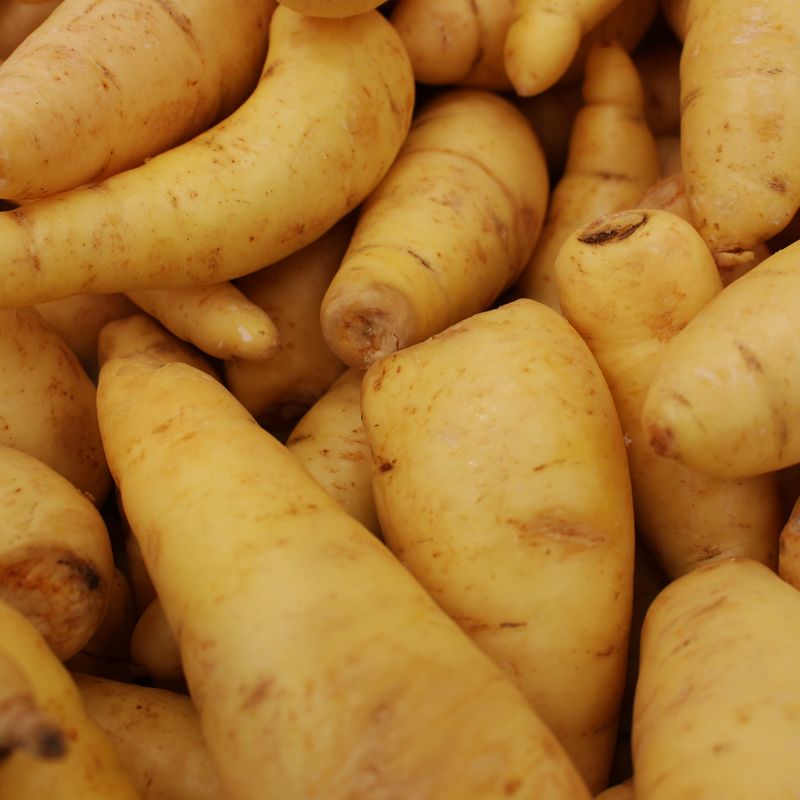
- Choose fingerling potatoes that are similar in size and length so they roast evenly. If some are noticeably larger (over 2 inches), halve them lengthwise so all pieces cook in the same time.
- The balsamic-to-olive-oil ratio is key: 2 tbsp vinegar to 3 tbsp oil creates a balanced glaze that isn't overly sharp or oily. Aged balsamic is worth seeking out here; its natural sweetness and syrupy body make the glaze silky.
- Roasting at 425°F (220°C) is hot enough to crisp the skins and caramelize the cut surface without drying out the potato inside. A lower temperature will yield soft potatoes but no browning.
- These potatoes are best served warm or at room temperature, within 1–2 hours of roasting. Cold leftover potatoes can be tossed into salads or reheated briefly.
Storage & reheating
Store leftovers in an airtight container in the refrigerator for up to 3 days. Reheat in a 350°F (175°C) oven for 8–10 minutes until warmed through, or serve cold as a potato salad–style side. Do not freeze, as potatoes become grainy and watery after thawing.
Substitutions
- aged balsamic vinegar → Red wine vinegar (1½ tablespoons) mixed with 1 tsp honey to approximate the sweetness of aged balsamic. Young or standard balsamic vinegar also works; just use the full 2 tbsp. The flavor will be more acidic and less mellow.
- fingerling potatoes (about 1½ inches / 4 cm long) → Waxy potatoes like red potatoes or new potatoes, cut into 1½-inch pieces. Avoid starchy russets, which break apart easily when tossed. Waxy varieties hold their shape and crisp up well.
- fresh thyme sprigs (or Italian parsley) → Dried Italian herbs, oregano, or fresh rosemary (use 1 tsp dried herb instead of 2 tbsp fresh). Dried herbs are concentrated, so use less. Rosemary's strong flavor pairs beautifully with balsamic.
- extra-virgin olive oil → Neutral vegetable oil (sunflower, grapeseed, or avocado oil). These oils have a higher smoke point than olive oil and will roast slightly hotter, creating a more deeply caramelized exterior. Taste may be less Mediterranean.