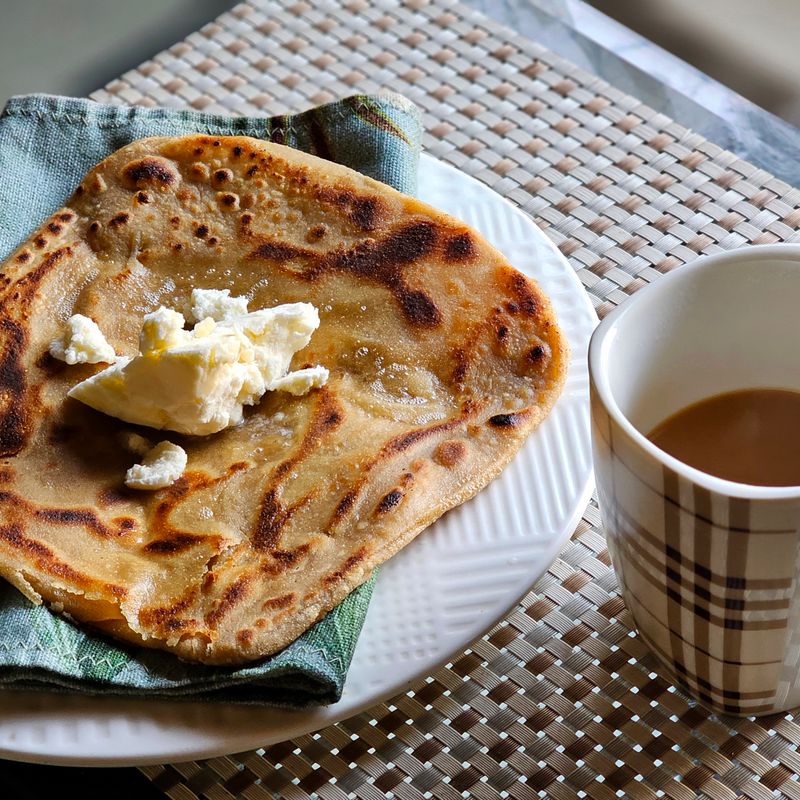
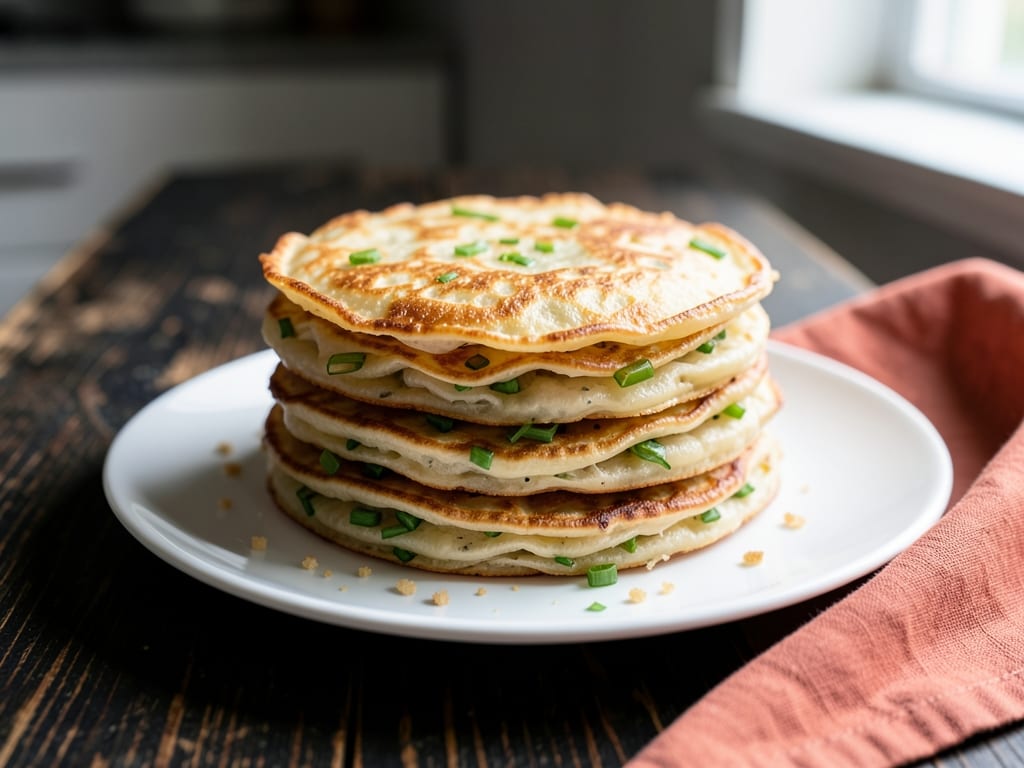
Riced Cauliflower and Soy Breakfast Flatbread
A crispy, golden flatbread studded with riced cauliflower and seasoned with soy sauce and sesame oil. This savory breakfast flatbread is quick to prepare, perfectly tender inside with a slight crunch on the edges, and works equally well served warm with a fried egg, as part of a breakfast spread, or torn and dipped into soft-boiled eggs for dunking.
- Prep
- 15 min
- Cook
- 20 min
- Wait
- 30 min
- Total
- 1 hr 5 min
- Makes
- 4 flatbreads (about 8 inches each)
Steps
Before you start
- Preheat your oven to 425°F (220°C)
- If using fresh cauliflower, rice it finely and squeeze out excess moisture with paper towels
- Have all ingredients measured and ready before you begin mixing the dough
Mix dough base
- In a large bowl, combine 1½ cups (180 g) all-purpose flour and ½ teaspoon (3 g) salt.
- Make a well in the center and pour in ¾ cup (180 ml) warm water.
- Stir with a fork until shaggy dough forms, about 1–2 minutes.
- Do not overwork.
+ Show details− Hide details
Ready when: Shaggy dough with no dry flour visible
Tip: Warm water (not hot) helps develop gluten gently without kneading
Rest dough briefly
- Cover the bowl with a clean kitchen towel and let the dough rest for 15 minutes at room temperature.
- This allows the flour to fully hydrate and makes the dough easier to knead.
Knead and combine dough
- Turn the dough onto a lightly floured surface and knead for about 3–4 minutes until smooth and slightly elastic.
- The dough should be soft but not sticky.
- If it sticks, dust with a tiny bit more flour.
- Return to the bowl.
+ Show details− Hide details
Ready when: Dough is smooth, elastic, and springs back slightly when poked
Tip: Brief kneading develops enough gluten for tender flatbread; avoid over-kneading
Prepare filling mixture
- In a medium bowl, combine 2 tablespoons (30 ml) soy sauce, 1½ tablespoons (22 ml) toasted sesame oil, minced garlic, and minced ginger if using.
- Add 1½ cups (150 g) riced cauliflower (squeezed dry), 3 thinly sliced scallions, and ¼ teaspoon white pepper if desired.
- Stir well to distribute flavors evenly.
- Taste and adjust soy sauce if needed.
+ Show details− Hide details
Ready when: Mixture is well combined with no dry cauliflower rice visible
Tip: Squeeze excess moisture from cauliflower rice to prevent soggy flatbread
Divide dough into portions
- Turn the dough onto a lightly floured surface and divide it into 4 equal pieces.
- Roll each piece between your palms into a smooth ball.
- Let them rest, uncovered, for 5 minutes.
+ Show details− Hide details
Tip: Resting makes the dough less likely to spring back when rolling
Roll and stuff flatbreads
- Working with one dough ball at a time, flatten it slightly and roll it into a thin oval or circle about 6 inches across.
- Place about 3–4 tablespoons (45–60 ml) of the cauliflower filling on one half, leaving a ½-inch border.
- Fold the dough over to create a half-moon or rectangular parcel, gently press the edges to seal (do not seal completely—leave tiny openings for steam to escape).
- Repeat with remaining dough and filling.
+ Show details− Hide details
Ready when: Each flatbread is evenly filled and edges are partially sealed
Tip: Leaving tiny gaps in the seal prevents the dough from puffing up too much during cooking
Preheat oven and heat skilletOven 425°F / 220°C
- Place a cast-iron skillet or heavy non-stick pan in the oven and preheat to 425°F (220°C) for 10 minutes.
- This ensures even cooking and a golden bottom.
+ Show details− Hide details
Tip: A hot pan gives the flatbread a better crust and prevents sogginess
Pan-fry first side
- Carefully remove the hot skillet from the oven and add 1 tablespoon (15 ml) vegetable oil, tilting to coat evenly.
- Place one stuffed flatbread in the pan and cook on the stovetop over medium-high heat for 2–3 minutes, until the bottom is golden brown and crispy.
- Brush the top with a small amount of sesame oil or water as it cooks to keep it from drying out.
+ Show details− Hide details
Ready when: Bottom is golden brown and crispy, small bubbles appear on top
Tip: Keep the heat at medium-high so the dough cooks through without burning the bottom
Flip and finish in ovenOven 425°F / 220°C
- Using a wide spatula, flip the flatbread carefully and immediately transfer it back to the oven on the hot skillet.
- Bake for 5–7 minutes until the second side is light golden and the dough is cooked through.
- The flatbread will puff slightly and feel firm but still tender.
+ Show details− Hide details
Ready when: Second side is light golden, flatbread springs back when gently pressed, and filling is hot throughout
Tip: The oven finishes cooking the inside evenly while the pan crisps the bottom
Cook remaining flatbreadsOven 425°F / 220°C
- Remove the first flatbread to a serving plate and tent loosely with foil to keep warm.
- Repeat the pan-frying and oven-baking process with the remaining three flatbreads, adding ½ tablespoon (7.5 ml) oil to the pan for each one if needed.
+ Show details− Hide details
Ready when: All four flatbreads are golden brown and cooked through
Tip: Keep cooked flatbreads warm under foil while finishing the batch
Finish and serve
- Transfer all flatbreads to a serving plate.
- If desired, brush lightly with toasted sesame oil and sprinkle with toasted sesame seeds.
- Serve warm, optionally with fried or soft-boiled eggs, sriracha, or extra soy sauce for dipping.
+ Show details− Hide details
Tip: Sesame oil and seeds add nutty depth; apply just before serving so they don't lose their fragrance
Good to know
Tips
- Squeezing excess moisture from the riced cauliflower and cooked vegetables is crucial—wet filling leads to soggy, dense flatbread.
- For a crispier exterior, brush the hot pan lightly with oil between each flatbread; this prevents sticking and promotes browning.
- If you don't have a cast-iron skillet, any heavy non-stick or stainless-steel pan works, but it won't retain heat as well; be ready to cook slightly longer on the stovetop.
- These flatbreads are best eaten fresh but reheat beautifully in a dry skillet over medium heat for 1–2 minutes per side to restore crispness.
Make ahead
Dough can be made up to 4 hours ahead, covered, at room temperature. The filling can be prepared up to 1 day ahead and refrigerated; bring to room temperature before assembling. Do not stuff and refrigerate the flatbreads unbaked—they become tough. Bake just before serving for the best texture.
Storage & reheating
Room temperature (2–3 hours): Keep in an airtight container or wrapped in foil. Reheat gently in a 350°F (175°C) oven for 5–7 minutes. Refrigerator (up to 3 days): Store in an airtight container. Reheat in a 350°F oven for 8–10 minutes until warmed through. Freezer (up to 1 month): Cool completely, wrap individually in parchment, then foil. Reheat from frozen in a 375°F (190°C) oven for 12–15 minutes, covered with foil for the first half.
Substitutions
- cauliflower rice → finely diced zucchini (squeezed dry), bok choy, or napa cabbage. These vegetables offer similar texture and can be used in equal amounts by weight. Zucchini may release more water, so squeeze it well.
- toasted sesame oil → neutral oil (vegetable, canola, or peanut oil). You'll lose the toasted sesame aroma but the flatbread will still be delicious. Use the same amount.
- soy sauce → tamari or coconut aminos for a gluten-free version. Tamari is very similar in flavor; coconut aminos is slightly sweeter and less salty, so add 1 tablespoon and taste.
- all-purpose flour → whole wheat flour or spelt flour. Whole grains absorb slightly more water, so you may need an extra 1–2 tablespoons of water. The flatbread will be nuttier and slightly denser.
More flatbreads
See all →

Find more like this
- Meal
- Breakfast
- Cuisine
- Chinese
- Main ingredient
- Cauliflower
- Quick & Easy
- Easy