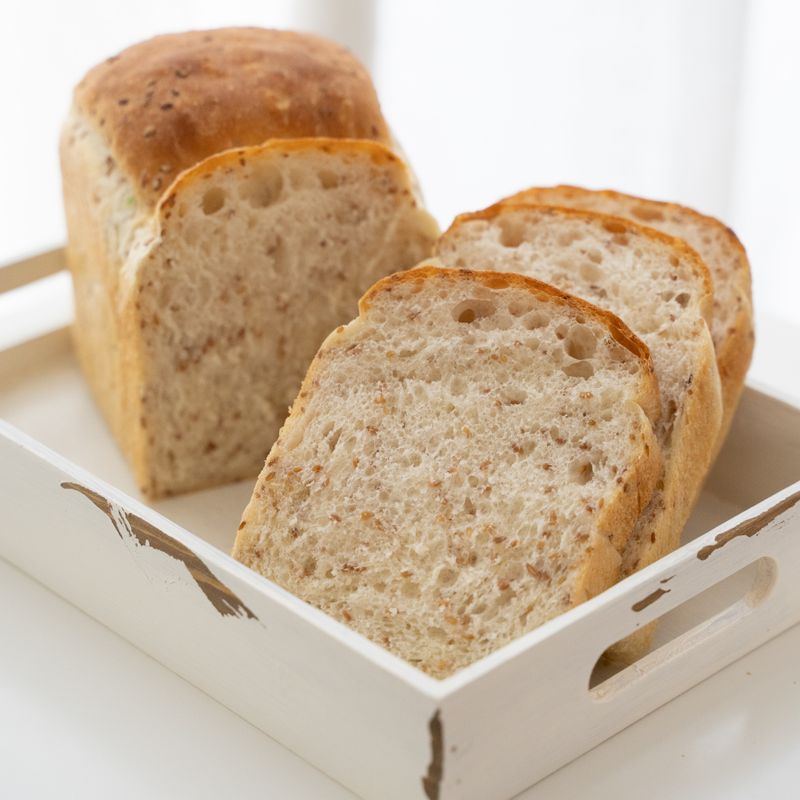
Sourdough Discard Ful Medames Fava Bean Rounds
Crispy-edged, pillowy flatbread rounds infused with sourdough tang and studded with a vibrant fava bean and garlic paste inspired by ful medames. Warm cumin and olive oil create a savory, deeply flavored bread that bridges the gap between focaccia and traditional Egyptian fava bean bread. Perfect for dipping, serving alongside soup, or eating on its own.
- Prep
- 25 min
- Cook
- 25 min
- Wait
- 1 hr 30 min
- Total
- 2 hr 20 min
- Makes
- 8 rounds (4–5 inches / 10–13 cm diameter)
Steps
Before you start
- Have your sourdough discard at room temperature (at least 1 hour out of the fridge)
- If using dried fava beans, soak them overnight and cook until tender (about 1 hour); canned fava beans work fine and need only draining and rinsing
- Preheat your oven to 425°F (220°C) about 15 minutes before baking
- Line two baking sheets with parchment paper
Mix the dough
- In a large bowl, combine the sourdough discard, all-purpose flour, whole wheat flour, kosher salt, and warm water.
- Stir with a wooden spoon or dough whisk until a shaggy dough forms with no dry flour visible.
- The dough should be slightly sticky and loose—wetter than typical bread dough.
- Add 3 tablespoons of olive oil and mix until fully incorporated, about 1 minute.
+ Show details− Hide details
Ready when: No dry flour visible; dough comes together but remains loose and sticky
Tip: Don't overmix—gentle folding ensures tender, open crumb. This is a wetter dough than typical sandwich bread, which creates the pillowy texture.
Prepare the fava bean filling
- While the dough rests, mash the drained fava beans in a medium bowl with a fork to a chunky paste—you want some beans intact, not a smooth purée.
- Stir in the minced garlic, ground cumin, lemon juice, 2 tablespoons of olive oil, black pepper to taste, and cayenne if using.
- Taste and adjust seasoning.
- Set aside.
+ Show details− Hide details
Ready when: Mixture is chunky and bright green, well seasoned with cumin and garlic
Tip: Don't over-process the fava beans—the chunky texture creates pockets of flavor in the final bread. A slight bitterness from the bean skins is authentic and delicious.
First rise
- Cover the dough bowl loosely with a damp kitchen towel or plastic wrap.
- Let it rise at room temperature for 45–60 minutes until the dough is noticeably puffy and has increased in volume by about 50%.
- It should jiggle slightly when you shake the bowl and show visible bubbles on the surface.
+ Show details− Hide details
Ready when: Dough has risen 50%, is puffy and bubbly, jiggles when bowl is moved
Tip: This isn't a high-rise recipe—the dough should be visibly aerated but not dramatically doubled. Sourdough rises more slowly than commercial yeast dough.
Divide the dough
- Turn the risen dough out onto a lightly floured surface.
- Using a bench scraper or knife, divide it into 8 equal pieces (roughly 2.5 ounces / 70 g each).
- Work gently to avoid deflating the dough.
- Shape each piece into a rough ball by pulling the edges toward the center and turning it seam-side down.
+ Show details− Hide details
Ready when: Eight roughly equal pieces, each shaped into a ball
Tip: Use a scale if you have one for even portions—this ensures all rounds bake at the same rate. Handle the dough gently to preserve the bubbles.
Shape and fill the rounds
- Lightly pour 1 tablespoon of olive oil into a shallow dish.
- Working with one dough ball at a time, roll it in the oil, then place it on a work surface.
- Using your fingers and palms, gently stretch and flatten the dough into a 4–5 inch (10–13 cm) round about ¼ inch (6 mm) thick.
- Spread about 2 tablespoons of the fava bean filling on the bottom half of the round, leaving a ½-inch (1 cm) border.
- Fold the top half over the filling like a half-moon, then gently press the edges to seal, creating a slight dome.
- Place on a prepared baking sheet.
- Repeat with the remaining dough and filling.
+ Show details− Hide details
Ready when: Eight sealed half-moon or round parcels on baking sheets with visible fava bean filling
Tip: Don't overfill—too much filling causes it to leak during baking. A half-moon shape is traditional, but you can fold into a package shape if you prefer. The oil coating prevents sticking and adds flavor.
Second rise
- Cover the shaped rounds loosely with a damp kitchen towel.
- Let them rise at room temperature for 20–30 minutes until they feel puffy and airy when gently pressed.
- They should increase in volume noticeably but won't double in size like commercial yeast dough.
+ Show details− Hide details
Ready when: Rounds are puffy and yield slightly when gently poked; surface is bubbly
Tip: Check one round by poking it gently—it should spring back slowly but not completely. If it springs back immediately, it needs more time. This second rise is shorter because the dough is already fermented.
Preheat and prepare to bakeOven 425°F / 220°C
- About 10 minutes before baking, preheat the oven to 425°F (220°C).
- Position racks in the upper and lower thirds of the oven.
+ Show details− Hide details
Ready when: Oven reaches 425°F (220°C)
Tip: A hot oven is crucial—it creates the crispy, slightly charred edges characteristic of this bread. Using two racks allows you to bake all rounds simultaneously.
Bake the roundsOven 425°F / 220°C
- Transfer both baking sheets to the preheated oven, placing one on the upper rack and one on the lower rack.
- Bake for 12–15 minutes until the rounds are golden brown on top and the bottoms are deep golden and crisp.
- The fava bean filling should be set and slightly caramelized at the edges.
- Rotate the sheets halfway through baking (about 7 minutes in) and swap their positions (upper to lower, lower to upper) to ensure even browning.
+ Show details− Hide details
Ready when: Tops are golden brown, bottoms are deep golden and crisp; filling is set and caramelized at edges
Tip: If your oven runs hot or cooks unevenly, tent the rounds loosely with foil during the last 3–4 minutes to prevent over-browning. Peek at the bottoms after 10 minutes to check for browning.
Cool and garnish
- Remove the baking sheets from the oven and let the rounds cool on the sheet for 5 minutes.
- Transfer to a wire rack or serving platter.
- While still warm, optionally drizzle with a small amount of additional olive oil and scatter with fresh cilantro or parsley if desired.
+ Show details− Hide details
Ready when: Rounds are warm and the filling is set; bottoms are still crispy
Tip: The rounds are best eaten warm or at room temperature on the same day. If serving later, you can reheat them briefly in a warm oven (300°F / 150°C) for 5 minutes.
Good to know
Tips
- Sourdough discard must be active and bubbly—feed it 4–6 hours before baking if it has been dormant in the fridge. A sluggish discard will produce dense rounds.
- The fava bean filling reflects the classic Egyptian ful medames, but it's not a true emulsion or paste. The chunky texture is intentional and creates delicious pockets of flavor; don't over-process.
- These rounds are best served warm, straight from the oven, or at room temperature on the same day. They pair beautifully with labneh, hummus, or a simple tomato and cucumber salad.
- For a more pronounced sourdough flavor and lighter crumb, extend the first rise to 60–75 minutes in a cooler location (65–70°F / 18–21°C). The longer fermentation develops tang and creates larger bubbles.
Make ahead
You can prepare the fava bean filling up to 2 days ahead and refrigerate it in an airtight container. You can also shape the rounds up to 4 hours ahead, cover them tightly with plastic wrap, and refrigerate them. If refrigerated, add 5–10 extra minutes to the baking time and bake directly from cold. Alternatively, let cold rounds come to room temperature before baking (about 20 minutes) for the most traditional texture.
Storage & reheating
Store cooled rounds in an airtight container at room temperature for up to 2 days. They are best eaten the day they're made. To reheat, wrap loosely in foil and warm in a 300°F (150°C) oven for 5–8 minutes until heated through and crispy again. Rounds can be frozen for up to 1 month in a freezer-safe container or bag; thaw at room temperature for 1 hour, then reheat as above.
Substitutions
- canned fava beans, drained and rinsed → canned or cooked cannellini beans, or a mix of fava and chickpeas. Fava beans are traditional in ful medames, but white beans offer a milder, creamier flavor. Adjust cumin and lemon to taste, as different beans absorb seasoning differently.
- whole wheat flour → additional all-purpose flour (use 2 cups / 250 g total) or spelt flour. All-purpose flour creates a lighter, more delicate crumb; spelt adds a slightly nutty flavor. Reduce whole wheat if using spelt, as spelt absorbs water differently.
- fresh cilantro or parsley, finely chopped (optional, for garnish) → fresh parsley, mint, or dill. Cilantro is traditional but optional. Parsley is milder; mint adds brightness; dill pairs well with the fava bean flavor.
- ground cumin → 2 teaspoons (4 g) whole cumin seeds, lightly toasted and crushed, or 1 teaspoon (2 g) ground coriander mixed with 0.5 teaspoon (1 g) ground cumin. Toasted cumin seeds add textural crunch and deeper spice; coriander-cumin blend mimics North African spice profiles and offers a more floral note.
More flatbreads
See all →



Find more like this
- Meal
- Lunch
- Cuisine
- Egyptian
- Main ingredient
- Fava Beans
- Method
- Oven