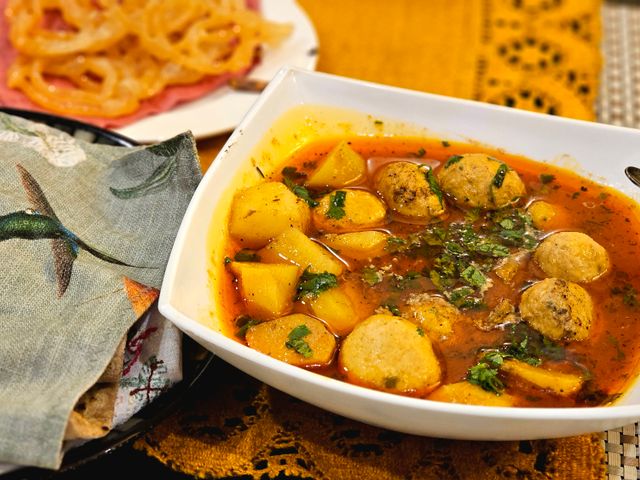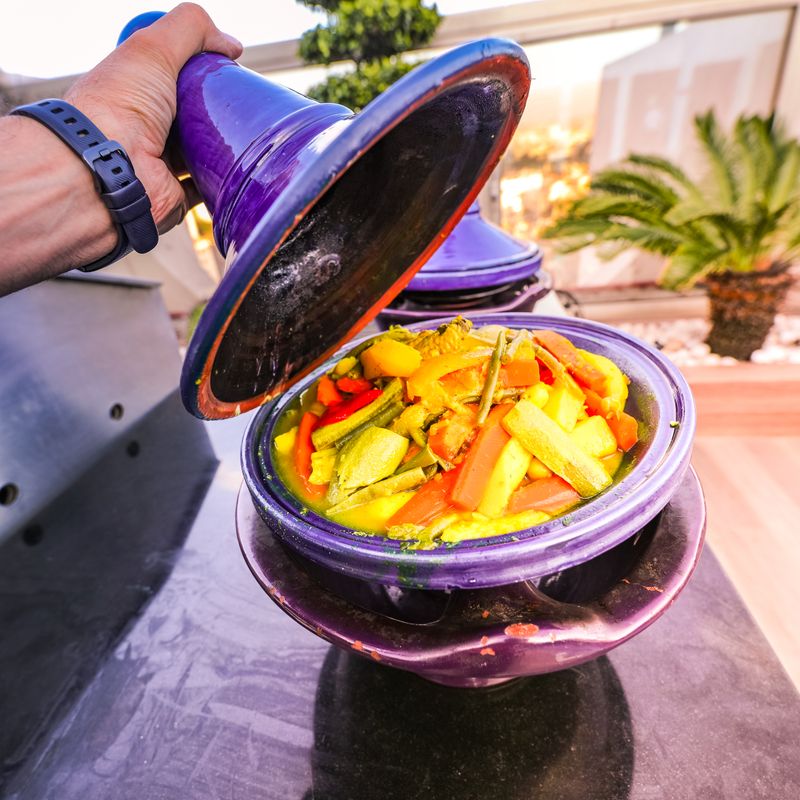
Ramadan Harissa Potato and Vegetable Tagine
A warming, deeply spiced North African tagine combining tender potatoes, vegetables, and dried apricots in a complex sauce built from harissa, preserved lemon, and warm spices. The slow braise melds flavors into a complex, slightly sweet and savory dish perfect for breaking the Ramadan fast.
- Prep
- 25 min
- Cook
- 50 min
- Wait
- 5 min
- Total
- 1 hr 20 min
- Makes
- 6 servings (about 8 cups total)
Steps
Before you start
- Read through the recipe to understand the timing—this is a hands-on braise that requires monitoring
- Prep and measure all ingredients before you start cooking (mise en place)
- If using homemade harissa, prepare it ahead; store-bought works well too
- Have a tagine or heavy-bottomed pot/Dutch oven ready
Build the spice base
- Heat the olive oil in a large tagine or 5–6 quart heavy-bottomed pot over medium heat.
- Once shimmering, add the sliced onions and cook, stirring often, for 5–6 minutes until softened and beginning to turn translucent.
- Add the minced garlic and cook for 1 minute until fragrant.
- Stir in the harissa paste, ground cumin, cinnamon, and ginger, mixing constantly until the spices are evenly distributed and the harissa is fully incorporated into the oil, about 1 minute.
- The mixture should be fragrant and lightly darkened.
+ Show details− Hide details
Ready when: Mixture is fragrant, spices are evenly distributed, and the harissa is fully incorporated
Tip: Stir constantly to prevent the spices from burning, which will make the dish taste bitter.
Add vegetables and liquid
- Add the potato chunks and carrot pieces to the pot, stirring to coat them well with the spiced oil.
- Pour in the vegetable broth and add the chopped preserved lemon and halved dried apricots.
- Stir everything together until the vegetables are submerged or mostly covered by liquid.
- Season with 1 teaspoon of kosher salt and a few grinds of black pepper.
+ Show details− Hide details
Ready when: All vegetables are submerged or nearly submerged in liquid
Tip: Use a wooden spoon to stir—it won't scratch the tagine or pot bottom. Metal utensils can damage a ceramic tagine.
Bring to a simmer
- Increase the heat to medium-high and bring the mixture to a simmer, stirring occasionally.
- Once small bubbles break the surface and you hear gentle sizzling, reduce the heat to medium-low.
+ Show details− Hide details
Ready when: Liquid is at a gentle simmer with bubbles breaking the surface
Tip: A full boil will cause the vegetables to break apart; a gentle simmer keeps them intact.
Cover and braise
- Place the lid on the pot and reduce the heat to medium-low.
- Simmer gently for 40–45 minutes, stirring gently every 12–15 minutes to ensure even cooking and prevent sticking.
- The vegetables should become very tender, and the liquid will reduce slightly, concentrating the flavors.
+ Show details− Hide details
Ready when: Potatoes and carrots are fork-tender; liquid has reduced slightly and tastes rich and complex
Tip: If the liquid seems to be reducing too quickly, add a splash of broth or water; if it's not reducing enough, increase the heat slightly after 30 minutes.
Taste and adjust seasoning
- Carefully taste the braise.
- The preserved lemon adds saltiness, so be conservative with additional salt.
- Add more salt and black pepper to taste.
- If you find the spice level too mild, stir in ½ teaspoon more harissa.
- If the tagine tastes too sharp from the lemon, add 1 teaspoon honey or a pinch more ground cinnamon to balance it.
+ Show details− Hide details
Ready when: Flavors are balanced to your taste
Tip: Taste small spoonfuls and adjust gradually—it's easier to add seasoning than to remove it.
Rest and serve
- Remove the pot from the heat and let the tagine rest, uncovered, for 5 minutes.
- This allows the flavors to settle and the pot to cool slightly, making serving safer.
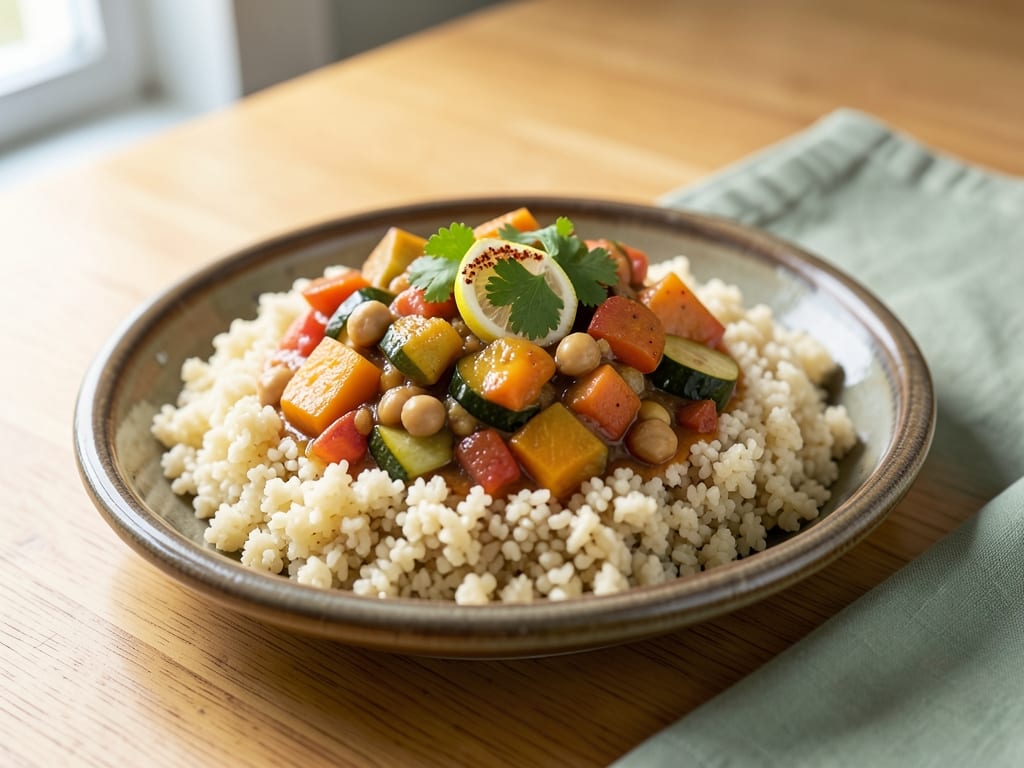
- Ladle the tagine into bowls, making sure each serving gets potatoes, carrots, apricots, and plenty of sauce.
- Garnish with fresh cilantro and parsley if desired.
+ Show details− Hide details
Ready when: Tagine is ready to serve
Tip: If you're serving family-style, you can keep the pot warm on the stovetop at the lowest setting while you break the fast and say prayers.
Good to know
Tips
- Preserved lemon is essential to the authentic flavor profile of this dish. If you cannot find it, make your own by packing sliced lemons with salt in a jar and letting them sit for 2–3 weeks in a cool, dark place.
- This tagine is naturally vegan and gluten-free. Serve it with couscous, rice, or warm flatbread to soak up the flavorful sauce.
- For a richer, more satisfying version, add 1 cup of cooked chickpeas in step 2, or 2–3 diced zucchini or bell peppers alongside the carrots.
- The spice heat in this dish comes from the harissa. If you prefer a milder tagine, reduce the harissa to 2 tablespoons; for more heat, increase to 4 tablespoons or add a pinch of cayenne pepper.
Make ahead
The tagine tastes even better the next day as the spices mellow and marry. Prepare it up to 2 days ahead, store in the refrigerator, and reheat gently on the stovetop over medium-low heat or in a 325°F (163°C) oven for 20–30 minutes until warmed through. It also freezes well for up to 3 months.
Storage & reheating
Room temperature: up to 1 hour. Refrigerator: in an airtight container for up to 4 days. Freezer: in a freezer-safe container for up to 3 months. To reheat from refrigerated, warm on the stovetop over medium-low heat, stirring occasionally, for 15–20 minutes until heated through. From frozen, thaw overnight in the refrigerator, then reheat as above.
Substitutions
- preserved lemon → Zest and juice of 1 fresh lemon plus 1/2 teaspoon salt. Fresh lemon is sharper and less complex than preserved lemon, but will work. Add juice partway through cooking and taste as you go.
- dried apricots → Dried dates, raisins, or prunes (use the same weight). Each will add different sweetness and depth. Dates are earthier, raisins more tart, prunes darker and less sweet.
- harissa paste → 1.5 tablespoons tomato paste mixed with 1.5 tablespoons paprika and 1/4 teaspoon cayenne pepper. This will be milder and less complex than harissa. If using this blend, increase the heat level slightly for more depth.
- vegetable broth → Water or a light chicken broth. Water will be less flavorful; chicken broth works well and adds a slightly richer taste. Use the same amount.