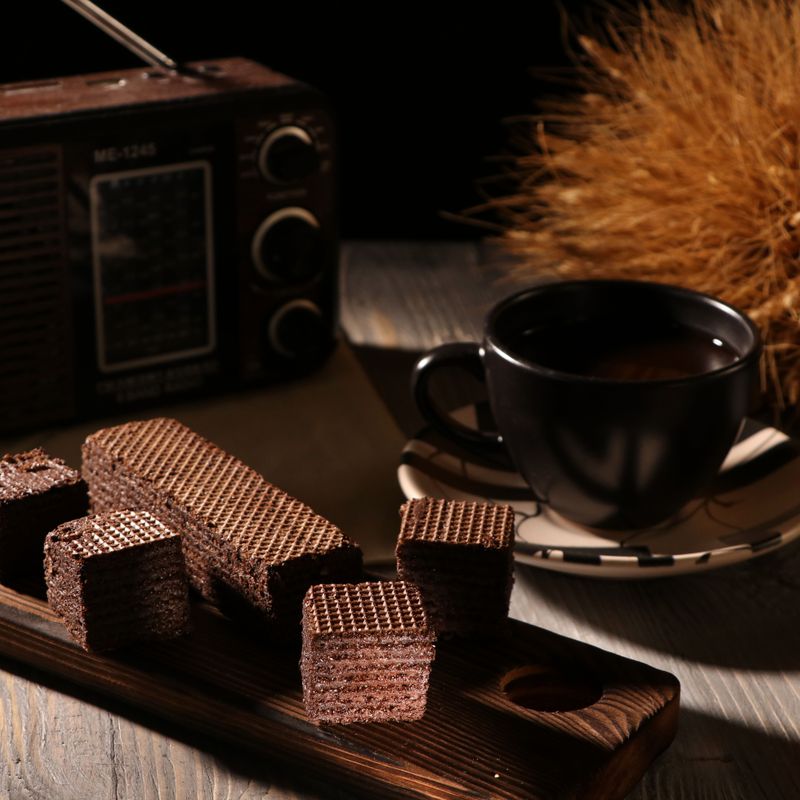
Ramadan Gathering Honey Chestnut Caramel Wafers
Crispy, paper-thin wafers layered with caramelized honey, roasted chestnuts, and butter. These elegant Middle Eastern sweets combine the warmth of caramelized sugar with the subtle sweetness of honey and the earthy crunch of roasted chestnuts. Perfect for sharing during Ramadan gatherings and special occasions.
Steps
Before you start
- Have all ingredients measured and at room temperature before starting
- Toast the chestnuts 10 minutes ahead if using raw; cool completely
- Line baking sheets with parchment paper
- Preheat oven to 350°F (175°C) before you begin the wafer batter
- Have a bench scraper or offset spatula ready for cutting warm wafers
Mix dry ingredients for wafers
- In a medium mixing bowl, whisk together 1 cup (120 g) all-purpose flour, 2 tablespoons (16 g) cornstarch, and ¼ teaspoon (1.5 g) fine sea salt.
- Set aside.
+ Show details− Hide details
Ready when: Ingredients are combined and no lumps remain
Tip: Sifting the dry ingredients creates an extra-light wafer batter; optional but recommended
Whisk eggs and sugar
- In another bowl, whisk together 2 large eggs (at room temperature) and ¼ cup (50 g) granulated sugar until pale and fluffy, about 2–3 minutes of vigorous whisking.
- The mixture should double in volume slightly and turn a light cream color.
+ Show details− Hide details
Ready when: Mixture is pale, airy, and about 1.5× the original volume
Tip: Room-temperature eggs incorporate more air; this creates lighter, crispier wafers
Combine wet ingredients
- Fold the dry flour mixture into the egg mixture in two additions, using a whisk or spatula.
- After adding the first half, fold gently until just combined, then add the remaining flour mixture and fold until no streaks of flour remain.
- Stir in 3 tablespoons (45 g) melted and cooled butter and ½ teaspoon (2.5 ml) vanilla extract until smooth.
+ Show details− Hide details
Ready when: Batter is smooth with no visible flour streaks
Tip: Overmixing at this stage develops gluten and makes wafers tough; fold gently just until combined
Bake thin wafer sheetsOven 350°F / 175°C
- Preheat oven to 350°F (175°C).
- Spread 2 tablespoons of batter onto a parchment-lined 9×13-inch (23×33 cm) baking sheet, using an offset spatula to spread it as thin and even as possible (about ⅛ inch / 3 mm thick).
- Bake for 8–10 minutes until pale golden with crispy edges.
- The surface should feel dry to the touch and just begin to brown at the corners.
- Repeat with remaining batter, working in batches.
+ Show details− Hide details
Ready when: Surface is dry, edges are golden-brown, and wafer flexes but doesn't break
Tip: Keep the oven door closed while baking; opening it lets steam escape and wafers may not crisp properly
Cool and cut wafers
- Allow wafers to cool on the baking sheet for 1–2 minutes until they firm up slightly but are still pliable.
- Using a bench scraper or offset spatula, gently cut the wafer sheet into 24 equal pieces (4 cuts lengthwise, 5 cuts widthwise).
- Transfer to a cooling rack to cool completely and crisp up, about 10 minutes.
+ Show details− Hide details
Ready when: Wafers are cool to the touch and snap cleanly when bent
Tip: Cut warm wafers immediately or they will harden and splinter; if they cool too much, return to oven for 30 seconds to soften
Prepare honey-caramel baseOven 350°F / 175°C
- In a small heavy-bottomed saucepan, combine ¼ cup (50 g) granulated sugar and 3 tablespoons (45 ml) water.
- Stir gently over medium heat until sugar dissolves, about 1–2 minutes.
- Stop stirring once the sugar is wet and let it cook undisturbed for 4–6 minutes, swirling the pan occasionally, until the sugar becomes amber-colored (about 325–350°F / 163–175°C on a candy thermometer).
+ Show details− Hide details
Ready when: Syrup is deep amber, not dark brown, and smells sweet and caramelized
Tip: Do not stir once the sugar begins to cook; stirring causes crystallization. Watch carefully—caramel darkens quickly at the end
Incorporate honey and butter
- Remove the pan from heat and carefully pour in ½ cup (170 g) raw honey, stirring constantly to combine.
- The mixture will bubble vigorously.
- Add 2 tablespoons (30 g) cold butter cubes, a few at a time, stirring between additions until fully incorporated.
- The caramel should be smooth and glossy.
- Stir in ⅛ teaspoon (0.75 g) fine sea salt.
+ Show details− Hide details
Ready when: Caramel is smooth, glossy, and no butter streaks remain
Tip: Add honey slowly to avoid violent sputtering; the residual heat will cook it slightly and mellow the honey flavor
Add chestnuts to caramel
- Fold in ¾ cup (100 g) roasted and roughly chopped chestnuts into the warm honey-caramel mixture until evenly distributed.
- Let the caramel cool for 5–10 minutes until it thickens slightly and reaches a spreadable consistency (it should still be warm but not hot to the touch).
+ Show details− Hide details
Ready when: Caramel coats a spoon and flows slowly; still warm but not scorching
Tip: If caramel thickens too much, warm it gently over low heat for 30 seconds; if too thin, let it cool longer before spreading
Assemble wafer layers
- Working with one cooled wafer at a time, spread about ½ teaspoon of the honey-chestnut caramel onto the wafer surface using a small spoon or palette knife, spreading it to the edges.
- Place a second wafer on top and press gently.
- Repeat the process, layering caramel between pairs of wafers, until you have created 12 sandwich wafers.
+ Show details− Hide details
Ready when: All 12 double wafers are assembled with caramel visible between layers
Tip: Do not overfill with caramel; too much will cause wafers to slip apart. A thin layer between each pair is sufficient
Garnish and set
- If desired, sprinkle ¼ cup (30 g) finely chopped pistachios over the tops of the assembled wafers, pressing gently so they adhere to any remaining caramel on the surface.
- Allow the assembled wafers to rest at room temperature for 15–20 minutes so the caramel sets and holds the layers together firmly.
+ Show details− Hide details
Ready when: Caramel between layers is firm but still slightly yielding; pistachios are secure
Tip: Do not refrigerate immediately; the caramel will become too hard and wafers may shatter when bitten
Good to know
Tips
- For the crispiest wafers, spread the batter as thin as possible (⅛ inch / 3 mm); thicker batches will be chewy rather than crispy. Use a straight edge or ruler as a guide if needed.
- Roasting fresh chestnuts: score the shells with an X, roast at 375°F (190°C) for 20–25 minutes, then peel while warm. Vacuum-packed roasted chestnuts from the grocery store are a convenient substitute—no peeling required.
- To prevent the caramel from seizing or crystallizing, avoid stirring the sugar syrup once it begins to cook, and keep a small glass of cold water nearby in case the caramel darkens too quickly; brush the sides of the pan with cold water to cool it.
- If you want extra indulgence, brush the cooled wafers lightly with melted butter before spreading the caramel; this adds richness and helps the caramel adhere.
Make ahead
Bake the plain wafers up to 2 days ahead and store in an airtight container. Prepare the honey-chestnut caramel up to 4 hours ahead and keep at room temperature in a covered bowl. Assemble the wafers within 2 hours of serving for best crispness; they gradually soften as the caramel sets into the wafers.
Storage & reheating
Room temperature: store assembled wafers in a single layer in an airtight container for up to 2 days; they will gradually soften. Refrigerator: store for up to 4 days, though wafers will lose crispness; bring to room temperature before serving. Freezer: freeze plain baked wafers (before assembly) in an airtight container for up to 1 month; thaw at room temperature for 10 minutes before assembling. Do not freeze assembled wafers as the moisture will make them soggy.
Substitutions
- roasted chestnuts, roughly chopped → roasted hazelnuts, roughly chopped. Hazelnuts provide similar earthiness and crunch; use the same quantity. They pair beautifully with honey caramel.
- raw honey → date molasses or date syrup (use 6 tablespoons / 100 ml instead of ½ cup honey). Date molasses adds a deeper, more complex sweetness traditional to some Middle Eastern sweets. Slightly reduce the added sugar to 3 tablespoons if using.
- vanilla extract → ¼ teaspoon (0.5 g) ground cinnamon or a pinch of ground cardamom. These warm spices enhance the Middle Eastern character; omit vanilla entirely if using cardamom.
- shelled pistachios, finely chopped → sliced or slivered almonds, or a mixture of both pistachios and almonds. Almonds are more delicate and may brown differently; toast lightly before using to enhance flavor.
More middle eastern sweets
See all →


Find more like this
- Meal
- Dessert
- Cuisine
- Middle Eastern
- Diet
- VegetarianHalal
- Method
- Oven
- Quick & Easy
- Budget
- Occasion
- Ramadan