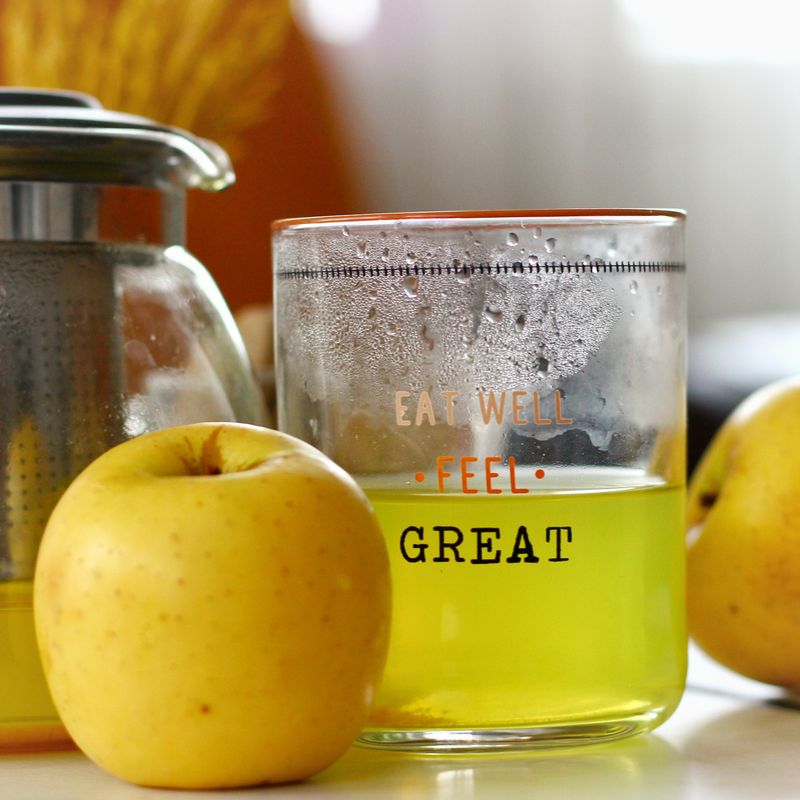
Quince Apple Juice with Rosewater
A delicate, floral fruit juice combining tart quince and crisp apples with a whisper of rosewater and bright lemon. Cold-pressed to preserve the delicate aromatics, this Middle Eastern–inspired drink is naturally sweet, slightly perfumed, and refreshingly complex. Serve chilled as an afternoon refresher or a sophisticated aperitif.
- Prep
- 15 min
- Cook
- —
- Wait
- 30 min
- Total
- 45 min
- Makes
- About 2 cups (480 ml) juice
Steps
Before you start
- Chill all juice glasses or a serving pitcher in the freezer for at least 30 minutes before serving
- If using a cold-press juicer, have it cleaned and assembled; if using a standard juicer, ensure it's ready
- Wash and dry all produce thoroughly
- Have a fine-mesh strainer or cheesecloth ready to catch pulp
Prepare the fruit
- Wash quince and apples under cool running water and pat dry thoroughly.
- Cut quince in half, scoop out the core and seeds, then cut into wedges small enough to fit through your juicer's feed tube (roughly 2–3 inches / 5–8 cm).
- Quarter the apples, remove seeds, and leave the skin on for color and nutrients.
- Cut lemon in half.
- Have all prepared fruit ready at the juicer.
+ Show details− Hide details
Ready when: All fruit cut uniformly and seeds removed
Tip: Leave apple skin on—it adds color and fiber. Don't remove quince skin; it contains tannins that give the juice its characteristic tartness.
Cold-press the fruit
- Feed prepared quince wedges through your cold-press or standard juicer, alternating with apple quarters and the lemon halves to help push pulp through and combine flavors evenly.
- Feed fruit at a steady, unhurried pace; do not force.
- Collect juice in a large measuring cup or bowl.
- You should yield approximately 2–2.25 cups (480–540 ml) of juice.
- If yield is low, your fruit may have been underripe; ripe quince and apples yield more liquid.
+ Show details− Hide details
Ready when: Juice is extracted and collected; pulp is mostly dry
Tip: Cold-pressing preserves the delicate floral and tart notes better than heat-based juicing. If using a standard juicer, press gently to avoid extracting bitter compounds from the seeds.
Strain the juice
- Pour the extracted juice through a fine-mesh strainer or folded cheesecloth into a clean bowl or pitcher.
- This removes any fine pulp, foam, or seed fragments, leaving a clear, silky juice.
- Do not press the pulp; let gravity do the work.
- Straining takes 10–15 minutes.
+ Show details− Hide details
Ready when: Juice is clear to slightly translucent; no visible pulp remains
Tip: If juice still appears cloudy, strain once more through fresh cheesecloth for a pristine finish.
Add rosewater and adjust
- Measure the strained juice.
- Pour it into a clean pitcher or serving bowl.
- Add rosewater by stirring in 0.5 teaspoon (2.5 ml) per batch.
- Taste, and add another ¼ teaspoon (1.25 ml) if you prefer a more pronounced floral note, but be cautious—rosewater is potent and can easily overpower the fruit.
- If the juice tastes too concentrated or tart, thin it with a splash of cold filtered water (up to ¼ cup / 60 ml) and stir gently.
+ Show details− Hide details
Ready when: Rosewater is fully dissolved and juice has a delicate, balanced floral aroma
Tip: Start with 0.5 teaspoon rosewater, then taste and add more if desired. You can always add more, but you can't remove it.
Chill and serve
- Pour the finished juice into chilled glasses or a chilled pitcher.
- Serve immediately over ice or chilled straight up.
- The juice is best consumed within 1–2 hours of pressing for maximum freshness and vibrancy of flavor, though it will keep refrigerated for up to 24 hours.
+ Show details− Hide details
Ready when: Juice is poured and ready to drink
Tip: Serve very cold to highlight the bright, tart notes and the subtle floral undertones. Do not add ice directly to the juice before serving if using a nice pitcher—prepare chilled glasses instead.
Good to know
Tips
- Quince can be hard to find fresh; check specialty Middle Eastern, Indian, or farmers' markets in autumn. Look for fragrant, golden-yellow fruit—avoid green or very hard specimens, as they contain less juice.
- Rosewater quality matters enormously. Buy food-grade rosewater from a reputable source or specialty market. Avoid perfume-grade rosewater, which is not safe to consume. A small bottle lasts a long time.
- If you don't have a cold-press juicer, a standard centrifugal juicer will work, but the juice will oxidize slightly faster and may be slightly warmer. Drink it within 1 hour for best flavor.
- For a sparkling version, chill the juice fully, then top each glass with 2–3 tablespoons (30–45 ml) chilled sparkling water or club soda just before serving.
Storage & reheating
Store covered in the refrigerator for up to 24 hours. The flavor and color are most vibrant within 2 hours of pressing. Rosewater intensifies slightly over time, so if keeping for longer, you may taste it become more perfumed. Juice can be frozen in ice cube trays for up to 3 months; thaw at room temperature or blend frozen cubes into smoothies. Do not store at room temperature—the delicate floral notes will fade and oxidation will occur quickly.
Substitutions
- crisp apple (Granny Smith or Honeycrisp) → pear (Bosc or Anjou). Use 2–3 medium pears in place of apples. Pear will be slightly sweeter and softer, adding creaminess. The juice will be more delicate; reduce rosewater to ¼ teaspoon if desired.
- food-grade rosewater → orange blossom water. Use ¼ teaspoon orange blossom water instead of rosewater. The flavor profile shifts from floral-tart to citrus-floral. Orange blossom is slightly more assertive, so start with less and taste.
- fresh lemon → fresh lime juice (2 tablespoons / 30 ml). If fresh lemons are unavailable, add lime juice at the end instead of pressing lime through the juicer. This gives a brighter, slightly more tropical finish.
- fresh quince → Asian pear (nashi). Use 2 lb (910 g) Asian pears if quince is unavailable. Asian pears yield more juice and are milder and sweeter; increase lemon to 0.75 whole and add rosewater to taste.
More juices
See all →
Find more like this
- Meal
- Snack
- Cuisine
- Middle Eastern
- Method
- No-Cook
- Quick & Easy
- 5 Ingredients or LessEasyBeginner