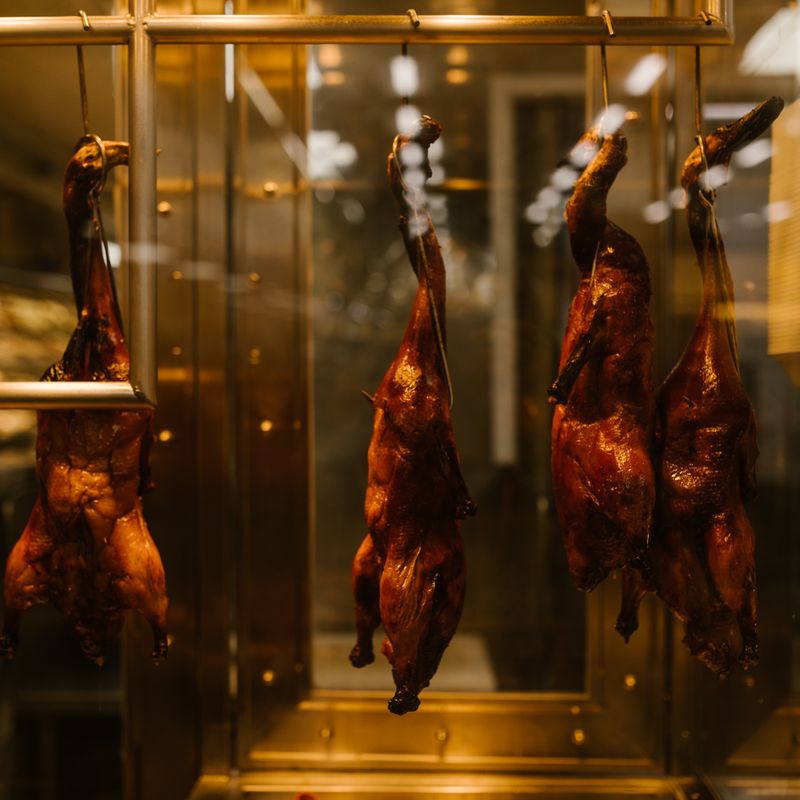
Quick Pomegranate Glazed Duck Breast with Couscous
Pan-seared duck breasts with crispy skin and fully cooked, tender meat are topped with a tangy-sweet pomegranate molasses glaze studded with fresh pomegranate seeds. Served over fluffy pearl couscous and garnished with toasted pistachios and herbs, this elegant yet quick dish delivers Middle Eastern flavors in just 30 minutes.
- Prep
- 10 min
- Cook
- 18 min
- Wait
- 2 min
- Total
- 30 min
- Makes
- 2 servings (2 duck breasts with 1 cup couscous)
Steps
Before you start
- Remove duck breasts from the refrigerator 15 minutes before cooking
- Pat duck skin completely dry with paper towels—this is essential for crispy skin
- Have all ingredients measured and ready
Start the couscous
- In a small saucepan, bring the chicken broth (300 ml) to a boil over high heat.
- Add the pearl couscous (150 g) and stir once to separate any clumps.
- Return to a boil, then reduce heat to low, cover, and set aside to cook.
+ Show details− Hide details
Ready when: Broth is fully absorbed and couscous is tender
Tip: Don't skip bringing the broth to a boil first—it helps the couscous cook evenly.
Sear the duck skin side down
- Season both duck breasts on the skin side with ¾ tsp (4 g) kosher salt and ½ tsp (1 g) black pepper.
- Place a 12-inch skillet over medium-high heat (do not add oil).
- Once hot, place both duck breasts skin side down in the dry pan.
- Sear for 6–7 minutes, adjusting heat as needed to maintain a steady sizzle.
- The skin should render and turn deep golden brown, and fat will begin pooling in the pan.
+ Show details− Hide details
Ready when: Skin is deep golden brown and meat releases easily from the pan
Tip: Start skin side down on a cool pan so the skin doesn't burn before fat renders; the rendered fat is your cooking medium.
Sear the meat side
- Flip the duck breasts and sear the meat side for 5–6 minutes over medium-high heat.
- The meat should be golden brown and an instant-read thermometer inserted into the thickest part should reach 165°F (74°C), which is the safe internal temperature for poultry.
- This ensures the duck is fully cooked and safe to eat.
+ Show details− Hide details
Ready when: Meat side is golden; instant-read thermometer reads 165°F (74°C)
Tip: Use a meat thermometer to check the thickest part of the breast away from bone. Duck is fully cooked and safe at 165°F; at this temperature the meat will still be tender and moist if not overcooked beyond this point.
Rest the duck
- Transfer the cooked duck breasts to a cutting board, skin side up.
- Tent loosely with foil and let rest for 2 minutes while you finish the glaze.
- This allows juices to redistribute and the meat to relax.
+ Show details− Hide details
Ready when: Duck is rested and ready to slice
Tip: Resting is crucial: it keeps the meat juicy and easier to slice cleanly.
Make the pomegranate glaze
- Pour off all but 1 tbsp of the duck fat from the skillet (reserve extra for another use if desired), keeping the skillet over medium heat.
- Add the minced garlic (5 g) and sauté for 30 seconds until fragrant.
- Add the pomegranate molasses (80 ml), honey (23 g), and Dijon mustard (15 g).
- Whisk well to combine and bring to a gentle simmer.
- Let it bubble for 1–2 minutes, stirring occasionally, until the sauce reduces slightly and becomes glossy.
- The glaze should coat the back of a spoon lightly.
- Do not let it burn.
+ Show details− Hide details
Ready when: Sauce is glossy and coats the back of a spoon lightly; no burnt edges
Tip: Watch the glaze carefully—it can scorch quickly. If it starts to caramelize too dark on the edges, remove from heat immediately.
Finish the couscous
- Fluff the cooked couscous with a fork, breaking up any clumps.
- Stir in the butter (14 g) until melted and incorporated.
- Taste and adjust seasoning with a pinch of salt and pepper if needed.
+ Show details− Hide details
Ready when: Couscous is fluffy and butter is evenly distributed
Tip: Fluff gently with a fork to avoid clumping; don't stir vigorously or you'll break up the tender grains.
Plate and garnish
- Divide the warm couscous between two plates.
- Slice each duck breast against the grain into ½-inch (1.3 cm) slices, then fan the slices over the couscous.
- Drizzle each plate with the pomegranate glaze (about 2 tbsp per plate).
- Scatter fresh pomegranate seeds (75 g total) over both plates, then top with chopped pistachios (40 g total) and fresh mint (10 g total).
- Add cilantro if using (12 g).
- Serve immediately while the duck is still warm.
+ Show details− Hide details
Ready when: Plates are assembled and ready to serve
Tip: Slice the duck just before serving so the heat helps warm the couscous. Serve immediately for the best texture contrast.
Good to know
Tips
- Pat the duck skin completely dry before cooking—any moisture will prevent the skin from crisping. This is the single most important step for perfect skin texture.
- Duck must reach an internal temperature of 165°F (74°C) for food safety, which is the USDA safe temperature for all poultry. Measure in the thickest part of the breast, away from any bone. At this temperature, the duck will be fully cooked, safe to eat, and still tender and moist.
- Pomegranate molasses is a tangy, thick reduction of pomegranate juice. It is not the same as pomegranate juice or grenadine. Look for it in Middle Eastern or specialty markets, or order online. It keeps in the pantry for up to 2 years.
- The rendered duck fat is liquid gold—save any excess for cooking vegetables, potatoes, or eggs later in the week. Store it in the fridge in a covered container for up to 2 weeks.
Storage & reheating
Cooked duck and couscous can be refrigerated separately in airtight containers for up to 2 days. The glaze keeps for 3 days in the fridge. To reheat: Warm couscous gently in a skillet with a splash of broth over medium heat, stirring occasionally. Slice cold duck and warm in a dry skillet over medium-high heat for 1–2 minutes per side, then rewarm the glaze separately and spoon over. This dish does not freeze well due to the texture of the duck skin.
Substitutions
- pomegranate molasses → balsamic vinegar (use 3 tbsp / 45 ml) mixed with 1 tbsp honey. Less authentic but delivers a tangy-sweet glaze. The flavor profile shifts from Middle Eastern to Italian.
- pearl couscous → jasmine rice, wild rice, or farro in the same amount by weight. Adjust cooking time and liquid as needed per grain instructions. Jasmine rice works best for a quick dinner.
- roasted salted pistachios → toasted sliced almonds or walnuts. Almonds provide a milder, buttery crunch; walnuts are earthier. Toast them lightly to intensify flavor.
- fresh mint leaves → fresh parsley or basil. Parsley is mild and won't overpower; basil adds an Italian note. Use the same amount.
More main dishes
See all →


Find more like this
- Meal
- Dinner
- Cuisine
- Middle Eastern
- Diet
- Halal
- Method
- Stovetop