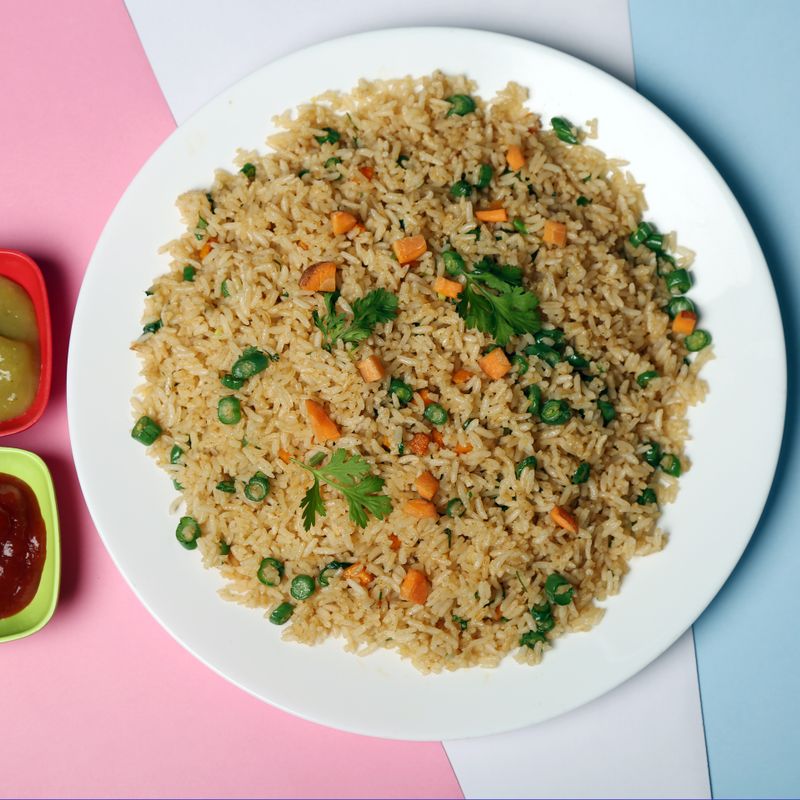
Oyster Sauce Chestnut Rice with Charred Bok Choy
A savory stir-fried rice made with day-old long-grain rice, roasted chestnuts, and umami-rich oyster sauce, finished with charred bok choy on the side. The nutty sweetness of chestnuts balances the salty oyster sauce, while the crispy-edged bok choy adds textural contrast. This dish comes together quickly and makes excellent use of leftover rice.
Steps
Before you start
- Cook rice the day before and refrigerate it (cold rice stir-fries better and won't clump)
- Have all ingredients prepped and measured before you begin—stir-frying moves quickly
- Use roasted, unsalted chestnuts (sold in jars or vacuum-packed); raw or canned chestnuts in syrup won't work
Char the bok choy
- Heat 1 tablespoon (15 ml) of neutral oil in a 14-inch (35 cm) wok or large skillet over medium-high heat until shimmering, about 1 minute.
- Arrange the bok choy pieces cut-side down in a single layer.
- Let them sit undisturbed for 3–4 minutes until the cut sides are golden brown and caramelized.
- Flip and cook the other side for 2 minutes.
- Transfer to a plate and season lightly with white pepper.
- Set aside.
+ Show details− Hide details
Ready when: Cut sides are deep golden brown; outer leaves are slightly wilted
Tip: Don't move the bok choy while charring—this develops color and flavor. A thin layer of oil is enough; too much will prevent browning.
Start the rice base
- Add the remaining 2 tablespoons (30 ml) of neutral oil to the same wok (no need to wash it; the browned bits add flavor).
- Heat over medium-high heat for 30 seconds until shimmering.
- Add the minced garlic and ginger, stirring constantly for 30 seconds until fragrant.
- Pour in the oyster sauce and soy sauce, stirring to combine, about 20 seconds.
+ Show details− Hide details
Ready when: Aromatics are fragrant; sauce is bubbling slightly
Tip: Garlic and ginger burn quickly at high heat, so move straight to the sauce. The fond (browned bits) from charring adds depth.
Stir-fry the rice
- Add the cold rice to the wok in batches, breaking up any clumps with the wooden spoon as you add it.
- Once all the rice is in, keep stirring continuously for 2–3 minutes, making sure every grain comes into contact with the sauce.
- The rice should be warm and evenly coated, with no white clumps remaining.
+ Show details− Hide details
Ready when: Rice is uniformly coated, hot throughout, and grains are separate and fluffy
Tip: Cold day-old rice breaks apart easily and won't stick together. Fresh warm rice will clump no matter how much you stir.
Add the chestnuts
- Gently fold the halved chestnuts into the rice with a few strokes of the wooden spoon.
- Stir for another 30 seconds to heat them through and distribute evenly.
- Taste the rice and season with additional white pepper if needed.
+ Show details− Hide details
Ready when: Chestnuts are heated through and evenly distributed throughout the rice
Tip: Fold gently to keep chestnuts intact; rough stirring will break them into pieces. Taste before adding more seasoning, as oyster sauce is quite salty.
Finish and serve
- Drizzle the toasted sesame oil over the rice and give everything one final stir to combine, about 15 seconds.
- Transfer the rice to a serving platter or divide among bowls.
- Arrange the charred bok choy pieces on top or alongside the rice.
- Scatter the sliced scallions over the top if using.
- Serve immediately while the rice is hot and the bok choy still has a slight crispness.
+ Show details− Hide details
Ready when: Sesame oil is mixed in; bok choy is warm and crispy-edged
Tip: Sesame oil is pungent and can overpower if too much is used. Add it at the end so its fragrance stays bright. Serve immediately for the best texture contrast.
Good to know
Tips
- Cook rice 1 day ahead: freshly cooked rice is too moist and will clump during stir-frying. Cold rice breaks apart into individual grains and gives the best texture.
- Keep your ingredients and wok very hot: stir-frying is a quick technique, and a crowded, cool wok will steam the rice instead of giving it a light, fluffy texture.
- Roasted chestnuts are essential here: they're already cooked and break apart if overhandled. Canned or fresh raw chestnuts won't give the same nutty depth or texture.
- For a protein boost, add cubed firm tofu, diced chicken (cooked), or scrambled eggs in step 2, right after the garlic and ginger, and stir until warmed through.
Storage & reheating
Store leftovers in an airtight container in the refrigerator for up to 3 days. Reheat in a wok or large skillet over medium heat with a splash of water or stock until warmed through, about 3–4 minutes. The bok choy is best eaten fresh; if making ahead, charred bok choy can be reheated gently but will lose its crispness.
Substitutions
- roasted, unsalted chestnuts → Halved or quartered cashews. Cashews provide similar sweetness and texture but are softer. They won't need halving and will blend more readily into the rice.
- bok choy → Chinese broccoli (gai lan) or regular broccoli cut into florets. Both char well and have a similar tender-crisp texture when cooked this way. Gai lan is closer in flavor; broccoli takes slightly longer to char.
- oyster sauce → Hoisin sauce (use same amount) or soy-based stir-fry sauce. Hoisin is slightly sweeter and thicker; stir-fry sauce is more complex but less concentrated. You may need to adjust quantity slightly.
- white pepper → Black pepper. Black pepper is more assertive and will be visible in the finished dish; use slightly less (about 50% of the amount).
More fried rice
See all →


Find more like this
- Meal
- Dinner
- Cuisine
- Chinese
- Main ingredient
- Leftover Rice
- Method
- Stovetop