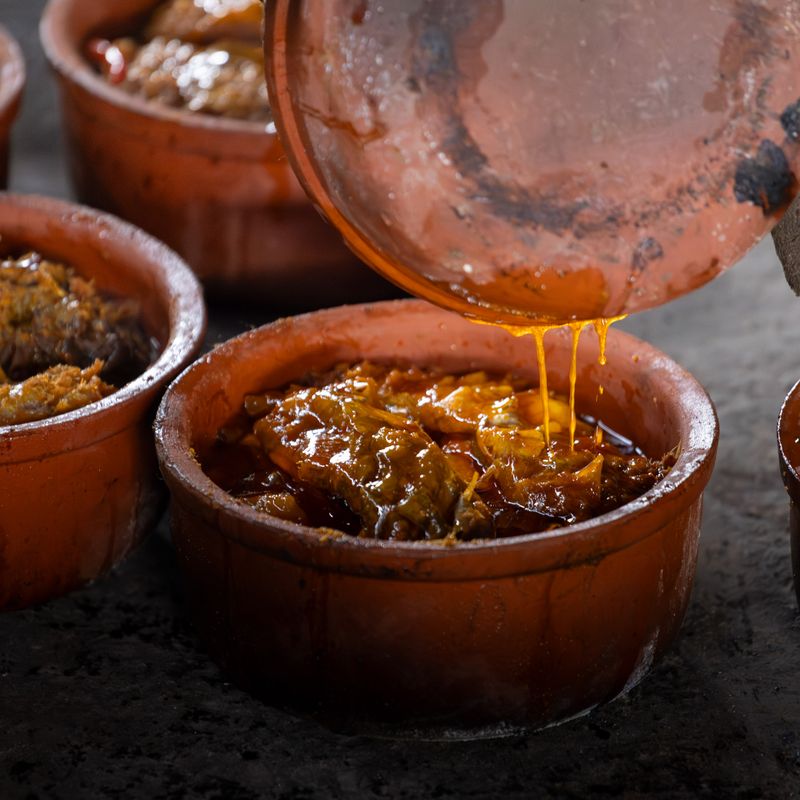
One-Pot Sourdough Vietnamese Pork and Caramel Glaze with Bread Dippers
A Vietnamese-inspired one-pot braise that merges pork shoulder, caramelized shallots, and savory-sweet fish sauce into a rich, glossy glaze. Chunks of sourdough bread are toasted until crisp, then dunked into the braising liquid or served alongside to soak up every drop of sauce. The bread absorbs the aromatic pork broth while maintaining a tender crumb—a textural contrast that elevates both the stew and the bread. This humble dish is comfort food at its most satisfying.
- Prep
- 25 min
- Cook
- 1 hr 30 min
- Wait
- 15 min
- Total
- 2 hr 10 min
- Makes
- 4 servings with bread
Steps
Before you start
- Pat pork shoulder dry with paper towels so it browns properly
- Have all aromatics prepped before you start cooking
- Use a heavy-bottomed pot or Dutch oven at least 5 quarts
- Slice sourdough bread at least 1 hour before serving so it can firm up slightly
Brown the pork
- Heat the vegetable oil in a 5-quart Dutch oven or heavy-bottomed pot over medium-high heat until shimmering, about 2 minutes.
- Working in batches to avoid crowding, add the pork shoulder chunks and sear for 3–4 minutes per side until deep golden brown.
- Don't stir constantly; let each side sit so a crust forms.
- Transfer browned pork to a clean plate.
- You should have richly caramelized meat.
+ Show details− Hide details
Ready when: Pork is deep golden brown on multiple sides
Tip: Don't crowd the pot; if pieces touch, they'll steam instead of brown. Dry meat browns better than wet meat.
Caramelize shallots
- Reduce heat to medium.
- Add the halved shallots to the pot, flat side down first, and cook undisturbed for 4 minutes until the cut side turns golden and caramelized.
- Flip and cook another 2 minutes.
- This develops the sweet, nutty foundation of the sauce.
- Transfer shallots to the plate with the pork.
+ Show details− Hide details
Ready when: Shallot flat sides are deep golden brown
Tip: Starting flat side down captures maximum caramelization; flip only once so they stay intact.
Build the aromatics
- To the same pot, add the minced garlic and thin-sliced ginger.
- Cook, stirring constantly, for 1 minute until fragrant.
- The garlic should just begin to brown at the edges but not burn.
- Scrape up any browned bits stuck to the pot's bottom—this is flavorful fond that belongs in your sauce.
+ Show details− Hide details
Ready when: Aromatics are fragrant and garlic begins to brown slightly
Tip: Ginger should be thin enough to soften quickly; if it's thick, it won't fully cook during braising.
Deglaze and season
- Pour in the fish sauce and soy sauce, stirring to loosen all the caramelized fond from the bottom of the pot.
- Add the palm sugar and stir until it dissolves completely into a glossy, dark liquid, about 1 minute.
- The mixture should smell deeply savory and slightly sweet.
+ Show details− Hide details
Ready when: Sugar is dissolved and sauce coats the spoon
Tip: Palm sugar dissolves faster if you break it into small pieces before adding. Don't skip deglazing—that fond adds tremendous depth.
Return meat and add spices
- Return the browned pork and caramelized shallots to the pot.
- Add the star anise pods, cinnamon stick pieces, black pepper, chicken stock, and water.
- Stir to combine so the meat is mostly submerged in the braising liquid.
- The liquid should come about three-quarters of the way up the pork.
+ Show details− Hide details
Ready when: Pork is mostly submerged and ingredients are well combined
Tip: The spices infuse as the liquid simmers; don't feel like you need a huge amount of liquid—the pork releases its own juices.
Braise the pork
- Bring the liquid to a gentle boil over medium-high heat, then reduce to medium-low, cover with the lid slightly ajar, and simmer for 75 minutes, stirring occasionally.
- The pork should be fork-tender and the liquid should have reduced and darkened into a rich glaze coating the meat.
- After 1 hour, check that the pork is becoming tender; if the braising liquid is reducing too quickly, lower the heat slightly.
+ Show details− Hide details
Ready when: Pork is fork-tender and liquid has reduced to a glossy glaze
Tip: A partly covered lid lets steam escape gradually so the sauce concentrates without drying out the meat. If liquid is too thin after 75 minutes, simmer uncovered for another 5–10 minutes.
Toast the breadOven 375°F / 190°C
- While the pork is in its final minutes of braising, prepare the sourdough.
- Cut the loaf into 1-inch cubes (you should have about 3 cups).
- Toss with melted butter and a pinch of salt.
- Spread on a large skillet or baking sheet in a single layer and toast over medium heat (or in a 375°F / 190°C oven) for 8–10 minutes, stirring halfway through, until the edges are crispy and golden but the inside is still tender.
+ Show details− Hide details
Ready when: Bread is golden and crispy on edges, tender inside
Tip: Don't overtoast; you want contrast between crispy outside and tender interior so the bread can still absorb sauce. Stir halfway through to ensure even cooking.
Taste and adjust
- Remove the pot from heat and taste the braising liquid.
- Fish sauce can sometimes need balancing: if it's too intense, add a splash more water and stir; if it's too mild, a few more drops of fish sauce deepen the umami.
- Add salt to taste.
- The sauce should be glossy, dark, and coat the pork luxuriously.
+ Show details− Hide details
Ready when: Sauce is balanced and coats the spoon
Tip: Taste for salt after the long simmer; much of the original salt may have concentrated, but you might need a touch more for final balance.
Serve
- Ladle the pork and sauce into shallow bowls or wide plates, making sure each serving gets some of the caramelized shallots and aromatic pieces.
- Top with toasted sourdough bread cubes.
- If desired, garnish with sliced scallions, fresh cilantro, and a pinch of chili flakes for heat.
- Serve immediately, encouraging diners to dunk the warm bread into the glossy sauce and let it soak up every bit.
+ Show details− Hide details
Tip: Serve in shallow vessels so bread can be easily dunked. Cold bread with hot sauce is the exact opposite of what you want—timing matters.
Good to know
Tips
- The success of this dish relies on building layers of caramelization—first on the pork, then the shallots. Don't skip the browning step; it creates the flavor foundation that no amount of simmering can replicate.
- Fish sauce is pungent raw but mellows beautifully during a long braise. If you're skeptical, trust the process; the end result is savory and balanced, not fishy.
- The bread's texture is essential: toasted until the outside is crisp but the inside still tender so it absorbs sauce like a sponge while maintaining its structure. Overtoasted bread will be too hard and won't soak up the glaze.
- Make this a day ahead if you're entertaining. The flavors deepen overnight, the sauce becomes more cohesive, and you can simply reheat it gently while toasting fresh bread.
Make ahead
The pork can be braised and cooled up to 2 days ahead. Reheat gently in the pot over medium-low heat until warmed through, about 15 minutes. Toast the bread fresh just before serving so it retains its texture."
Storage & reheating
Refrigerate the braised pork and sauce in an airtight container for up to 3 days. The bread cubes are best eaten fresh but can be stored in an airtight container at room temperature for 1 day; recrisp in a 300°F (150°C) oven for 5 minutes if they soften. Freeze the pork and sauce together for up to 3 months. Do not freeze bread; toast a fresh batch after reheating the pork.
Substitutions
- palm sugar or light brown sugar → light brown sugar or coconut sugar. Use 1:1 by weight. Both dissolve and caramelize similarly, though coconut sugar may give a subtle nuttiness.
- fish sauce → soy sauce or tamari (use 3 tablespoons in place of 4 tablespoons fish sauce). You lose the distinctive umami funk of fish sauce, but the sauce will still be savory and rich. Taste and adjust salt accordingly.
- sourdough bread, cut into 1-inch (2.5 cm) cubes → crusty white bread, brioche, or even torn focaccia. Sourdough's tang pairs beautifully with the Vietnamese flavors, but any sturdy bread that can be toasted and won't dissolve immediately works.
- pork shoulder, cut into 1½-inch (4 cm) chunks → beef chuck or lamb shoulder. Both braise beautifully and absorb the caramelized sauce. Beef is richer; lamb adds a more aromatic quality. Use the same weight and cooking time.
More stews
See all →


Find more like this
- Meal
- Dinner
- Cuisine
- Vietnamese
- Main ingredient
- Pork Shoulder
- Method
- Stovetop
- Quick & Easy
- One-Pot