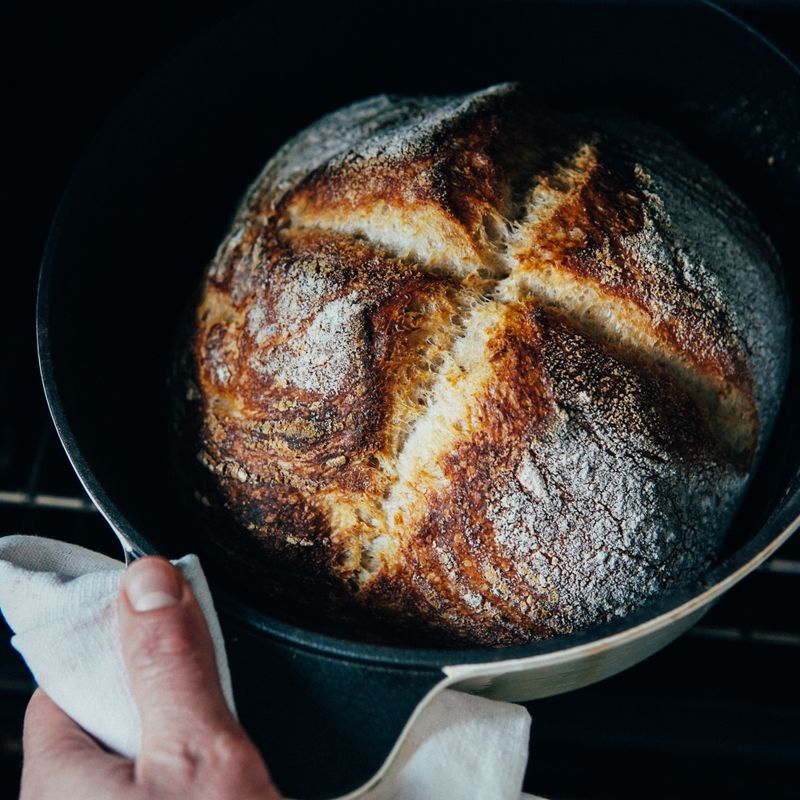
One-Pot Sourdough Hungarian Goulash with Crispy Bread Strips
A rustic Central European braise combining tender beef chuck, caramelized onions, and warm spices built on sourdough's tangy depth. Toasted sourdough cubes thicken the stew and serve as a crispy garnish, while a handful of caraway seeds and paprika anchor the authentic Hungarian flavor. Cooked entirely in one pot with minimal active time—perfect for weeknight comfort food.
- Prep
- 20 min
- Cook
- 2 hr
- Wait
- 15 min
- Total
- 2 hr 35 min
- Makes
- 6 servings (about 2 cups per bowl)
Steps
Before you start
- Pat beef dry with paper towels so it browns deeply, not steams
- Cut sourdough into two distinct sizes: ½-inch cubes for thickening and ¾-inch strips for crisping
- Have paprika, caraway seeds, and fresh herbs within arm's reach
Season and sear beef
- Pat the beef chunks thoroughly dry with paper towels.
- Season generously with kosher salt and black pepper on all sides.
- Heat the vegetable oil in a 7- to 8-quart (6.5–7.6 L) Dutch oven over medium-high heat until it shimmers, about 2 minutes.
- Working in two batches so you don't overcrowd the pan, sear the beef for 3–4 minutes per side until deeply browned (you're building color and flavor, not cooking through).
- Transfer to a plate.
+ Show details− Hide details
Ready when: Meat is dark golden brown on all sides; do not skip this step
Tip: Don't move the meat while it sears—let it sit 3 minutes per side for a proper crust. Dry meat browns; wet meat steams.
Build the aromatic base
- Lower heat to medium.
- Add the sliced onions to the pot and cook, stirring frequently with a wooden spoon, for 8–10 minutes until they soften and begin to caramelize.
- You should smell sweet onion aroma and see light golden color at the edges.
- Add the minced garlic and cook for another 1 minute until fragrant.
+ Show details− Hide details
Ready when: Onions are soft and golden; garlic is fragrant but not browned
Tip: Medium heat prevents the garlic from burning while the onions soften. Rushing this step on high heat hardens the onions.
Bloom spices and tomato
- Add the paprika, caraway seeds, and tomato paste to the onions.
- Stir constantly for 1–2 minutes until the mixture is fragrant and the tomato paste darkens slightly.
- This 'blooming' releases the essential oils in the spices, deepening the flavor.
+ Show details− Hide details
Ready when: Spices smell warm and complex; tomato paste is brick-red
Tip: Blooming spices in fat amplifies their flavor—don't skip this brief step. If the mixture begins to scorch, add a splash of stock immediately.
Deglaze and build the braise liquid
- If using red wine, pour it into the pot and scrape up any browned bits from the bottom with your wooden spoon—this is liquid gold.
- Let it simmer for 2 minutes to reduce slightly and cook off some alcohol.
- Then add the beef stock (and return the seared beef to the pot along with any accumulated juices).
- Add the bay leaves and thyme sprigs.
- Stir well to combine.
+ Show details− Hide details
Ready when: Liquid simmers gently; beef is submerged or mostly submerged
Tip: Deglazing with wine (or stock, if you prefer) dissolves caramelized fond stuck to the pot—that's where the deep savory flavor lives. Scrape vigorously.
Begin the braise
- Bring the liquid to a gentle simmer over medium heat.
- Once small bubbles break the surface consistently (not a rolling boil), cover the pot with a tight-fitting lid and reduce heat to low.
- Let the goulash simmer gently for 1.5 to 1 hour 45 minutes.
- The beef should be very tender and yield easily to a fork or knife when pierced.
+ Show details− Hide details
Ready when: Beef chunks break apart with minimal resistance when pierced with a fork; liquid is reduced by about one-third
Tip: Keep the lid on to retain moisture and prevent evaporation. If the liquid reduces too quickly, lower the heat further or add a few splashes of stock.
Toast the sourdough strips
- While the goulash is braising (about 30 minutes before it finishes), prepare the crispy bread garnish.
- Heat the butter in a large skillet over medium heat.
- Once foaming, add the ¾-inch sourdough strips in a single layer.
- Toast for 4–5 minutes, shaking the pan occasionally, until the strips are golden brown and crispy on all sides.
- Transfer to a paper towel-lined plate and season lightly with salt.
+ Show details− Hide details
Ready when: Bread strips are golden brown, firm, and crispy when cooled
Tip: Don't rush this step on high heat or the outsides will brown before the insides crisp. Medium heat gives even, gentle toasting.
Thicken with sourdough cubes
- When the beef is fork-tender, use a slotted spoon to crush the ½-inch sourdough cubes directly into the simmering braise.
- Stir well for 2–3 minutes.
- The bread will partially dissolve and create a silky, slightly rustic thickener—it won't be smooth like flour-based roux, but rather soft and integrated.
- The sourdough's acidity also brightens the rich beef flavor.
+ Show details− Hide details
Ready when: Bread cubes are mostly dissolved; liquid is noticeably thicker and coats the back of a spoon
Tip: Use your spoon to gently mash the sourdough cubes as you stir—this releases their starch and creates the thickening effect. Don't over-blend or the stew becomes gluey.
Finish and adjust seasoning
- Remove the pot from heat.
- Fish out and discard the bay leaves and thyme sprigs.
- If using sour cream, stir it in until fully incorporated (this adds richness and a subtle tang that complements the paprika and sourdough).
- Taste the goulash and adjust seasoning with additional salt and pepper as needed.
- The flavor should be bold, warming, and complex—with layers of paprika, caraway, and tangy sourdough.
+ Show details− Hide details
Ready when: Bay leaves and thyme are removed; sour cream is fully integrated with no streaks
Tip: Taste before serving, not after—sour cream cools the braise and mutes flavors slightly, so season when hot for clarity.
Serve and garnish
- Ladle the goulash into shallow bowls (about 2 cups per serving).
- Top each bowl with a handful of crispy sourdough strips and a sprinkle of fresh flat-leaf parsley.
- The strips will soften slightly as they sit but retain their crunch.
+ Show details− Hide details
Tip: Add the crispy strips just before serving so they stay crunchy. They soften quickly if buried in hot liquid for too long.
Good to know
Tips
- Sour cream should always be stirred in off the heat—if the goulash is boiling when you add it, the cream can curdle or separate. Let it cool for 30 seconds if you're nervous.
- The sourdough cubes are your thickener—they replace flour roux, which fits the bread-forward theme and adds sourdough's characteristic tang. Don't puree; gentle stirring creates a rustic, integrated texture.
- Caraway seeds are essential to authentic Hungarian goulash and their small amount is potent—don't omit. If you dislike caraway, you can reduce it to ¾ teaspoon, but the goulash will lose its traditional character.
- Make this in a Dutch oven or large pot with a tight-fitting lid so the braise stays moist and the beef stays submerged. A loose lid or open pot will evaporate too much liquid.
Make ahead
You can braise the goulash up to step 7 (before adding sour cream) up to 2 days ahead. Cool, cover, and refrigerate. Reheat gently on the stovetop over medium-low heat with a splash of stock, then stir in sour cream and season just before serving. Toast the sourdough strips up to 4 hours ahead and store in an airtight container; rewarm briefly in a 300°F (150°C) oven for 5 minutes if needed.
Storage & reheating
Room temperature: up to 2 hours after cooking. Refrigerator: cover and store for up to 4 days; reheat gently on the stovetop over medium-low heat, adding a splash of stock if needed. Freezer: cool completely, transfer to a freezer-safe container (omit the sour cream before freezing), and freeze for up to 3 months. Thaw overnight in the refrigerator and reheat gently; add sour cream after reheating. Store crispy sourdough strips separately in an airtight container at room temperature for up to 2 days.
Substitutions
- Hungarian sweet paprika (or Spanish smoked paprika) → Spanish smoked paprika (pimentón) or Hungarian hot paprika if you prefer more heat. Sweet paprika is traditional; hot paprika will add gentle spice. Use the same weight; smoked paprika adds a slightly different (but delicious) flavor profile.
- beef chuck roast, cut into 1½-inch (4 cm) chunks → beef brisket or pork shoulder. Chuck is the goulash standard; brisket takes slightly longer (add 20 minutes) and has more fat cap to render; pork shoulder yields a lighter, less rich version.
- sourdough bread, cut into ½-inch (12 mm) cubes for thickening → day-old white bread, rye bread, or pumpernickel. Sourdough provides tang and structure; rye or pumpernickel adds earthiness and more body; plain white bread works but lacks the sourness that brightens the beef.
- dry red wine (optional but recommended) → beef stock or water with 1 tablespoon red wine vinegar. Wine adds depth; stock alone is milder. If omitting wine entirely, add the vinegar to keep the acidity and brightness.
More stews
See all →


Find more like this
- Meal
- Dinner
- Cuisine
- Southern
- Main ingredient
- Beef Roast
- Diet
- Sugar-Free
- Method
- Stovetop
- Season
- Winter Comfort Food