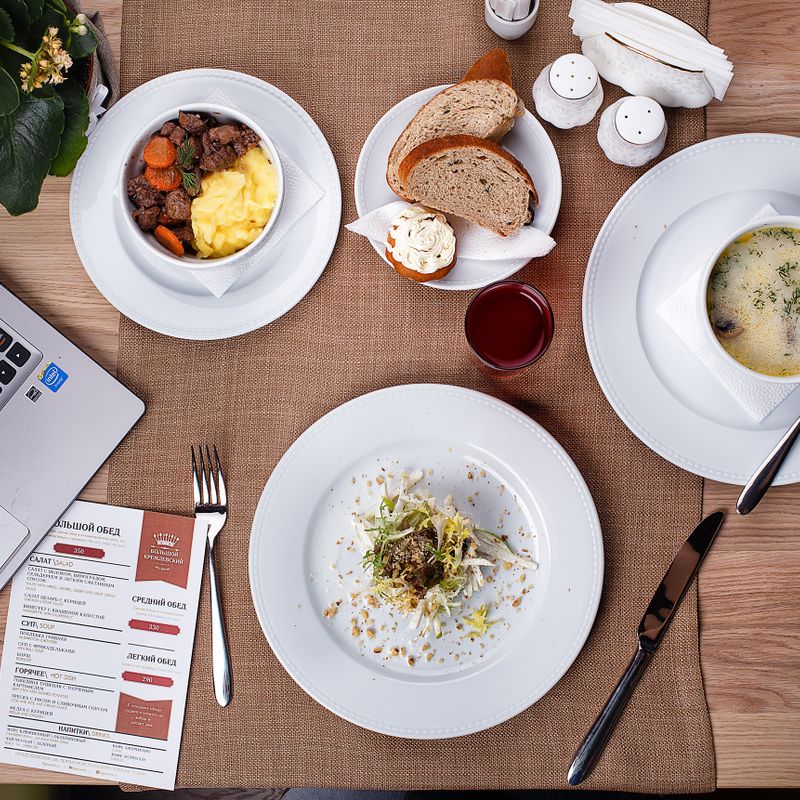
Slow Cooker Sourdough Braised Beef Stew Bread Bowls
A rustic, showstopping dinner where tender, wine-braised beef stew is served in warm, crusty sourdough bread bowls. The stew cooks unattended in the slow cooker on low heat for 7–8 hours while you mix, bulk ferment, shape, and bake fresh sourdough dough from scratch. All components come together beautifully at dinner time. You can also make the bread bowls a day ahead for convenience. Serves 4 generously with about 2 cups (480 ml) of stew per person.
- Prep
- 50 min
- Cook
- 15 min
- Wait
- 8 hr
- Total
- 9 hr 5 min
- Makes
- 4 bread bowls with beef stew (about 2 cups stew per serving)
Steps
Before you start
- Ensure your sourdough starter is active and bubbly—feed it 4–8 hours before mixing the dough so it's at peak rise
- Arrange your oven rack to the middle position and have it ready to preheat to 475°F (245°C) before you bake bread
- Read through the full recipe to understand the parallel timing: dough bulk ferments while you prep and start the stew
- Have a 6–8 quart (5.7–7.5 liter) slow cooker clean and ready, positioned on your counter
- Plan for about 9 hours of elapsed time from start to finish, with much of that being passive waiting
Mix and bulk ferment dough
- In a large bowl, combine 1 cup (250 ml) active, fed sourdough starter, 1¼ cups (300 ml) warm water (75–80°F/24–27°C), and 3 cups (375 g) bread flour.
- Stir until all flour is incorporated and a shaggy dough forms; let rest uncovered for 20 minutes (autolyse).
- Add 2 tsp (12 g) salt and mix thoroughly by folding dough over itself until salt is fully distributed and dough feels cohesive (about 2 minutes).
- Cover with a damp kitchen towel and bulk ferment at room temperature (68–72°F/20–22°C) for 4–8 hours.
- Fold the dough gently but firmly every hour for the first 4 hours: cup one hand and pull dough from the side toward the center, rotate the bowl 90 degrees, repeat 4–6 times per fold.
- Dough should increase in volume by 50–75% and show visible bubbles throughout when ready to shape.
+ Show details− Hide details
Ready when: Dough increases 50–75% in volume, shows visible bubbles throughout, passes poke test (indent springs back slowly over 3–5 seconds)
Tip: Use this bulk fermentation time to prep and start the stew—brown the beef and build it in the slow cooker while dough ferments. Plan to start the stew 30 minutes into bulk ferment so it has plenty of time to cook.
Brown the beefOven 400°F / 205°C
- While dough bulk ferments, heat 2 tbsp (30 ml) olive oil in a large skillet over medium-high heat (about 400°F/200°C) until shimmering.
- Pat 2 lbs (900 g) beef chuck cubes very dry with paper towels—moisture prevents browning.
- Season generously with salt and black pepper on all sides.
- Working in batches of 5–6 pieces, sear beef for 2–3 minutes per side without crowding the pan (crowding causes steaming instead of browning).
- Each batch should develop a deep brown crust.
- Transfer browned beef to slow cooker as you finish batches.
- Do not discard browned bits in the pan; they add flavor to the stew.
+ Show details− Hide details
Ready when: All beef pieces are deep brown on all sides; no pink meat is visible
Tip: Browning is crucial for developing deep, savory flavor through the Maillard reaction. Don't skip this step. If your pan isn't large enough, be patient—browning properly takes time and is well worth it.
Build the stew in slow cooker
- Pour 4 cups (950 ml) beef broth and 1 cup (240 ml) red wine (or additional broth and vinegar) into the slow cooker with browned beef.
- Stir in 2 tbsp (30 g) tomato paste until combined and smooth.
- Add 3 medium carrots (cut into 1-inch chunks), 1 lb (450 g) Yukon gold potatoes (cut into 1-inch cubes), 2 celery stalks (cut into ½-inch pieces), and 1 large yellow onion (cut into 1-inch chunks).
- Stir in 4 minced garlic cloves and 4–5 fresh thyme sprigs (or 1 tsp dried thyme).
- Season generously with salt and black pepper to taste.
- Stir everything well so tomato paste is distributed.
- Cover slow cooker and set to LOW heat.
- Cook for 7–8 hours (or HIGH for 4–5 hours if pressed for time).
- If your slow cooker runs hot, begin checking at 6 hours.
+ Show details− Hide details
Ready when: Beef is very tender and falls apart easily with a fork; vegetables are soft but not mushy; broth is rich and flavorful
Tip: Use LOW heat for the most tender meat and best flavor development. If you prefer thicker stew, you'll add thickener near the end (see Step 7), so don't worry if it looks thin now.
Shape the sourdough bowls
- Turn bulk-fermented dough onto a lightly floured work surface.
- Divide into 4 equal portions (about 230 g / 8 oz each).
- Shape each piece into a tight ball by cupping both hands around the dough and pulling it gently toward you in small overlapping motions, creating surface tension on the top.
- Work around the dough, tightening the surface until it feels taut.
- Flip each ball seam-side down and place on a parchment-lined baking sheet, spacing them 3 inches (7.5 cm) apart.
- Do not cover yet—you'll cover before the final proof begins.
+ Show details− Hide details
Ready when: Four smooth, evenly shaped balls of dough arranged on the sheet, seam-side down with tight surfaces
Tip: Create strong surface tension by pulling dough toward you as you shape. This tension helps the bowls rise upward and maintain their shape rather than spreading flat.
Final proof the bowls
- Cover the shaped dough loosely with a clean kitchen towel, draping it so it doesn't touch the dough.
- Let final proof at room temperature (68–72°F/20–22°C) for 1–2 hours until the dough is visibly puffy, light, and airy.
- To check readiness, gently poke the side of one ball with your floured finger about ½ inch (1 cm) deep.
- The indent should spring back slowly, taking 3–5 seconds to fully spring back—not immediately and not stay indented.
- (Overproofed dough where the indent doesn't spring back at all will result in flat bowls; underproofed dough where the indent springs back immediately will be dense.)
+ Show details− Hide details
Ready when: Dough has increased noticeably in size and feels airy; poke test shows indent springs back slowly over 3–5 seconds
Tip: Room temperature affects proofing time—warm kitchens proof faster (45–60 min), cool kitchens slower (2+ hours). Use the poke test rather than time as your guide for doneness.
Score and bake bread bowlsOven 475°F / 245°C
- Preheat oven to 475°F (245°C) and position rack in the middle.
- When dough passes the poke test and is ready, score each bowl with a sharp knife or bread lame, making cuts ½ inch (1 cm) deep.
- Score a tic-tac-toe pattern (two intersecting lines), an X, or a circle across the top—scoring controls where the dough expands.
- Optionally brush each bowl lightly with 1 tbsp (15 ml) olive oil to encourage browning.
- Carefully transfer parchment with dough to preheated oven on the middle rack.
- Bake for 25–30 minutes until deep golden brown all over.
- Bowls are done when the bottom sounds hollow when tapped and the internal temperature reaches 210°F (99°C) if measured.
- Cool on a wire rack for 5–10 minutes before using; bowls should still be warm when you fill them.
+ Show details− Hide details
Ready when: Bowls are deep golden brown all over; bottom sounds hollow when tapped; internal temp is 210°F (99°C); crust is firm and crackly
Tip: A hot oven (475°F) and initial crust formation are key to a crispy exterior. Don't open the oven door during the first 15 minutes, as this releases steam needed for oven spring.
Finish and season the stew
- About 20–30 minutes before you plan to serve, taste the stew and adjust seasoning with salt and black pepper.
- If you prefer a thicker stew (rather than brothier), whisk 1–2 tbsp (8–16 g) cornstarch with 3 tbsp (45 ml) cold water to form a smooth slurry with no lumps.
- Slowly stir the slurry into the simmering stew and cook for 15–20 minutes on HIGH (or continue on LOW for an additional 20–30 minutes) until thickened.
- The stew should coat the back of a spoon.
- If you prefer a brothier consistency, skip the thickener entirely—slow-cooked stew is delicious either way.
- Taste again and adjust seasoning as needed.
+ Show details− Hide details
Ready when: Stew reaches desired consistency, beef is very fork-tender, flavors are rich and well-balanced
Tip: Taste before you thicken—you may not need it. The stew will continue to thicken slightly as it cools, so don't over-thicken.
Assemble and serve
- Using a serrated knife, carefully slice off the top ¼ to ⅓ of each warm bread bowl to create a lid.
- If desired, gently pull out some of the soft interior with your fingers (save these for dunking) to create more room for stew.
- Ladle 1½–2 cups (360–480 ml) of hot beef stew into each bread bowl, filling generously.
- Garnish with a fresh thyme sprig if available.
- Serve immediately on shallow bowls or plates to catch any drips, with bread lids and reserved interior pieces on the side for eating with the stew.
+ Show details− Hide details
Ready when: Bowls are filled with hot stew, ready to eat immediately
Tip: Serve each bowl on a plate or shallow bowl to catch any stew that drips from the bread. You can eat the bowl as you go (tearing off pieces to scoop stew) or save it for the end as dessert.
Good to know
Tips
- Plan ahead: If you want to reduce same-day time pressure, make the sourdough dough and shape it the day before. Let it bulk ferment in the refrigerator overnight, then shape, proof, and bake the next day while the stew cooks. Baked bread can be warmed just before serving.
- Don't skip browning the beef. This 15-minute step develops deep, savory Maillard flavor and is absolutely worth the time. If you rush it or skip it, the stew will taste flat and one-dimensional.
- The stew improves when made a day or two ahead and reheated. If you have time, make it ahead, refrigerate, and reheat gently while you finish shaping and baking the bread. Flavors have time to settle and deepen.
- Use a slow cooker with a good seal and even heating. Very old or inconsistent slow cookers may cook faster or slower. Check the stew at 6 hours; if vegetables are already very soft, it's done early. If still firm at 8 hours, adjust your expectations in mind for future recipes.
Make ahead
"The sourdough bread bowls can be made 1–2 days ahead: after shaping and final proofing, bake as directed, then cool and store in an airtight container at room temperature. On the day you serve, warm the bowls in a 300°F (150°C) oven for 10 minutes while the stew finishes cooking. The beef stew also keeps beautifully—make it 1–2 days ahead, refrigerate, and reheat gently on the stovetop or in the slow cooker on low until warmed through. Flavors actually improve overnight."
Storage & reheating
"Leftover stew keeps 3–4 days in the refrigerator in an airtight container. Reheat on the stovetop over medium heat, stirring occasionally, for 15–20 minutes until warmed through. Baked bread bowls keep 2 days at room temperature in an airtight container; wrap in foil and warm in a 300°F (150°C) oven for 10 minutes before serving. The stew freezes well for up to 3 months in a freezer-safe container; thaw overnight in the refrigerator before reheating. Do not freeze baked bread bowls (they become dry and stale upon thawing). You may freeze unbaked shaped dough: place on a baking sheet, freeze until solid, then transfer to a freezer bag and freeze for up to 1 month. Thaw overnight in the refrigerator and proceed with final proofing and baking."
Substitutions
- Beef chuck roast → Beef short ribs, beef brisket, or pork shoulder. All work well for slow cooking. Short ribs need 6–7 hours; brisket needs 8–9 hours. Pork shoulder is delicious at 6–8 hours.
- Red wine → Dark beer, beef broth, or balsamic vinegar (2 tbsp). Wine adds depth, but beef broth works fine. Dark beer adds rich flavor; balsamic adds brightness and slight sweetness.
- Fresh thyme → Rosemary, oregano, bay leaves, or mixed dried herbs (use 1 tsp total dried). Any hearty herb works well. Avoid delicate herbs like basil or dill, which become bitter when slow-cooked.
- Yukon gold potatoes → Parsnips, turnips, rutabaga, or celery root (or mix). Cut into similar 1-inch pieces. Avoid small red potatoes as they sometimes fall apart after 8 hours; Yukon golds hold their shape best.
More stews
See all →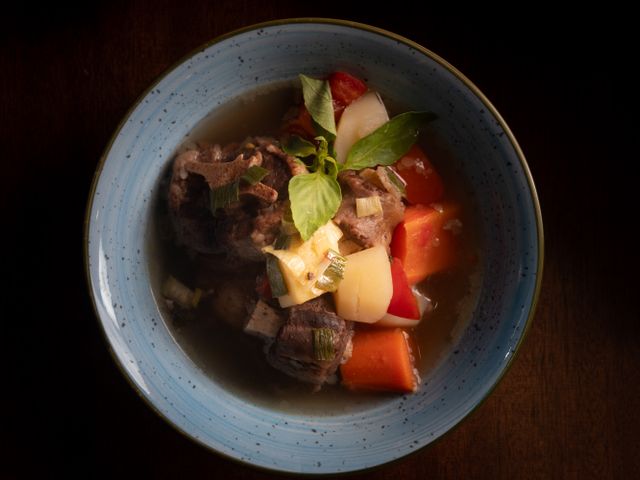
Find more like this
- Meal
- Dinner
- Cuisine
- American
- Main ingredient
- Beef RoastCarrotsPotatoes
- Method
- OvenStovetopSlow Cooker
- Quick & Easy
- Make Ahead