
One-Pot Beef and Barley Broth
A hearty, slow-simmered Eastern European broth built on beef chuck, pearl barley, and root vegetables. The beef becomes tender while infusing the broth with deep, savory flavor, and the barley swells to create a rich, satisfying texture. Perfect for cool weather eating and naturally freezer-friendly.
- Prep
- 15 min
- Cook
- 1 hr 35 min
- Total
- 1 hr 50 min
- Makes
- About 10 cups (2.4 L), 6 servings
Steps
Before you start
- Pat the beef dry with paper towels so it browns properly
- Chop all vegetables before you start cooking—there's no time to pause once the pot is hot
- Have 8 cups (2 L) of beef or chicken stock ready
Brown the beef
- Heat the olive oil in a large heavy-bottomed pot or Dutch oven (at least 6-quart capacity) over medium-high heat for 2 minutes until shimmering.
- Add half the beef cubes (about ¾ lb/340 g) in a single layer and cook without stirring for 3–4 minutes until the bottom is deeply browned.
- Stir and cook for another 2–3 minutes until most surfaces are golden-brown.
- Transfer to a plate.
- Repeat with the remaining beef, cooking it the same way.
- Do not overcrowd—browning in two batches ensures deep caramelization.
+ Show details− Hide details
Ready when: Beef is deeply browned on all sides, not gray; each batch takes 5–7 minutes total
Tip: Do not stir constantly; let the beef sit so it develops a flavorful crust. Resist the urge to crowd the pan, which steams the meat instead of browning it.
Sauté aromatics
- Reduce heat to medium.
- Add the diced onion and cook, stirring occasionally, for 4–5 minutes until soft and beginning to turn golden.
- Add the minced garlic and cook for 1 minute, stirring constantly, until fragrant.
- Do not burn the garlic.
+ Show details− Hide details
Ready when: Onion is translucent and edges are golden; garlic is fragrant but not brown
Tip: Lower the heat after browning the beef to prevent burning these delicate aromatics. Keep stirring the garlic to cook it evenly.
Build the broth
- Pour in the beef stock and use a wooden spoon to scrape up any browned bits stuck to the bottom of the pot—these are pure flavor.
- Return the cooked beef and all accumulated juices to the pot.
- Add the bay leaves and thyme sprigs.
- Stir well and bring to a boil over high heat, about 5 minutes.
+ Show details− Hide details
Ready when: Liquid is visibly bubbling across the entire surface
Tip: Deglazing the pot (scraping the browned bits) is what gives the broth its deep, savory flavor. Don't skip this step.
Add vegetables and barley
- Once the broth comes to a boil, add the carrots, celery, parsnips, and pearl barley.
- Stir well to distribute.
- Reduce heat to medium-low and bring the broth back to a gentle simmer—you should see small bubbles breaking the surface but not a rolling boil.
- Partially cover the pot with the lid slightly ajar.
+ Show details− Hide details
Ready when: Broth returns to a gentle simmer with small steady bubbles; vegetables are just starting to soften
Tip: Keep the lid slightly ajar to let steam escape while preventing excessive evaporation. A true gentle simmer extracts maximum flavor without boiling away the broth.
Simmer until beef is tender
- Cook for 60–70 minutes at a gentle simmer, stirring occasionally (every 15–20 minutes).
- The beef should be fork-tender and nearly falling apart, and the barley should have swollen and softened.
- If you want to check, a knife should slide through a piece of beef with almost no resistance.
+ Show details− Hide details
Ready when: Beef is very tender (knife cuts through easily); barley is plump and soft; broth has a rich, deep amber color
Tip: Don't let the broth boil hard—it will cloud and become bitter. If it boils, lower the heat further. Stir occasionally to ensure the barley cooks evenly and the vegetables don't stick to the bottom.
Season and finish
- Remove the pot from heat.
- Fish out and discard the bay leaves and thyme sprigs using a slotted spoon.
- Taste the broth and season with kosher salt and black pepper to your preference.
- Start with ½ teaspoon of salt and ¼ teaspoon of pepper, then adjust.
- The broth should taste rich and savory, not underseasoned or overly salty.
+ Show details− Hide details
Ready when: Herbs are removed; broth tastes well-seasoned and balanced
Tip: Taste as you season—it's easy to add salt, but you can't remove it. Remember that the broth will concentrate slightly as it cools.
Serve
- Ladle the broth into bowls, distributing the beef, vegetables, and barley evenly.
- Garnish with fresh chopped dill if desired.
- Serve hot, with fresh bread on the side.
+ Show details− Hide details
Tip: Dill is a classic pairing in Eastern European cooking; a sprig or two at the table lets diners add it to taste.
Good to know
Tips
- For a clearer, more refined broth, you can blanch the beef before browning: bring a pot of salted water to a boil, add the beef cubes, boil for 1 minute, drain, rinse under cold water, pat dry, then proceed with browning. This removes impurities and is traditional in French cooking. The broth will be more delicate but takes an extra 5 minutes.
- Save vegetable scraps and onion skins in the freezer. When making broth, toss them into the pot along with the stock for extra depth and to reduce waste.
- If the broth looks too fatty after cooling, skim the solidified fat off the top before reheating. Discard it or save it for cooking (beef fat is excellent for roasting potatoes).
- This broth is a launching point: add egg noodles, orzo, or matzo ball dumplings near the end of cooking for a more substantial meal. Add leafy greens (spinach, kale) in the last 2 minutes of cooking for added nutrition.
Make ahead
Make the broth up to 2 days ahead. Cool it completely, then cover and refrigerate. The fat will solidify on top; skim it off before reheating if you prefer a leaner broth, or leave it for extra flavor. Reheat gently on the stovetop over medium heat until simmering, stirring occasionally, about 20 minutes. Do not boil hard.
Storage & reheating
Room temperature: up to 2 hours (do not leave longer; bacteria can grow). Refrigerator: covered, up to 4 days. Freezer: in an airtight container or freezer bag, up to 3 months. To reheat from frozen, thaw overnight in the refrigerator, then warm on the stovetop over medium heat, stirring occasionally, about 20–25 minutes until simmering throughout. Alternatively, reheat directly from frozen in a covered pot over medium-low heat for 45–55 minutes, stirring occasionally.
Substitutions
- pearl barley → farro or diced potatoes (½-inch cubes). Barley is traditional and adds a nutty flavor, but farro (same cooking time) or potatoes (ready in 25–30 minutes) both work. Use the same volume. Potatoes will make a heartier, less brothy dish.
- parsnips, medium → turnips or additional carrots. Parsnips add subtle sweetness and body. Turnips are earthier and more assertive; carrots are milder. Use the same volume.
- beef chuck, cut into ¾-inch (2 cm) cubes → beef shank (cut into large pieces) or stewing beef. Both are excellent for long, slow simmering. Shank has more collagen and will produce an even silkier broth; it may take 85–100 minutes to become fully tender.
- fresh_thyme → ½ teaspoon dried thyme or 1 dried oregano sprig. Dried thyme is more concentrated; use half the amount. Oregano gives a slightly different, Mediterranean flavor.
More broths
See all →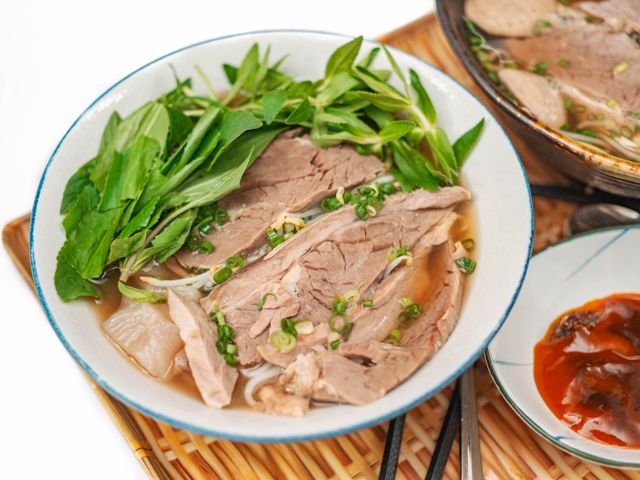


Find more like this
- Meal
- Dinner
- Main ingredient
- Stew Beef
- Method
- Stovetop
- Quick & Easy
- EasyOne-PotFreezer Friendly
- Season
- Winter Comfort Food