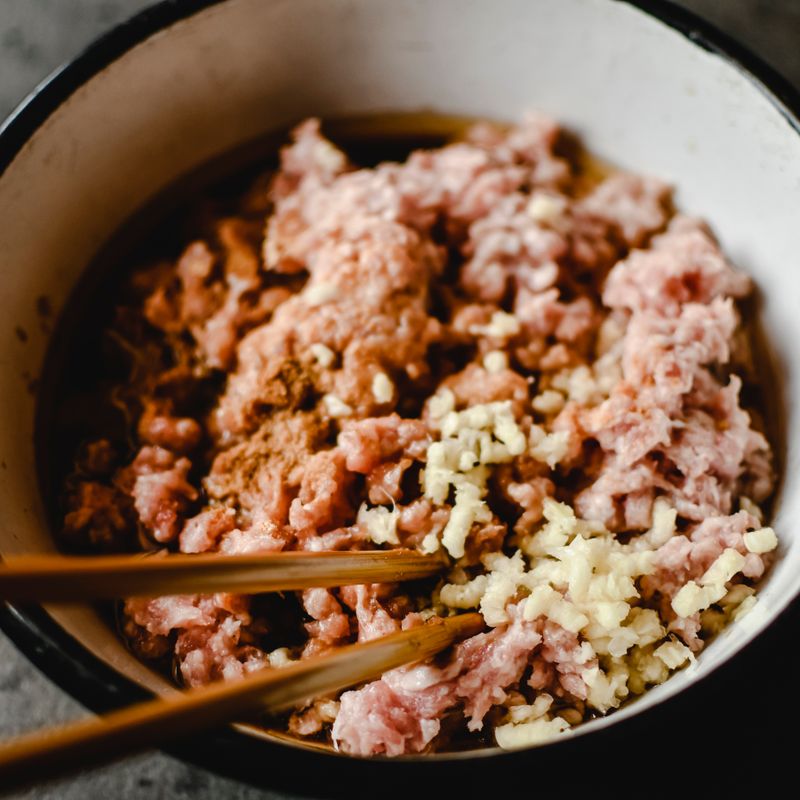
Olive Paste & Minced Garlic Flatbread Dough
A Mediterranean-inspired flatbread dough infused with briny olive paste and fresh minced garlic. The olives add depth and salty richness, while garlic provides aromatic pungency. This dough is supple and forgiving—perfect for hand-stretched or rolled flatbreads, focaccia, or rustic pizzas. The flavor develops as the dough rests, making it an excellent candidate for cold fermentation.
- Prep
- 15 min
- Cook
- —
- Wait
- 1 hr 30 min
- Total
- 1 hr 45 min
- Makes
- 1 pound (454 g) dough, enough for 4 large flatbreads or 8 smaller pieces
Steps
Before you start
- Use room-temperature water (about 75°F/24°C) for consistent dough hydration
- Ensure olive paste is finely minced—large chunks won't distribute evenly
- Have a kitchen scale nearby; weight measurements are more reliable than volume for bread doughs
- Read through the resting time: the dough benefits from a long bulk fermentation
Mix dry ingredients
- In a large mixing bowl, whisk together the all-purpose flour (310 g), instant yeast (3 g), and kosher salt (9 g).
- Use a whisk or fork to break up any clumps and distribute the yeast evenly throughout the flour.
+ Show details− Hide details
Ready when: Dry ingredients are uniformly mixed
Tip: Whisking the yeast into the flour helps it distribute evenly and prevents clumping when water is added.
Combine wet ingredients
- In a small bowl, stir together the room-temperature water (175 ml) and extra-virgin olive oil (30 ml).
- Add the finely minced garlic (20 g) and the drained olive paste (120 g), stirring until fairly combined.
- A few small chunks of olive are fine.
+ Show details− Hide details
Ready when: Garlic is evenly dispersed and olive paste is broken up
Tip: If your olive paste is very wet or briny, drain it slightly in a fine-mesh sieve to avoid making the dough too slack.
Combine wet and dry
- Pour the wet ingredients into the dry ingredients bowl.
- Using a wooden spoon or dough whisk, stir vigorously for 2–3 minutes until all the flour is hydrated and a shaggy dough forms.
- There should be no dry flour visible at the bottom of the bowl.
- The dough will look lumpy and rough at this stage—that's normal.
+ Show details− Hide details
Ready when: Shaggy dough with all flour moistened
Tip: Don't knead yet—vigorous stirring is enough at this stage. Over-mixing now can toughen the dough.
Knead the dough
- Turn the dough out onto a clean, lightly floured work surface.
- Knead for 8–10 minutes by hand, using the heel of your hand to push the dough away from you, then folding it back over itself and rotating a quarter turn.
- The dough should gradually become smooth, elastic, and slightly tacky (it may stick a little to your fingers, but should release easily from the counter).
+ Show details− Hide details
Ready when: Dough is smooth, elastic, springs back slowly when poked, and holds together without tearing
Tip: If the dough is very sticky, dust lightly with flour—but avoid adding too much, as olive paste absorbs moisture differently than plain dough. The dough should be slightly softer than a standard bread dough.
First rise (bulk fermentation)
- Form the kneaded dough into a ball and place it in the same bowl (no need to oil).
- Cover the bowl with a damp kitchen towel.
- Let it rest at room temperature (68–72°F/20–22°C) for 1–1.5 hours, until the dough has risen by about 50% (not quite doubled—olive and garlic fermentation is slower than plain dough).
- The dough should feel airy when gently poked.
+ Show details− Hide details
Ready when: Dough has risen 50%, feels airy and pillowy, indentation from a poke slowly springs back halfway
Tip: Longer fermentation (even overnight in the fridge) will deepen the flavors; this is the base timeline for same-day use.
Divide and shape (optional)
- Turn the dough out onto a lightly floured surface.
- If you're making 4 large flatbreads, use a bench scraper to divide the dough into 4 equal portions (roughly 110–115 g each).
- If you prefer 8 smaller pieces, divide in half again.
- Gently pre-shape each portion into a loose ball and let them rest on the work surface, covered loosely with a towel, for 10 minutes to relax the gluten before final stretching.
+ Show details− Hide details
Ready when: Portions are evenly sized and relaxed
Tip: You can also skip this step and use the entire dough as one large round, or refrigerate individual portions for up to 24 hours before baking.
Good to know
Tips
- Olive paste varies widely in saltiness and moisture. Taste a small amount before adding to the dough, and if it's extremely salty or wet, reduce the salt in the dough by ¼ teaspoon (1.5 g) and drain the paste well.
- For the most tender flatbread, use this dough to make pizzas or focaccia—bake at 500°F (260°C) for 8–12 minutes on a preheated baking stone or sheet pan. The quick, high heat keeps the crust soft inside while crisping the bottom.
- If the dough feels cold or stiff after fermentation, let it warm at room temperature for 15 minutes before stretching—cold dough is harder to shape and won't rise evenly in the oven.
- This dough is forgiving: if your first rise runs a few minutes longer, the dough won't collapse or become gummy. The olive and garlic flavors actually improve with a longer, slower fermentation.
Make ahead
This dough is excellent for make-ahead work. After the first rise (step 5), divide it into portions, wrap each tightly in plastic wrap, and refrigerate for up to 24 hours. The cold fermentation deepens the garlic and olive flavors. Remove from the fridge 30 minutes before stretching and cooking for best workability.
Storage & reheating
Refrigerator: Store the dough in an airtight container for up to 3 days; it improves with time. Bring to room temperature 30 minutes before using. Freezer: Wrap divided portions tightly in plastic wrap and freeze for up to 3 months. Thaw overnight in the refrigerator and use within 1 hour of reaching room temperature. Room temperature: Not recommended for more than 4 hours after the bulk fermentation, as the dough may over-proof.
Substitutions
- olive paste (or finely minced pitted olives) → Kalamata olive tapenade or finely chopped pitted green or black olives. If using tapenade, reduce the amount to ¼ cup (60 g) as it is more concentrated; adjust salt accordingly. If using whole chopped olives, pack them in measure and drain well to avoid excess liquid.
- fresh garlic → Roasted garlic cloves (about 6–8 cloves) or garlic paste. Roasted garlic will give a milder, sweeter note compared to raw garlic's pungency. Use the same weight.
- instant yeast → Active dry yeast (use the same weight or volume) or ¼ teaspoon (1.5 g) fresh yeast mixed with a pinch of sugar. Active dry yeast may require an extra 10–15 minutes of rising time. Fresh yeast (if available) will produce a slightly airier crumb.
- all-purpose flour → Bread flour (up to 1 cup / 125 g) blended with all-purpose flour for a chewier crumb. Use no more than 1 cup (125 g) bread flour mixed with 1.5 cups (185 g) all-purpose flour. Bread flour will yield a denser, more elastic dough; adjust water up by 1–2 tablespoons (15–30 ml) if the dough seems too stiff.
More flatbread doughs
See all →


Find more like this
- Meal
- Dinner
- Cuisine
- Mediterranean
- Quick & Easy
- 5 Ingredients or LessEasyBeginner