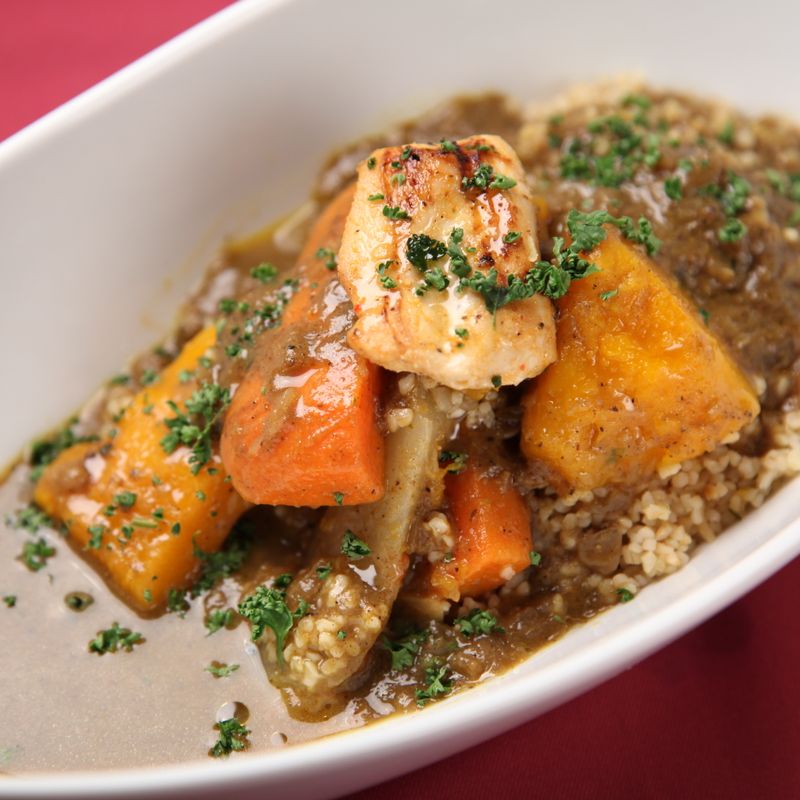
Moroccan Vegetable Stew with Couscous
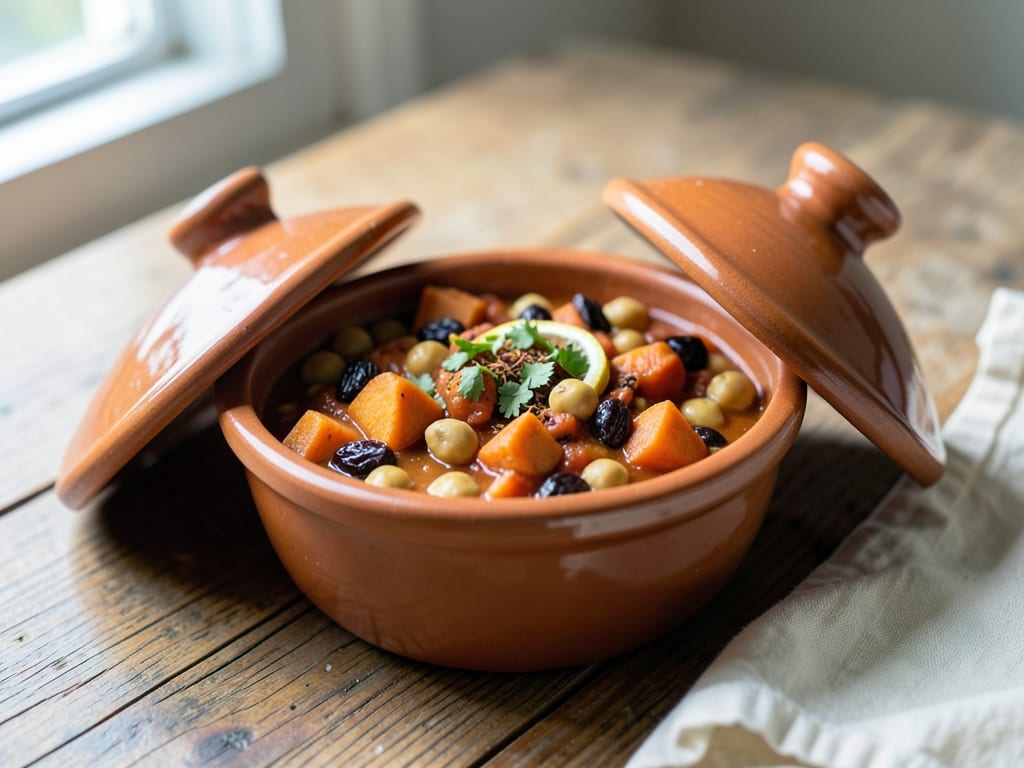
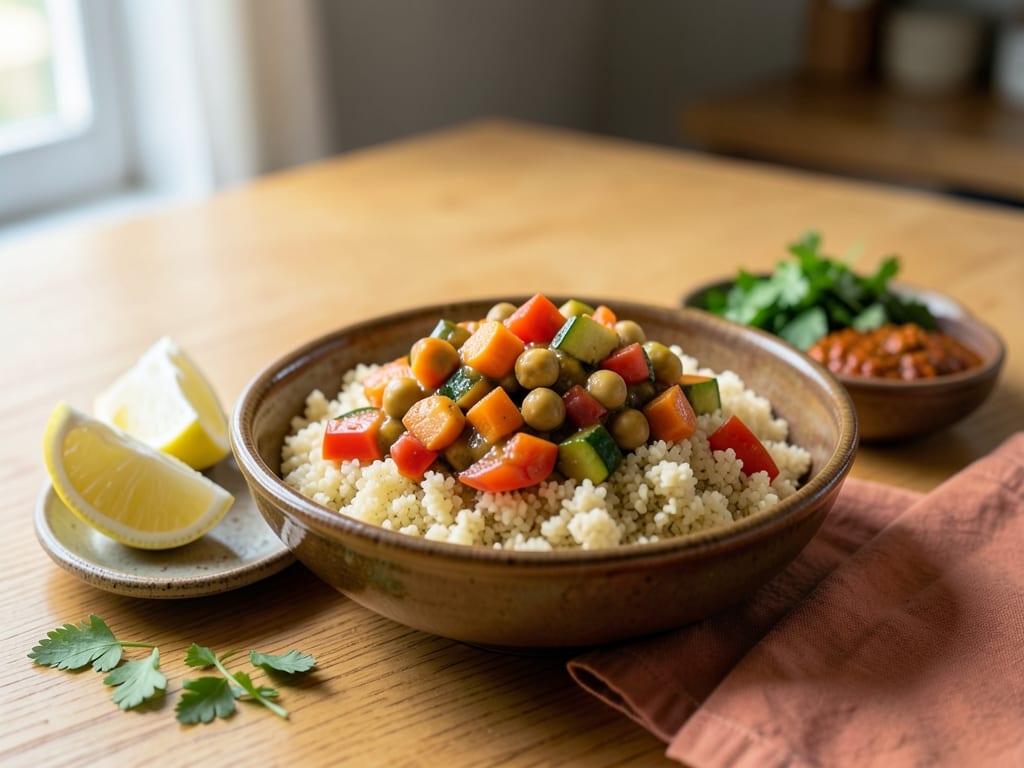
A fragrant, warming stew built on warm spices, tender vegetables, and chickpeas, finished with fluffy couscous. Cinnamon and cumin anchor the flavor while dried apricots add subtle sweetness. This one-pot meal feeds a crowd and deepens in flavor as it sits.
- Prep
- 20 min
- Cook
- 35 min
- Wait
- 10 min
- Total
- 1 hr 5 min
- Makes
- 4 servings (about 2 cups stew + ¾ cup couscous per bowl)
Steps
Before you start
- Gather all spices before you start—Moroccan cooking moves quickly once the onions hit the pan
- Cut butternut squash into ¾-inch cubes; peeling is easier if you microwaved the whole squash 3 minutes first
- Use good-quality canned chickpeas or cook dried ones ahead; they should be tender, not mushy
Build the aromatics base
- Heat 2 tablespoons olive oil in a large 5-quart pot over medium heat.
- Add the diced onion and cook for 4–5 minutes, stirring often, until softened and translucent.
- Stir in the minced garlic and grated ginger, cooking for another minute until fragrant.
- The onion should look glossy and slightly caramelized at the edges.
+ Show details− Hide details
Ready when: Onion is translucent and garlic is fragrant (don't brown the garlic)
Tip: Toast the spices next, before adding liquid, to deepen their flavor—skipping this step leaves them flat and one-dimensional.
Toast the spices
- Add the cumin, cinnamon, paprika, and turmeric to the pot.
- Stir constantly for about 45 seconds until the spices bloom and smell warm and toasted.
- Be careful not to scorch them—they should smell sweet, not acrid.
+ Show details− Hide details
Ready when: Spices are fragrant and glossy, not dark or burnt
Tip: If the spices look like they're turning dark, quickly add a splash of broth or lower the heat—burnt spices taste bitter and will ruin the stew.
Add vegetables and liquid
- Add the diced butternut squash, carrot rounds, drained chickpeas, and halved apricots.
- Pour in the 3 cups of vegetable broth and the canned tomatoes with their juices.
- Stir well to combine, scraping up any browned bits from the bottom of the pot.
+ Show details− Hide details
Ready when: All ingredients are submerged or mostly covered; there are no dry spices visible
Tip: Stir gently at first to avoid breaking up the squash pieces once they start to soften.
Simmer the stew
- Bring the stew to a simmer over medium-high heat, then reduce the heat to medium-low and let it simmer gently, uncovered, for 20–25 minutes.
- The vegetables should be tender and the squash should break apart with gentle pressure from a spoon.
- Taste and adjust the seasoning with salt and black pepper.
- The stew should taste warming and slightly sweet, balanced by savory spices.
+ Show details− Hide details
Ready when: Butternut squash breaks apart easily; carrots are fork-tender; the liquid has reduced by about one-third
Tip: Don't rush this step with high heat—gentle simmering keeps the vegetables intact and allows flavors to develop. If the stew looks too thin, simmer uncovered for a few extra minutes to reduce the liquid.
Prepare couscous and broth
- While the stew finishes cooking, bring 2.25 cups of lightly salted water (or additional vegetable broth for more flavor) to a boil in a separate pot.
- This is a 1.5:1 liquid-to-couscous ratio, which ensures fluffy, separate grains.
+ Show details− Hide details
Ready when: Water is at a rolling boil
Tip: Starting the couscous broth toward the end of the stew simmering keeps everything warm and ready to eat at the same time.
Cook the couscous
- Pour the 1.5 cups of couscous into the boiling water, stir once, and remove from heat immediately.
- Cover the pot with a lid or foil and let it sit undisturbed for 10 minutes.
- The couscous will absorb all the liquid and become fluffy.
+ Show details− Hide details
Ready when: Couscous is plump, all liquid is absorbed, and grains are fluffy and separate
Tip: Do not stir the couscous while it steams—stirring breaks up the grains and makes them mushy. Pearl couscous holds its shape better than regular couscous for this reason.
Finish and fluff
- Remove the couscous from heat and fluff gently with a fork.
- Stir in 2 tablespoons of butter until melted and evenly distributed.
- Season to taste with a pinch more salt if needed.
+ Show details− Hide details
Ready when: Couscous is loose and fluffy, not clumpy; butter is completely melted
Tip: Butter makes the couscous silkier and prevents clumping. If you prefer it dairy-free, use olive oil instead.
Serve
- Ladle the stew into serving bowls and top each with a portion of the fluffy couscous (about ¾ cup per serving).
- Garnish with fresh chopped cilantro and a squeeze of lemon juice if desired.
+ Show details− Hide details
Tip: Cilantro and lemon brighten the warm spices—they're not essential, but they lift the dish considerably. If cilantro isn't available, parsley works as a light alternative.
Good to know
Tips
- Spice blooming (step 2) is the difference between a flat, dusty spice flavor and a warm, rounded one—this technique works in any curry, stew, or soup.
- Pearl couscous is chewier and holds its shape better than regular fine couscous. If you use fine couscous, reduce the liquid to 2 cups and the soaking time to 8 minutes.
- Make this recipe your own: if you like heat, add ¼ teaspoon of cayenne or a pinch of harissa to the spice mix. For herbaceousness, add fresh mint instead of (or alongside) cilantro.
- This stew is excellent served alongside a simple green salad dressed with a sharp vinaigrette—the acidity cuts the richness and cleanses the palate between bites.
Make ahead
You can prepare the stew up to 2 days ahead and store it in the refrigerator. The flavors will deepen slightly as it sits. Reheat gently on the stovetop over medium heat, stirring occasionally and adding a splash of broth if it has thickened too much. Make the couscous fresh just before serving.
Storage & reheating
Room temperature: Store leftovers in an airtight container for up to 2 hours. Refrigerator: Up to 4 days in an airtight container. Reheat gently on the stovetop over medium heat, stirring often. Freezer: Up to 3 months in a freezer-safe container. Thaw overnight in the refrigerator and reheat gently. Couscous can become mushy if frozen with the stew; it's best to reheat only the stew and prepare fresh couscous.
Substitutions
- butternut squash → Diced pumpkin, sweet potato, or acorn squash. Use the same weight. Sweet potato will make the stew slightly less sweet; acorn squash is denser and may need 2–3 extra minutes to soften.
- canned chickpeas → Cooked lentils (brown or green), white beans, or split peas. Use the same weight. Lentils and split peas will soften slightly more during the simmer; beans hold their shape similarly to chickpeas.
- dried apricots → Dried figs, raisins, dates, or prunes. Use the same weight. Figs and prunes are slightly less sweet; dates are much sweeter, so reduce to ⅓ cup. Raisins are smaller; use ¼ cup.
- pearl couscous → Brown rice, quinoa, or bulgur wheat. Use a 1.5:1 liquid-to-grain ratio. Brown rice needs 35–40 minutes; quinoa and bulgur need 15–20 minutes. Adjust the cooking time accordingly.