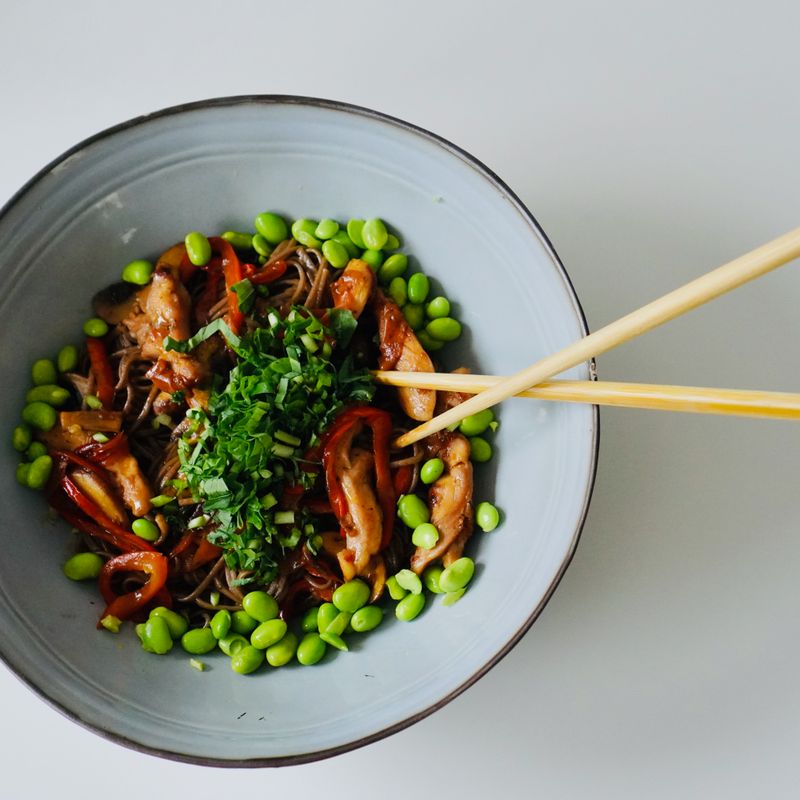
Miso-Ginger Soba Noodle Salad with Edamame and Crispy Shallots
A bright, refreshing cold noodle salad with nutty soba, tender edamame, and a savory-sweet miso-ginger dressing. Crispy fried shallots add textural contrast and rich flavor. Perfect for warm weather meals or as a make-ahead lunch.
- Prep
- 20 min
- Cook
- 12 min
- Wait
- 15 min
- Total
- 47 min
- Makes
- 4 servings (about 2 cups per bowl)
Steps
Before you start
- Bring two large pots of water to a boil (one for noodles, one for edamame)
- Have a bowl of ice water ready for shocking the noodles
- Slice shallots lengthwise into thin rings before frying
Fry the shallotsOven 300°F / 150°C
- Heat the neutral oil in a shallow 8–10 inch skillet over medium heat for 1–2 minutes until it reaches about 300°F (150°C) if using a thermometer.
- Add the sliced shallots in batches, stirring occasionally, until golden-brown and crispy, about 5–7 minutes total.
- Watch carefully—they will continue to darken as they cool.
- Transfer to a paper towel-lined plate using a slotted spoon.
- Sprinkle lightly with salt while still warm.
- Set aside.
- Reserve 2 tablespoons of the infused oil for the dressing.
+ Show details− Hide details
Ready when: Shallots are golden-brown and crispy, oil is golden
Tip: Don't let the oil get too hot or shallots will burn; aim for gentle, steady browning. They'll crisp up further as they cool.
Cook the soba noodles
- Bring a large pot of water to a rolling boil.
- Add soba noodles and stir to separate them.
- Cook for 4–5 minutes, stirring occasionally, until just tender but still slightly firm (they will soften further as they cool).
- Drain in a colander and immediately place under cold running water or into an ice bath, stirring gently until completely chilled.
- Drain well and set aside.
+ Show details− Hide details
Ready when: Noodles are tender but not mushy; easily break when bent but no hard center
Tip: Shock the noodles in ice water immediately—this stops cooking and keeps them from becoming mushy or clumping together.
Cook the edamame
- In a medium saucepan, bring salted water to a boil.
- Add frozen edamame and cook for 3–4 minutes until heated through and tender.
- Drain in a colander and let cool to room temperature, about 5 minutes.
+ Show details− Hide details
Ready when: Edamame are tender and bright green
Tip: Salt the water generously—this seasons the edamame throughout and brings out their flavor.
Make the dressing
- In a medium mixing bowl, combine the miso paste, ginger, soy sauce, rice vinegar, honey, and mirin (if using).
- Whisk until smooth and emulsified, about 1 minute.
- Slowly add the reserved 2 tablespoons of warm shallot-infused oil and the sesame oil, whisking constantly to combine.
- Taste and adjust seasoning with salt and white pepper if needed.
- The dressing should be balanced between savory, sweet, and tangy.
+ Show details− Hide details
Ready when: Dressing is smooth, creamy, and no lumps of miso remain
Tip: Warm shallot oil helps emulsify the dressing better. If the miso clumps, use the back of a spoon to press it against the bowl's sides.
Assemble the salad
- In a large mixing bowl, combine the cooled soba noodles, edamame, and cucumber slices.
- Pour the dressing over and toss gently but thoroughly using two forks or tongs, ensuring every strand of noodle is coated.
- The salad should be moist but not swimming in dressing.
- Let the salad sit at room temperature for 10–15 minutes to allow flavors to meld.
+ Show details− Hide details
Ready when: Noodles are evenly coated, flavors have developed
Tip: Don't over-toss or you'll break the noodles. Use a gentle hand with a fork or two wooden spoons.
Finish and serve
- Divide the soba noodle salad among four bowls.
- Top each bowl with a generous handful of crispy shallots, a sprinkle of sesame seeds, sliced scallions, and nori pieces if using.
- Serve immediately while the shallots are still crispy.
- The salad can be enjoyed cold or at room temperature.
+ Show details− Hide details
Tip: Add the crispy shallots just before serving—if added too early, they'll soften from the dressing's moisture.
Good to know
Tips
- For maximum textural contrast, keep crispy shallots separate until just before serving. Their crispness will fade if mixed in advance.
- Toasted sesame oil is essential for authentic flavor—regular sesame oil will taste flat and raw. Store it in a cool place to prevent rancidity.
- If the dressing seems too thick, whisk in water 1 teaspoon at a time until you reach the desired consistency. The noodles will absorb liquid as they sit.
- For a protein-rich bowl, top with grilled chicken, poached shrimp, or crispy tofu cubes.
Make ahead
The soba noodles, edamame, and dressing can be prepared up to 24 hours ahead and refrigerated in separate airtight containers. Fry the shallots up to 6 hours ahead and store in an airtight container. Assemble the salad and add dressing up to 2 hours before serving (before adding crispy shallots), then top with shallots, sesame seeds, scallions, and nori just before serving to maintain their texture.
Storage & reheating
Room temperature (1 hour): Salad will stay fresh for up to 1 hour at room temperature. Refrigerated (3–4 days): Store in an airtight container. Reheat gently by tossing in a large bowl to distribute dressing evenly, or serve chilled. The noodles will absorb more dressing as they sit. Frozen: Not recommended, as the texture of noodles and vegetables will suffer upon thawing. Store crispy shallots separately for up to 5 days.
Substitutions
- dried buckwheat soba noodles → udon noodles or ramen noodles. Udon will be softer and chewier; adjust cooking time per package. Ramen works well but will be denser. Both require the same ice-bath cooling method.
- frozen edamame (shelled) → snap peas, green beans, or roasted chickpeas. Snap peas add crunch (no cooking needed); blanch green beans for 2–3 minutes. Chickpeas add protein and earthiness.
- white or yellow miso paste → 2 tablespoons tahini mixed with 1 tablespoon soy sauce. Will be less umami-forward but still creamy. Add an extra ½ teaspoon of minced garlic for depth.
- rice vinegar → unseasoned rice vinegar substitute: 1 tablespoon white vinegar + 1 tablespoon apple cider vinegar. Adjust proportions to taste. Lime juice (1 tablespoon) also works but will shift the flavor profile.