
Roasted Carrot and Sumac Farro Salad with Labneh and Dukkah
A vibrant Middle Eastern–inspired grain salad featuring nutty roasted farro, caramelized carrots dressed in tart sumac and olive oil, creamy dollops of labneh, and a crunchy dukkah spice blend. The combination of warm roasted vegetables with cool, tangy labneh and the textural contrast of dukkah creates a complex, satisfying dish that's as elegant for entertaining as it is nourishing for everyday eating.
- Prep
- 20 min
- Cook
- 50 min
- Wait
- 10 min
- Total
- 1 hr 20 min
- Makes
- 4 servings (approximately 1½ cups each)
Steps
Before you start
- Preheat your oven to 425°F (220°C) at least 15 minutes before roasting the carrots
- Have all your ingredients measured and prepped—the salad comes together quickly once vegetables are roasted
- If you don't have labneh on hand, you can make a quick substitute by whisking Greek yogurt with lemon juice and salt, though the flavor won't be quite as tart
Cook the farro
- In a medium saucepan, bring 2½ cups (600 ml) of water to a boil over high heat.
- Add 1½ teaspoons (9 g) kosher salt and 1¼ cups (250 g) pearl farro.
- Stir once, then reduce heat to a gentle simmer.
- Cover and cook for 30–35 minutes, until the grains are tender but retain a slight chew and the liquid is mostly absorbed.
- The farro should have a pale, creamy color and the kernels should split slightly when pressed.
- Drain any excess water if needed and spread on a baking sheet to cool slightly and stop cooking.
+ Show details− Hide details
Ready when: Grains are tender with a slight chew, kernels split when pressed
Tip: Do not overcook farro—it should remain slightly firm in the center. Pearl farro works better than semi-pearled or hulled varieties for this salad's texture.
Roast the carrotsOven 425°F / 220°C
- While farro cooks, pat 1¼ lb (570 g) of prepared carrot slices dry with paper towels.
- Place on a large baking sheet (18 × 13 inches / 45 × 33 cm), drizzle with 3 tablespoons (45 ml) extra-virgin olive oil, and toss to coat evenly.
- Season with ¾ teaspoon (4.5 g) kosher salt and freshly ground black pepper to taste.
- Spread in a single layer.
- Roast at 425°F (220°C) for 20–25 minutes, stirring halfway through, until the carrot edges are caramelized and golden brown and the centers are tender.
- The carrots should have some dark spots and smell sweet and nutty.
+ Show details− Hide details
Ready when: Carrot edges are golden brown and caramelized, centers are fork-tender
Tip: Dry the carrot slices well before roasting—excess moisture will cause them to steam rather than caramelize. Cut them on a bias for visual appeal and even cooking.
Make the sumac vinaigrette
- In a small bowl, whisk together 3 tablespoons (45 ml) fresh lemon juice, 1½ teaspoons (4.5 g) ground sumac, 1 teaspoon kosher salt, and a few grinds of black pepper.
- Let sit for 1 minute to let the sumac bloom, then whisk in 2 tablespoons (30 ml) extra-virgin olive oil until emulsified.
+ Show details− Hide details
Ready when: Dressing is emulsified and evenly mixed
Tip: The sumac adds tartness and color—if it's been sitting in your pantry for over a year, replace it as it loses potency and flavor.
Assemble the salad
- Transfer the cooled farro to a large mixing bowl.
- Pour the sumac vinaigrette over it and toss gently to coat evenly.
- Add the roasted carrot slices (still slightly warm is fine), ½ medium red onion (thinly sliced), ½ cup (20 g) roughly chopped fresh flat-leaf parsley, and ¼ cup (10 g) torn fresh mint leaves.
- Toss gently until all components are well combined.
- If using pomegranate seeds, reserve about 3 tablespoons for garnish and fold the rest into the salad.
- Taste and adjust seasoning with salt and pepper.
+ Show details− Hide details
Ready when: All ingredients are evenly combined and glistening with dressing
Tip: Let the salad rest for 10 minutes at room temperature—this allows the farro to fully absorb the tangy vinaigrette. Don't over-mix or the farro will break down.
Finish and serve
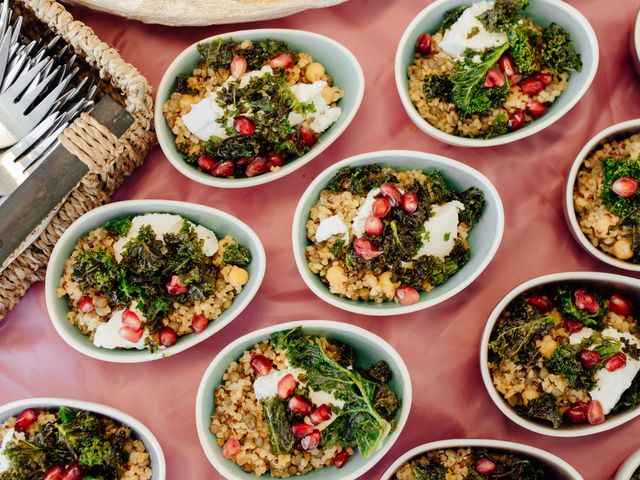
- Divide the farro salad among four serving bowls or plates.
- Top each portion with a generous dollop (about 3 tablespoons / 45 g) of labneh.
- Sprinkle 1 tablespoon (10 g) of dukkah over each serving and scatter any reserved pomegranate seeds on top.
- Finish with a light drizzle of extra-virgin olive oil.
- Serve at room temperature or slightly cool.
+ Show details− Hide details
Ready when: Salad is plated with toppings arranged attractively
Tip: Add the labneh just before serving so it doesn't break down in the warm salad. The contrast between cool, creamy labneh and warm farro is part of the appeal.
Good to know
Tips
- Toast the dukkah in a dry skillet over low heat for 30 seconds just before serving—this awakens the spices and deepens their flavor, especially if it's been stored for a while.
- If your red onion is particularly pungent, soak the sliced onion in a bowl of ice water for 10 minutes to mellow it slightly. Drain well before adding to the salad.
- This salad is wonderful warm or at room temperature, but avoid serving it directly from the refrigerator—the farro becomes starchy and dense when cold. Let it sit out for 15 minutes or warm gently.
- For a heartier meal, serve this over a bed of crisp greens or alongside grilled chicken or fish. The sumac and labneh would complement roasted salmon beautifully.
Make ahead
The farro can be cooked up to 1 day ahead and refrigerated in an airtight container. The roasted carrots can be made 1 day ahead as well. The vinaigrette is best made fresh, but you can store it covered at room temperature for up to 4 hours. Assemble the salad just before serving—the farro will soften and lose its texture if dressed more than 30 minutes ahead.
Storage & reheating
Leftover assembled salad keeps in the refrigerator for up to 2 days in an airtight container, though the texture softens slightly. The dukkah will lose its crunch if mixed in ahead of time, so store it separately and sprinkle over individual portions when reheating. Reheat gently in the microwave (1–2 minutes) or serve cold directly from the fridge—both are delicious.
Substitutions
- dukkah spice blend → Za'atar (1 tablespoon per serving) mixed with 1 tablespoon toasted sliced almonds. This shifts the flavor slightly earthier and more herbaceous, but still maintains the nutty, crunchy finish. Dukkah has more diverse spices and is superior, but za'atar is easier to find.
- labneh (strained yogurt) → Greek yogurt (¾ cup / 180 g) whisked with 2 tablespoons fresh lemon juice, 1 teaspoon minced fresh garlic, and ½ teaspoon kosher salt. Greek yogurt is tangier and less creamy than labneh, but works well. This version is slightly more refreshing.
- fresh mint leaves → Fresh dill or fresh basil. Both offer different herb notes—dill is more delicate and licorice-tinged, basil brings sweetness. Use the same amount and chop just before adding.
- pomegranate seeds (arils) → Dried currants (¼ cup / 40 g) plumped in 2 tablespoons warm water for 5 minutes, or fresh berries (¼ cup / 35 g blueberries or raspberries). Currants add chewiness and subtle sweetness; berries add freshness. Neither matches pomegranate's tartness, but both are lovely alternatives.
More grain salads
See all →


Find more like this
- Meal
- Lunch
- Cuisine
- Middle Eastern
- Main ingredient
- Carrots
- Method
- Oven
- Season
- Fall