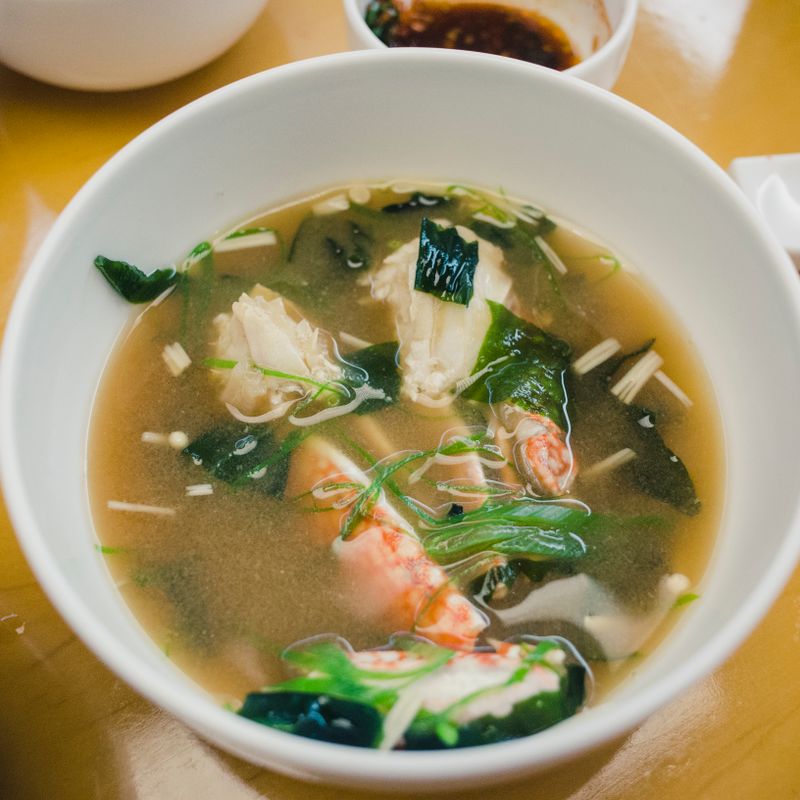
Miso and Dashi Seafood Broth
A layered umami broth built on a foundation of kombu and bonito dashi, enriched with fresh scallops and finished with white miso for depth and subtle sweetness. The broth simmers gently to draw out delicate seafood flavors without becoming cloudy or bitter. Serve as a refined soup course, use as a base for noodles, or pair with vegetables and proteins for a light meal.
- Prep
- 15 min
- Cook
- 25 min
- Wait
- 5 min
- Total
- 45 min
- Makes
- 4 servings (about 5 cups / 1.2 L)
Steps
Before you start
- Wipe the kombu gently with a damp cloth to remove any sand, but do not scrub away the white powder—it contains umami compounds
- Have all ingredients measured and prepped before you begin; dashi making is quick and timing matters
- Use cold water for the best dashi extraction
Prepare the kombu dashiOven 160°F / 70°C
- Place the wiped kombu in a 6-quart pot and add 5 cups (1200 ml) of cold water.
- Set the pot over medium heat.
- As the water begins to warm (around 160°F / 70°C), small bubbles will appear around the kombu.
- Watch closely and remove the kombu just before the water comes to a boil—this should take about 8–10 minutes.
- If the kombu stays in boiling water, the broth will become bitter and cloudy.
- Set the kombu aside.
+ Show details− Hide details
Ready when: Small bubbles form around the kombu; steam rises gently but water has not yet boiled
Tip: Listen for the sound of brewing—once the water is steaming, pull the kombu within 30 seconds to avoid bitterness
Add bonito flakes
- Once the kombu is removed and the water is at a gentle boil, add the bonito flakes all at once.
- Stir once, then reduce the heat to low and allow the broth to simmer for 2 minutes.
- The flakes will sink and flavor the broth without overcooking.
+ Show details− Hide details
Ready when: Broth is barely simmering; bonito flakes have settled to the bottom
Tip: Do not stir or agitate the broth once the flakes are in—this keeps it clear and prevents cloudiness
Strain the dashi
- Line a fine-mesh sieve with cheesecloth or use a fine strainer.
- Pour the broth slowly through the sieve into a clean pot, leaving the bonito flakes behind.
- You should have about 4.5–5 cups (1080–1200 ml) of clear, golden broth.
- Discard the solids.
+ Show details− Hide details
Ready when: Broth is clear and passes through the sieve; no sediment remains
Tip: Patience here prevents cloudy broth—do not press the solids through the sieve
Prepare the scallops
- Pat the scallops dry with paper towels.
- If any scallops are thicker than ¾ inch (2 cm), slice them horizontally in half so they cook evenly.
- The drier the scallops, the better they will sear and develop flavor in the broth.
+ Show details− Hide details
Ready when: Scallops are completely dry to the touch
Tip: Moisture on scallops causes them to steam rather than sear; a quick pat is essential
Sear the scallops
- Return the strained broth to the pot and bring it to a gentle simmer over medium heat.
- Once simmering, add the scallops and any optional ginger and green onion if using.
- Maintain a low simmer—do not let the broth boil.
- The scallops will cook through in 3–4 minutes.
- You will know they are done when they are opaque throughout and feel firm but not rubbery when touched with a fork.
+ Show details− Hide details
Ready when: Scallops are opaque throughout and spring back when lightly pressed; no translucent center remains
Tip: Simmering gently, rather than boiling, keeps the scallops tender; overcooking makes them tough and rubbery
Dissolve the miso
- Remove the pot from the heat.
- In a small ladle or bowl, whisk together the white miso and about ½ cup (120 ml) of the hot broth until the miso is completely smooth and lump-free.
- Pour the miso mixture slowly back into the pot, stirring gently and constantly to incorporate evenly.
- Do not return the pot to the heat—miso is sensitive to high temperatures and cooking will destroy its beneficial probiotics and some of its subtle flavor.
+ Show details− Hide details
Ready when: Miso is fully dissolved; broth appears uniform in color and consistency
Tip: Dissolve miso in broth first to avoid clumps—whisking in cold broth will cause lumps that don't dissolve
Season and taste
- Taste the broth.
- If using mirin, add the 1 tablespoon (15 ml) now for a touch of mild sweetness that balances the umami.
- Season with a small pinch of fine sea salt at a time, tasting after each addition.
- The broth should taste rich and balanced, with no single flavor dominating.
- If you prefer it less rich, add a splash of hot water.
+ Show details− Hide details
Ready when: Broth tastes balanced and satisfying; salt enhances but does not overpower
Tip: Add salt incrementally—you can always add more, but you cannot remove it
Serve
- Ladle the hot broth and scallops into warm bowls.
- Garnish with reserved green onion slices if desired.
- Serve immediately while the broth is at its best temperature and the scallops are warm and tender.
+ Show details− Hide details
Tip: Warm the serving bowls by rinsing them with hot water just before serving to keep the broth hot longer
Good to know
Tips
- For the clearest, most refined broth, never let dashi boil once bonito flakes are added. A gentle simmer extracts flavor without extracting bitterness or creating cloudiness.
- If your kombu has a white powder on it, that is natural umami-rich compounds (glutamates); a gentle wipe with a damp cloth is all you need. Do not wash it away.
- Miso paste varies in saltiness and intensity depending on the brand and fermentation time. Taste the broth before salting and adjust the miso quantity if it seems overpowering.
- For a lighter broth, reduce the bonito flakes to ½ cup (12 g) and cut the miso to 2 tablespoons (36 g). For a richer broth, add a small handful of additional bonito flakes or increase the miso slightly.
Make ahead
The dashi base (kombu and bonito) can be made up to 2 days ahead and stored in the refrigerator in a covered container. Reheat gently before adding the miso and scallops. Do not make the complete broth with miso more than a few hours ahead, as the miso's flavor and beneficial properties diminish with storage.
Storage & reheating
Store leftover broth (without scallops) in an airtight container in the refrigerator for up to 3 days. To reheat, warm gently over medium-low heat—do not boil, as this damages the miso flavor. Frozen storage is not recommended due to the miso base. Scallops are best eaten fresh; leftovers become rubbery when reheated.
Substitutions
- white miso (shiro miso) → red miso (aka miso) or awase miso (mixed white and red). Red miso will deepen the broth's color and add earthier, more assertive umami. Use the same quantity. Awase miso creates a middle ground between white and red in both flavor and appearance.
- large sea scallops, side muscle removed → large shrimp (peeled and deveined) or white fish such as halibut or cod cut into bite-sized pieces. Shrimp will cook in 2–3 minutes; fish in 3–4 minutes depending on thickness. Both absorb the dashi flavors beautifully.
- bonito flakes (katsuobushi) → dried shiitake mushrooms (about 4–5 medium pieces, sliced) or a combination of kombu and shiitake. Shiitake creates a deeper, earthier dashi without the strong fishiness. Strain carefully as pieces are larger.
- mirin (sweet rice wine) → a small pinch of sugar or honey (about ½ teaspoon / 2.5 ml). Mirin adds subtle sweetness and body; sugar or honey provide sweetness alone. Use sparingly to avoid making the broth cloying.
More broths
See all →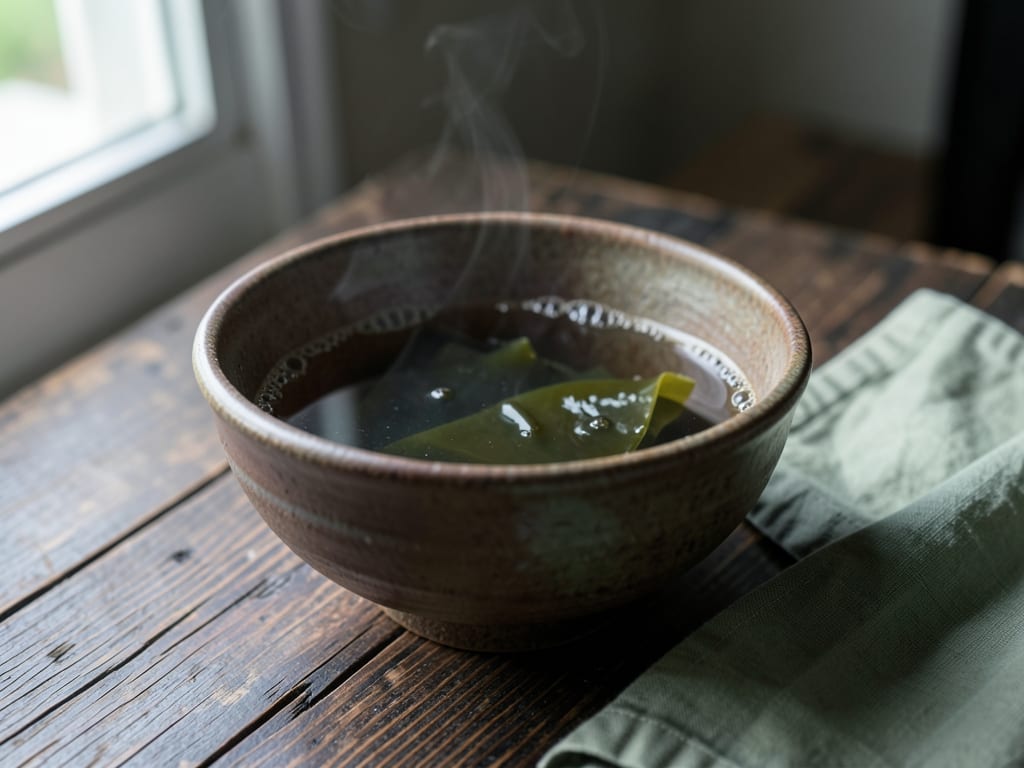
Find more like this
- Meal
- Dinner
- Cuisine
- Japanese
- Main ingredient
- Scallops
- Method
- Stovetop
- Quick & Easy
- 5 Ingredients or LessMake Ahead