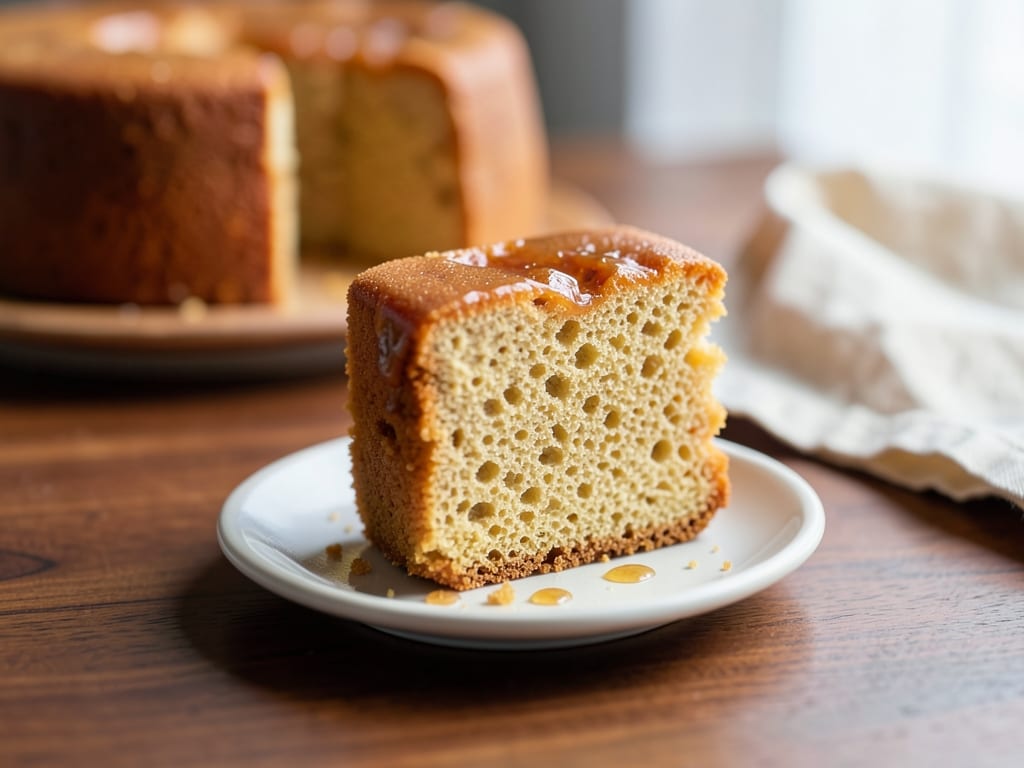
Ma Lai Go (Cantonese Steamed Brown Sugar Sponge Cake)
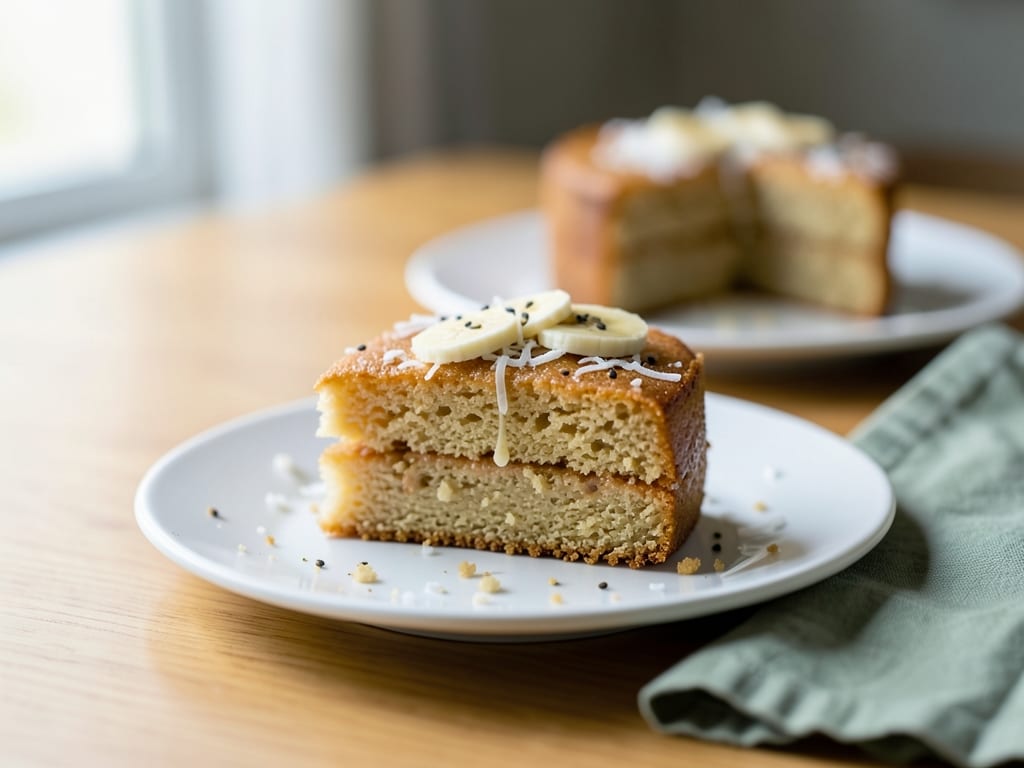
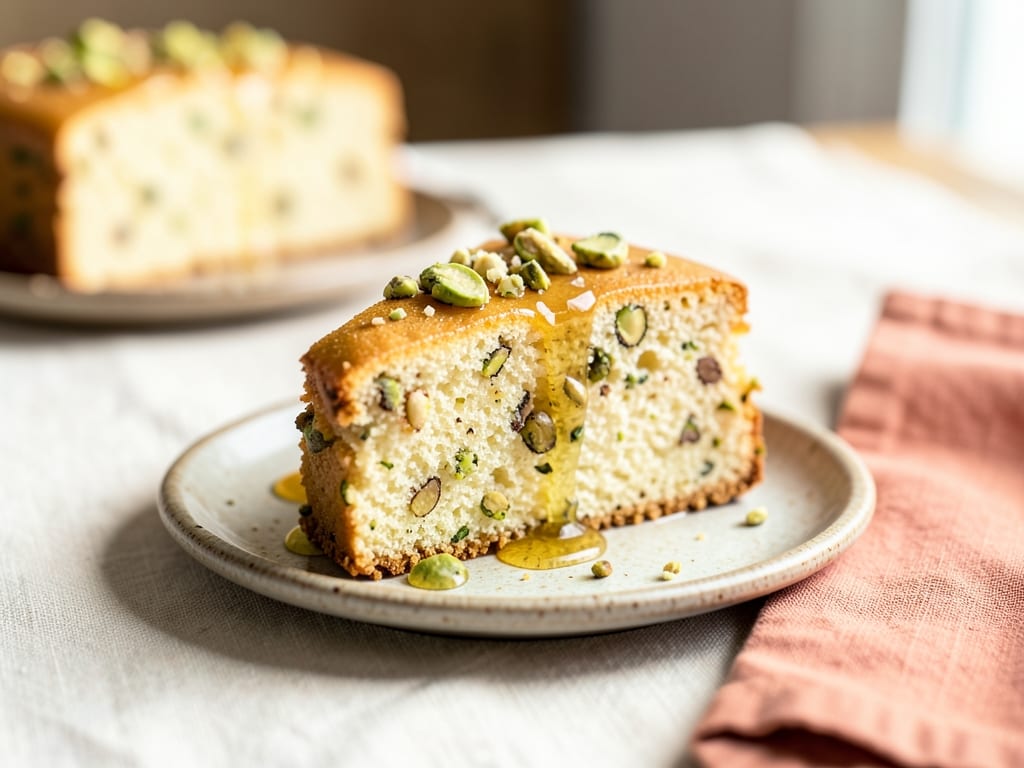
A tall, golden-brown steamed sponge with a honeycomb crumb, a soft springy bounce and a caramel-like sweetness from brown sugar and evaporated milk. It's the classic dim sum cake, and it needs only a bowl, a whisk and a steamer.
- Prep
- 24 min
- Cook
- 35 min
- Wait
- 35 min
- Total
- 1 hr 34 min
- Makes
- 1 cake (8-inch/20 cm round), 8 wedges
Steps
Before you start
- Take the eggs out 30 minutes ahead so they come to room temperature. Cold eggs whip to less volume.
- Check that your pot or wok with a lid can hold an 8-inch (20 cm) cake pan on a rack with at least 1 inch (2.5 cm) of clearance around the pan.
- Break up any lumps in the brown sugar. Pack it into the measuring cup so the measurement is accurate.
- Don't open the steamer lid during the first 25 minutes. A sudden drop in temperature makes the cake sink.
Set up the steamer
- Pour the hot water into the pot or wok and set the rack inside.
- The water should sit about 1 inch (2.5 cm) below the top of the rack.
- Bring to a full boil over high heat, then reduce to medium-high so it keeps a steady, strong steam.
- Brush the inside of the 8-inch (20 cm) pan with the 1 tsp oil and line the bottom with a round of parchment.
- Lightly oil the parchment too.
+ Show details− Hide details
Ready when: Water is at a rolling boil with plenty of steam before the cake goes in.
Tip: Keep extra hot water in a kettle. If the pot runs low during steaming, top it up with boiling water, never cold.
Whip eggs and sugar
- Add the eggs and packed brown sugar to a large bowl.
- Beat with the electric mixer on medium-high for 5 to 6 minutes.
- The mixture should become pale tan, thick and about double in volume.
+ Show details− Hide details
Ready when: When you lift the beaters, the batter falls in a thick ribbon that stays visible on the surface for 3 to 4 seconds. Rub a little between your fingers: it should feel only slightly gritty.
Tip: This step builds most of the cake's lift, so don't cut it short.
Add milk and oil
- Reduce the mixer to low.
- Pour in the evaporated milk and then the 60 ml oil in a slow stream.
- Mix for about 30 seconds, just until the liquid is blended and there are no oily streaks.
- The batter will be thinner and the foam will be less dense.
+ Show details− Hide details
Ready when: The batter looks uniform and glossy, with no pooled oil on top.
Sift the dry ingredients
- Place the fine-mesh sieve over the egg mixture.
- Add the flour, baking powder, baking soda and salt.
- Sift them directly over the bowl in an even layer.
+ Show details− Hide details
Ready when: The dry ingredients rest on the surface in an even, lump-free layer.
Tip: Sifting directly onto the batter prevents flour clumps that are hard to fold out.
Fold the batter
- Using the rubber spatula, fold gently by scraping down the side, sweeping across the bottom and turning the batter over itself.
- Keep going for about 1 minute, just until no dry flour streaks remain.
- Scrape the bottom of the bowl once at the end.
+ Show details− Hide details
Ready when: The batter is smooth, thick but pourable, and a deep caramel brown with no dry patches.
Tip: Stop as soon as the flour disappears. Overmixing knocks out air and makes the cake dense and tough.
Rest the batter
- Pour the batter into the prepared pan, which should be about two-thirds full.
- Tap the pan gently on the counter twice to release large bubbles.
- Let it rest uncovered for 15 minutes while the steamer keeps heating.
- Small bubbles will appear on the surface.
+ Show details− Hide details
Ready when: A scattering of small bubbles shows on the surface.
Tip: Make sure the water in the steamer is still boiling. Add hot water if it has dropped.
Steam the cake
- Wrap the underside of the pot lid in a clean kitchen towel, or drape the towel over the lid and tie the corners up, to catch condensation.
- Set the pan on the rack, cover and steam over medium-high heat (strong, steady steam) for 35 minutes.
- Do not lift the lid for the first 25 minutes.
+ Show details− Hide details
Ready when: The cake is domed and risen, the top is springy and no wet batter shows in any cracks.
Tip: Water dripping onto the cake leaves pits. Keep the towel away from the burner flame and tucked up around the lid.
Test for doneness
- Turn off the heat.
- Open the lid away from you to avoid the steam.
- Insert a wooden skewer into the center of the cake.
- It should come out clean and dry.
- If it has wet batter on it, re-cover and steam 3 to 5 more minutes and test again.
+ Show details− Hide details
Ready when: Skewer is clean, the top springs back when pressed lightly, and the center reads about 200°F (93°C) if you check with a thermometer.
Tip: Use heatproof gloves or a lifter. The pan and steam are very hot.
Cool and unmold
- Lift the pan out and rest it on a wire rack for 20 minutes.
- Run a thin knife around the edge, turn the cake out onto the rack, peel off the parchment and turn it right side up.
- Cut into 8 wedges with a serrated knife and serve warm or at room temperature.
+ Show details− Hide details
Ready when: The cake is firm enough to hold its shape and pulls cleanly from the pan sides.
Tip: Cutting while it is piping hot makes the crumb gummy.
Good to know
Tips
- Whip the eggs and sugar until the ribbon holds for several seconds. This is the key to the cake's height and honeycomb texture.
- Keep the steam strong and steady. Weak steam gives a dense, gummy cake; if the water runs low, add boiling water only.
- Never open the lid in the first 25 minutes; the cake can collapse from the sudden temperature change.
- For a taller, deeper-brown cake, use dark brown sugar and a straight-sided metal pan.
Make ahead
Steam the cake up to 1 day ahead, cool completely, and wrap tightly. Re-steam wedges for 5 minutes before serving to restore the soft, springy texture.
Storage & reheating
Room temperature: covered airtight for up to 1 day. Fridge: wrapped well for up to 4 days (it firms up when cold). Freezer: wrap wedges individually and freeze for up to 2 months; thaw overnight in the fridge. Reheat wedges by steaming for 4 to 5 minutes, or microwave covered with a damp paper towel for 20 to 30 seconds.
Substitutions
- dark brown sugar → light brown sugar or dark muscovado. Light brown gives a paler, milder cake; muscovado gives a stronger molasses flavor. Keep the same weight.
- evaporated milk → whole milk. Works fine, but the cake will taste slightly less rich and caramelly.
- neutral oil (vegetable, canola or corn) → melted unsalted butter, cooled. Adds a buttery flavor. Use the same amount, and add it with the milk.
- all-purpose flour → cake flour (same weight). Gives a slightly finer, softer crumb.