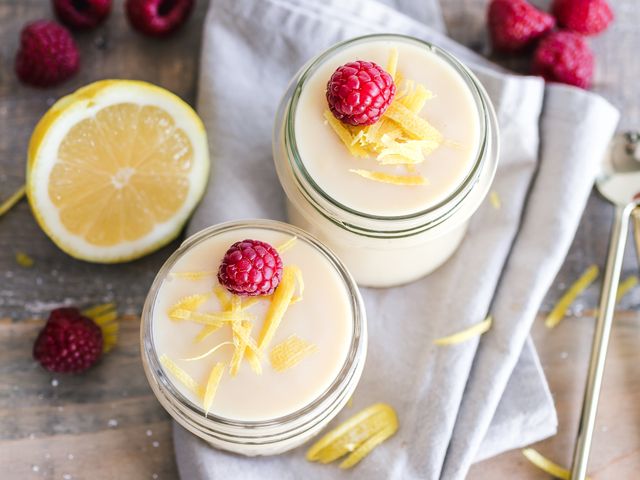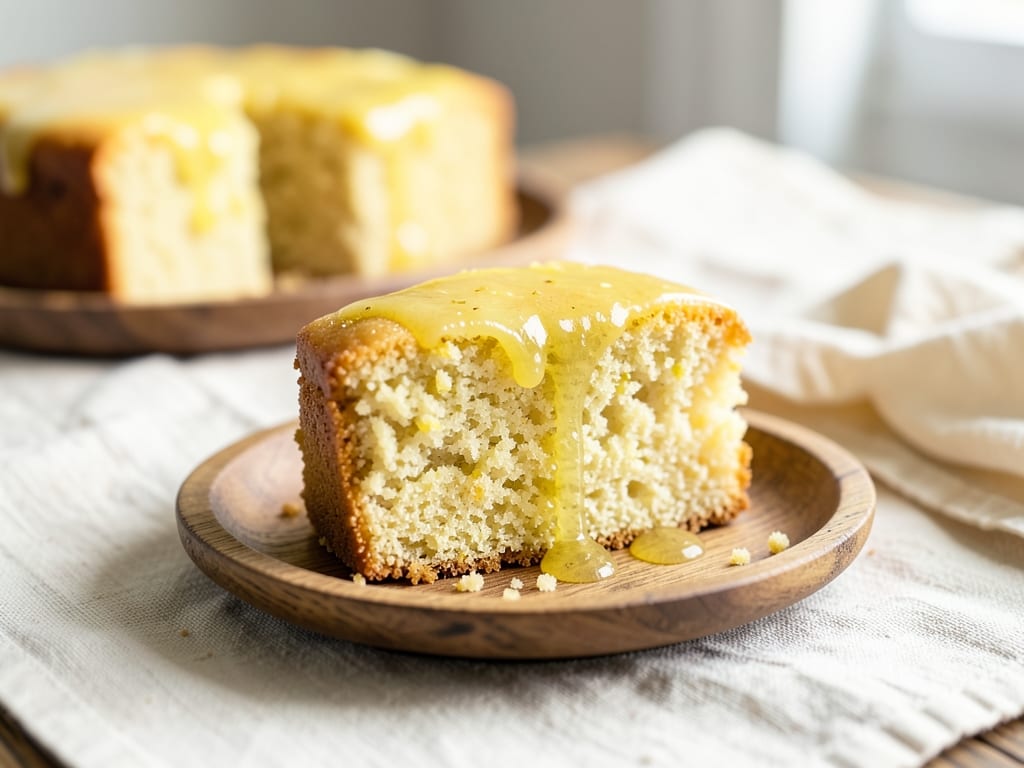
Lemon Pound Cake with Glaze
A bright, tender pound cake with concentrated lemon flavor throughout, topped with a tangy lemon glaze. The butter-rich crumb stays moist for days, with fresh lemon zest and juice woven into both the batter and the glaze for a balanced citrus punch.
- Prep
- 15 min
- Cook
- 50 min
- Wait
- 1 hr 30 min
- Total
- 2 hr 35 min
- Makes
- 1 loaf (10 slices)
Steps
Before you start
- Bring butter and eggs to room temperature (about 1 hour)
- Preheat oven to 325°F (160°C) and position rack in the lower third
- Grease a 9×5-inch (23×13 cm) loaf pan and line the bottom and sides with parchment paper for easy release
Cream butter and sugar
- In a large bowl with an electric mixer (or by hand with a wooden spoon), beat the softened butter and granulated sugar together for 3–4 minutes on medium speed until the mixture is pale, fluffy, and light in color.
- This step incorporates air into the batter, which helps the cake rise and gives it a tender crumb.
- Scrape down the bowl halfway through.
+ Show details− Hide details
Ready when: Mixture is pale, fluffy, and has increased in volume
Tip: Do not rush this step. Proper creaming ensures an even crumb and helps the cake rise evenly.
Add zest to butter mixture
- Add the finely grated lemon zest to the creamed butter and sugar, stirring until evenly distributed.
- The oils in the zest will flavor the entire batter.
+ Show details− Hide details
Ready when: Zest is evenly combined throughout the mixture
Incorporate eggs one at a time
- Add the room-temperature eggs to the butter mixture one at a time, beating on medium speed for about 30 seconds after each addition.
- Add the first egg, beat well, then add the second egg, beat well, then add the third egg and beat until fully incorporated.
- If the mixture looks curdled, it is normal—it will smooth out once the dry ingredients are added.
+ Show details− Hide details
Ready when: All three eggs are added and combined; mixture may appear slightly separated
Tip: Room-temperature eggs emulsify better with the butter and create a smoother batter than cold eggs.
Add lemon juice to batter
- Reduce mixer speed to low and slowly pour in the fresh lemon juice while mixing.
- Beat for about 30 seconds until fully incorporated.
- The batter may look slightly separated at this point, which is normal.
+ Show details− Hide details
Ready when: Lemon juice is incorporated throughout
Tip: Add the juice slowly to prevent over-mixing and to help it emulsify with the butter mixture.
Combine flour, baking powder, and salt
- In a separate small bowl, whisk together the sifted all-purpose flour, baking powder, and kosher salt until evenly distributed.
+ Show details− Hide details
Ready when: Dry ingredients are evenly combined with no visible lumps
Fold in dry ingredients
- With the mixer on low speed, add the flour mixture to the wet ingredients in two additions, mixing just until the flour is no longer visible after each addition.
- Do not over-mix.
- Use a rubber spatula to gently fold the batter and ensure all flour at the bottom of the bowl is incorporated.
- The batter should be smooth and homogeneous.
+ Show details− Hide details
Ready when: No streaks of flour remain; batter is smooth and uniform in color
Tip: Over-mixing the batter once the flour is added will develop gluten and result in a tough, dense cake. Mix just until combined.
Fill prepared pan and bakeOven 325°F / 165°C
- Pour the batter into the parchment-lined loaf pan, smoothing the top with a rubber spatula to ensure an even surface.
- Place the pan on the lower rack of the oven preheated to 325°F (160°C).
- Bake for 48–52 minutes, until a toothpick inserted into the center of the cake comes out with only a few moist crumbs clinging to it (not wet batter, but a few crumbs are fine).
- The top should be golden brown and spring back lightly when gently pressed.
+ Show details− Hide details
Ready when: Toothpick inserted in center comes out with only a few moist crumbs; top is golden brown and springs back lightly when pressed
Tip: Baking at 325°F instead of the standard 350°F allows the pound cake to bake more gently and evenly, preventing a dome or cracked top.
Cool cake in pan
- Remove the cake from the oven and place it on a wire rack.
- Let the cake cool in the loaf pan for 15 minutes.
- This allows the cake to firm up slightly and makes it less likely to break when unmolded.
- Do not skip this step.
+ Show details− Hide details
Ready when: Cake has cooled enough to handle the pan
Unmold and cool completely
- Invert the pan onto a wire rack and lift off the loaf pan.
- Gently peel away the parchment paper.
- Place the cake right-side up on the rack and allow it to cool completely, about 60 minutes, before glazing.
- The cake should be at room temperature when you apply the glaze.
+ Show details− Hide details
Ready when: Cake is completely cool to the touch
Tip: If you glaze the cake while it is still warm, the glaze will run off and not set properly.
Prepare lemon glaze
- In a small saucepan over medium-low heat, melt the 3 tablespoons of butter, stirring occasionally so it does not brown.
- Remove from heat and let cool for 1–2 minutes.
- In a small bowl, whisk together the sifted powdered sugar and fresh lemon juice until smooth and pourable.
- Add the melted butter and stir until fully combined.
- The glaze should be thick but pourable, about the consistency of honey.
- If it is too thick, add a teaspoon of lemon juice or water; if too thin, add a bit more powdered sugar.
+ Show details− Hide details
Ready when: Glaze is smooth, thick but pourable, and uniform in consistency
Tip: Do not let the butter brown or the glaze will taste bitter. Melt gently and watch carefully.
Glaze and set
- Pour the warm glaze over the top of the cooled cake, letting it drip down the sides.
- Use a small spatula or knife to spread the glaze evenly over the top and sides if desired.
- If using the optional lemon zest garnish, sprinkle it over the glaze while it is still slightly warm and sticky.
- Allow the glaze to set at room temperature for about 30 minutes before slicing.
- The glaze will firm up and become a smooth, tangy coating.
+ Show details− Hide details
Ready when: Glaze is no longer sticky to the touch and has a matte finish
Tip: If the glaze hardens too quickly before you apply it, warm it gently over low heat or add a touch of water.
Good to know
Tips
- For the brightest lemon flavor, use both zest and juice from lemons. Meyer lemons have more juice but are less sharp; standard Eureka or Lisbon lemons are more acidic and deliver a more pronounced citrus punch.
- If your cake cracks slightly on top during baking, do not worry—this is common and normal for pound cake. It will be covered by the glaze.
- This cake freezes beautifully unglazed and is perfect for gift-giving. Glaze it fresh when you are ready to serve for the best presentation.
- For a more pronounced lemon flavor, you can increase the zest to 2.5–3 tablespoons or reduce the sugar to 1.5 cups, but note that this will make the cake less sweet and the rise may be slightly lower.
Make ahead
The cake (without glaze) can be baked up to 2 days ahead, wrapped tightly in plastic wrap, and stored at room temperature. Glaze the cake no more than 4 hours before serving for the best appearance.
Storage & reheating
Room temperature: wrapped tightly in plastic wrap for up to 3 days. Refrigerator: in an airtight container for up to 5 days (the cake becomes slightly moister and softer). Freezer: wrap the unglazed cooled cake tightly in plastic wrap and then foil; freeze for up to 2 months. Thaw at room temperature for 2–3 hours before glazing. To reheat, warm slices in a 300°F (150°C) oven for 5 minutes.
Substitutions
- unsalted butter, softened → Unsalted coconut oil (use the same amount by weight, 226g). The cake will have a subtle coconut flavor and a slightly different texture—less rich but still moist. Use refined coconut oil for the most neutral flavor.
- fresh lemon juice → Meyer lemon juice or a mix of lemon and lime juice (use the same total volume, 80 ml). Meyer lemon juice is sweeter and less acidic than standard lemon juice, resulting in a milder citrus flavor. Lime will add a more complex, slightly floral note.
- all-purpose flour → Gluten-free all-purpose flour blend (same volume, 240g). Use a 1:1 gluten-free blend that includes xanthan gum. The cake may have a slightly denser crumb and may need an extra minute or two in the oven.
- baking powder → Baking soda and cream of tartar (use 1/4 teaspoon baking soda + 1/2 teaspoon cream of tartar). This will produce a cake with a slightly more tender crumb, though the rise may be marginally less dramatic. Use immediately after mixing.