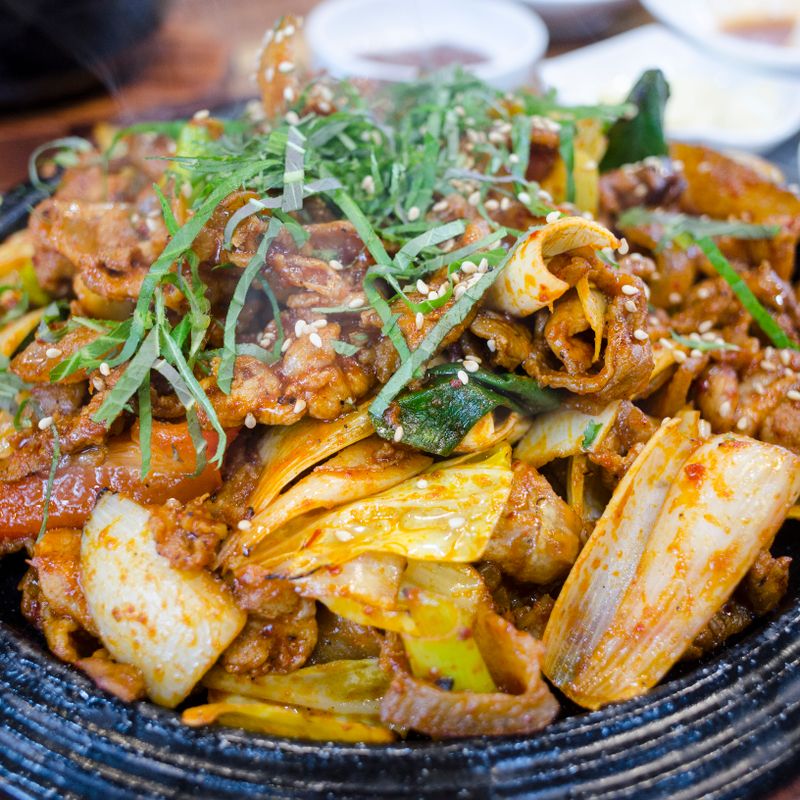
Korean Gochujang Pineapple Pork Marinade
A bold, sweet-spicy marinade that combines fermented gochujang with fresh pineapple juice to tenderize and flavor pork. The enzymes in pineapple break down muscle fibers while ginger, garlic, and sesame oil add depth. Perfect for grilling, pan-searing, or broiling pork chops, shoulder, or belly.
- Prep
- 10 min
- Cook
- —
- Wait
- 4 hr
- Total
- 4 hr 10 min
- Makes
- about 1 cup marinade (enough for 2 lb / 900 g pork)
Steps
Before you start
- Read the full recipe and note marinating time
- Have your pork ready or plan ahead—marinade works best when pork sits for 4–8 hours or overnight
- Use fresh or shelf-stable pineapple juice, not sweetened concentrate
Combine wet ingredients
- In a 1-quart bowl or measuring cup, whisk together the gochujang, pineapple juice, sesame oil, and soy sauce until the gochujang dissolves and the mixture is smooth.
- Work out any lumps with the back of a spoon if needed.
+ Show details− Hide details
Ready when: mixture is smooth and uniform
Tip: Gochujang is thick and can clump; warm pineapple juice slightly if needed to help it dissolve, or whisk vigorously.
Add aromatics and seasoning
- Stir in the minced garlic, minced ginger, rice vinegar, and brown sugar.
- Whisk until the sugar dissolves and all ingredients are evenly distributed.
+ Show details− Hide details
Ready when: sugar is dissolved and mixture is uniform
Tip: Brown sugar dissolves quickly in acidic or liquid-rich mixtures; a few extra whisks ensure it's fully incorporated.
Transfer and marinade pork
- Place your 2 lb (900 g) of pork (chops, shoulder, belly, or cubed for stir-fry) in a gallon-size resealable bag or shallow dish.
- Pour the entire marinade over the pork, press out any air, seal the bag (or cover the dish), and refrigerate for at least 4 hours or up to 12 hours.
- Turn the bag or stir the pork halfway through if marinating longer than 6 hours.
+ Show details− Hide details
Ready when: pork is fully submerged and color is even throughout
Tip: Longer marinating (8–12 hours) yields more tender, flavorful results, but 4 hours is the minimum for good flavor.
Prepare pork for cooking
- Remove the marinated pork from the refrigerator 15–20 minutes before cooking to bring it closer to room temperature.
- If desired, reserve a few tablespoons of marinade for basting or serving as sauce (do not re-use marinade that has touched raw pork unless you boil it first).
+ Show details− Hide details
Ready when: pork is no longer cold to the touch
Tip: Reserved marinade can be boiled in a small saucepan for 1–2 minutes to kill any bacteria, then drizzled over the finished dish for extra flavor.
Cook the pork (optional guidance)Oven 450°F / 230°C
- Remove pork from the bag, letting excess marinade drip back.
- Cook on a preheated grill over medium-high heat (400–450°F / 200–230°C), in a cast-iron skillet over medium-high heat, or under the broiler.
- Pork chops (¾–1 inch thick) take 4–6 minutes per side; thicker cuts or cubed pork may need 8–12 minutes total depending on size.
- Internal temperature should reach 145°F (63°C) for medium-rare.
+ Show details− Hide details
Ready when: pork reaches 145°F (63°C) internally; exterior is caramelized with slight charring
Tip: Watch the heat—the sugar and pineapple juice can cause the marinade to brown or burn quickly; move pork to a cooler zone if browning too fast.
Finish with sesame seeds
- If using, sprinkle the toasted sesame seeds over the finished pork just before serving for a nutty garnish.
+ Show details− Hide details
Ready when: garnish is evenly distributed
Tip: Add sesame seeds at the last moment so they stay crisp and fragrant.
Good to know
Tips
- Gochujang varies in heat level by brand—taste a tiny amount first and adjust the quantity if you prefer milder or spicier results.
- Pineapple's bromelain enzyme tenderizes meat quickly, so avoid marinating longer than 12 hours or the texture may become mushy.
- For extra umami, add ½ teaspoon of miso paste or fish sauce (omit the latter if cooking for vegetarians).
- This marinade also works beautifully on chicken, shrimp, or even firm tofu—reduce marinating time for chicken (2–4 hours) and fish (30 minutes–2 hours).
Make ahead
Marinade can be made up to 2 days ahead and stored in an airtight container in the refrigerator. Combine all ingredients, then add pork when ready to marinate (minimum 4 hours before cooking).
Storage & reheating
Leftover marinade (if not used on raw pork) keeps refrigerated for up to 3 days. Boil it for 1–2 minutes before using it as a finishing sauce. Cooked pork leftovers keep refrigerated for up to 3 days; reheat gently in a skillet or microwave, or shred and use cold in salads or wraps.
Substitutions
- fresh or shelf-stable pineapple juice → apple juice or mango juice. Provides similar sweetness and fruit enzymes for tenderizing, though the flavor profile shifts slightly away from Korean tropical notes.
- gochujang (Korean red chili paste) → sambal oelek or Korean chili flakes (gochugaru). Chili flakes lack fermented umami but still deliver heat; use 1–1½ tbsp and add ½ tsp miso paste for depth.
- toasted sesame oil → neutral oil (vegetable, canola, or peanut oil) with an additional ½ tsp toasted sesame oil for flavor. Keeps the marinade lighter if you prefer less sesame intensity.
- rice vinegar → white vinegar or lime juice. Maintains acidity and brightness; rice vinegar is milder, so white vinegar may taste sharper—use ½–¾ tbsp.