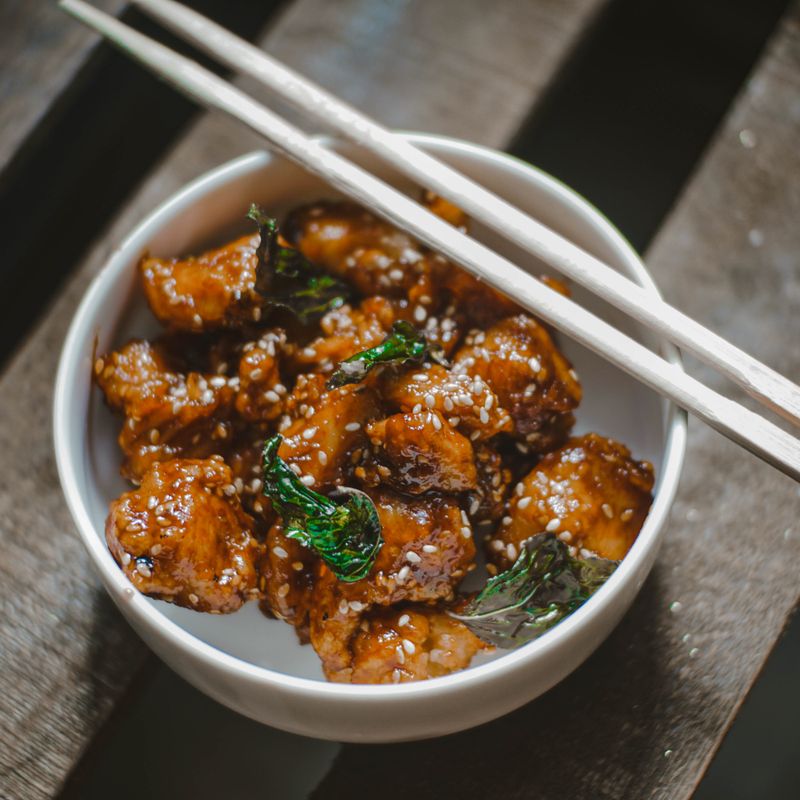
Korean Doenjang Sesame Chicken Thigh Marinade
A savory-spicy Korean marinade built on doenjang (fermented soybean paste) and toasted sesame oil, infused with garlic, gochugaru, and fresh scallions. Perfect for grilling, pan-frying, or braising chicken thighs. The deep umami from doenjang combined with nutty sesame and gentle heat creates an intensely flavorful base that penetrates the meat within 2–4 hours or overnight.
- Prep
- 10 min
- Cook
- —
- Wait
- 2 hr
- Total
- 2 hr 10 min
- Makes
- About ¾ cup (180 ml) marinade, enough for 8 chicken thighs (about 3 lbs / 1.4 kg)
Steps
Before you start
- Pat chicken thighs completely dry with paper towels—moisture prevents the marinade from adhering properly.
- Have all aromatics prepped and measured so you can mix the marinade quickly.
- Use a glass bowl or zip-top bag; avoid reactive metals which can interact with the salty, acidic marinade.
Combine paste and liquid
- In a small mixing bowl, combine the doenjang, soy sauce, mirin, and water.
- Whisk together until the paste is broken down and the mixture is smooth, about 1 minute.
- The water helps distribute the thick paste evenly throughout the marinade.
+ Show details− Hide details
Ready when: Mixture is smooth with no lumps of doenjang
Tip: Whisk thoroughly to break up the paste; any clumps will not distribute evenly on the chicken.
Add aromatics and heat
- Stir in the minced garlic, ginger, gochugaru, and the white parts of the scallions.
- Mix well to combine.
- The garlic and ginger will steep into the marinade as it sits.
+ Show details− Hide details
Ready when: Garlic and ginger are evenly distributed
Tip: Reserve the green scallion tops for stirring in at the end to preserve their fresh flavor.
Finish with sesame oil
- Pour in the toasted sesame oil and stir until fully incorporated.
- The marinade should be glossy, speckled with garlic and ginger, and aromatic.
- Taste it: it should be salty, slightly sweet, savory, and with a gentle warmth from the gochugaru.
+ Show details− Hide details
Ready when: Sesame oil is fully blended and marinade is glossy
Tip: Add sesame oil last so its aroma stays bright rather than diminishing during extended mixing.
Coat chicken thighs
- Transfer the marinade to a gallon-size zip-top bag or glass bowl.
- Add 8 bone-in, skin-on chicken thighs (about 3 lbs / 1.4 kg total).
- Massage the marinade all over and into the crevices of each thigh, ensuring thorough coverage.
- Squeeze out excess air if using a bag.
+ Show details− Hide details
Ready when: All chicken pieces are evenly coated with marinade
Tip: Spread the chicken in a single layer in the bag to ensure the marinade contacts all surfaces equally.
Marinate at room temperature or refrigerate
- Leave the chicken at room temperature for 2–4 hours for a balanced flavor, or cover and refrigerate for up to 24 hours for deeper penetration.
- If marinating longer than 4 hours, refrigerate to slow any bacterial growth.
- Stir or flip the bag halfway through if marinating more than 8 hours.
+ Show details− Hide details
Ready when: Chicken has absorbed the marinade and glistens; aromatics have infused the meat
Tip: A minimum of 2 hours at room temperature or 4 hours refrigerated yields the best flavor.
Stir in fresh green scallions
- Just before cooking, gently stir in the reserved green scallion tops to brighten the flavor of the marinade.
- They will add a fresh, oniony accent that complements the deep savory base.
+ Show details− Hide details
Ready when: Green scallions are evenly distributed throughout
Tip: Add these only right before cooking so they stay bright and fresh.
Good to know
Tips
- Doenjang is sold in Korean markets and online; look for brands labeled 'doenjang' rather than 'gochujang' (which is fermented chili paste). Quality varies by brand—choose one made from soybeans, salt, and koji, with no extra additives.
- Pat the chicken dry before marinating so the skin won't steam during cooking. Excess moisture dilutes the marinade and prevents proper browning or caramelization.
- This marinade works beautifully grilled over charcoal or gas (medium-high heat, about 6 inches from the flame, 12–15 minutes per side) or pan-seared in a cast-iron skillet over medium-high heat until the skin is crackling and the thickest part reaches 165°F (74°C) internally.
- The marinade's salt content is balanced for meat but generous; if you reduce the doenjang or soy sauce, increase the ginger and garlic slightly to maintain depth of flavor.
Make ahead
Prepare the marinade up to 2 days ahead and store it in an airtight container in the refrigerator. Marinate the chicken up to 24 hours in advance. Remove from the refrigerator 20 minutes before cooking to allow the chicken to approach room temperature.
Storage & reheating
Store marinated chicken in an airtight container or zip-top bag in the refrigerator for up to 2 days before cooking. Do not freeze marinated chicken, as the salt in the doenjang can degrade texture. If freezing unmarinated chicken, use within 2 months and thaw in the refrigerator before marinating. Leftover cooked chicken (marinated and cooked) keeps refrigerated in an airtight container for up to 4 days; reheat gently in a 325°F (163°C) oven for 10–12 minutes or in a skillet over medium heat with a splash of water to prevent drying.
Substitutions
- doenjang (Korean fermented soybean paste) → miso paste (red or white), using 3 tablespoons (45 g). Miso will deliver umami and fermented depth, though the flavor profile shifts slightly more toward Japan than Korea. White miso will be milder; red miso will be closer to doenjang in intensity.
- gochugaru (Korean red chili flakes) → cayenne pepper or red pepper flakes, using ½–¾ teaspoon (1.5–2 g). These are hotter and less fruity than gochugaru. Start with less and adjust to taste.
- mirin (sweet rice wine) → honey or sugar, using 1 tablespoon (12 g honey or 13 g sugar). Honey adds sweetness and a subtle floral note; sugar is neutral. Mirin's complex sweetness is harder to replicate exactly.
- toasted sesame oil → neutral oil (vegetable or canola) plus ½ teaspoon toasted sesame seeds, crushed. This reduces the intensity of sesame flavor but keeps the marinade workable. Toasted sesame seeds add texture and aroma.