Korean Gochujang Crispy Rice Cakes
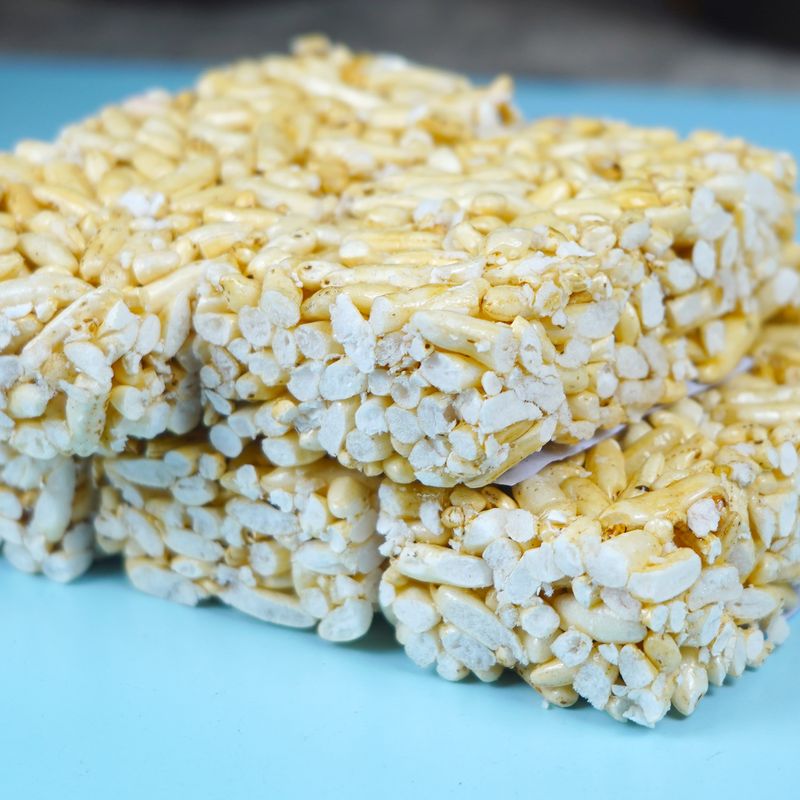
Pan-fried rice cakes with a caramelized gochujang glaze, crispy on the outside and tender within. This Korean-inspired side features the savory heat of gochujang balanced with the sweetness of honey and richness of butter, finished with toasted garlic and sesame seeds for depth.
- Prep
- 15 min
- Cook
- 16 min
- Wait
- 30 min
- Total
- 1 hr 1 min
- Makes
- 8 rice cakes (serves 4 as a side)
Steps
Before you start
- Use day-old or cooled cooked rice for best texture—freshly cooked rice is too moist and will fall apart
- Have all ingredients prepped before you start forming the cakes, as the rice mixture sets quickly as it cools
- Line a plate with parchment paper to prevent the formed cakes from sticking
Mix rice with butter and salt
- In a medium bowl, combine the cooled cooked rice with 2 tablespoons (29 g) of softened butter and ½ teaspoon (3 g) of kosher salt.
- Mix gently with a wooden spoon until the butter is evenly distributed throughout the rice.
- The mixture should hold together when pressed but remain slightly loose.
+ Show details− Hide details
Ready when: butter is evenly distributed and rice is slightly glossy
Tip: Don't overwork the mixture or the rice grains will break down and become gummy.
Form rice cakes
- Divide the rice mixture into 8 equal portions (about ½ cup / 110 g each).
- Using damp hands to prevent sticking, press each portion firmly into a compact cake roughly ¾ inch (2 cm) thick and 3 inches (7.5 cm) wide.
- Place each formed cake on the parchment-lined baking sheet.
- Refrigerate for at least 30 minutes until the cakes are firm and hold their shape.
+ Show details− Hide details
Ready when: cakes are solid and maintain their shape when picked up
Tip: Keep your hands damp as you form each cake to prevent sticking. If the rice mixture becomes too warm, chill it briefly in the refrigerator.
Make gochujang glaze
- In a small bowl, whisk together 3 tablespoons (45 g) of gochujang, 2 tablespoons (30 ml) of honey, and the 3 minced garlic cloves.
- Stir until smooth and fully combined.
- Set aside.
+ Show details− Hide details
Ready when: mixture is smooth with no lumps
Heat pan and add oil
- Heat a large skillet or cast-iron pan over medium-high heat.
- Once hot, add 1 tablespoon (15 ml) of vegetable oil and swirl to coat the bottom evenly.
- Let the oil heat for about 1 minute until shimmering.
+ Show details− Hide details
Ready when: oil is shimmering and barely smoking
Tip: Don't skip the preheating step—a hot pan is crucial for creating a crispy, caramelized exterior on the rice cakes.
Pan-fry first batch of rice cakes
- Carefully place 4 of the chilled rice cakes into the hot skillet, spacing them evenly.
- Do not move them for 3–4 minutes, allowing the bottoms to become golden brown and crispy.
- Flip each cake carefully and fry the other side for another 2–3 minutes until golden and crispy.
- Transfer to a clean plate.
+ Show details− Hide details
Ready when: both sides are golden brown and crispy; cakes are tender inside
Tip: Don't flip too early or the rice cakes will break apart. A thin, golden crust will form naturally if you leave them undisturbed.
Pan-fry second batch
- Add the remaining 1 tablespoon (14 g) of unsalted butter to the pan.
- Once melted and foaming, add the remaining 4 rice cakes and fry for 3–4 minutes on the first side until golden and crispy.
- Flip and fry for 2–3 minutes on the second side.
- Transfer to the plate with the first batch.
+ Show details− Hide details
Ready when: both sides are golden brown and crispy
Tip: The butter will add richness and help the second batch achieve an even crispier crust.
Coat cakes with gochujang glaze
- Return all 8 rice cakes to the skillet over medium heat.
- Pour the gochujang glaze over the cakes and gently toss or stir for 1–2 minutes, tilting the pan occasionally to coat all surfaces evenly.
- The glaze should caramelize slightly and coat the cakes in a glossy layer.
+ Show details− Hide details
Ready when: glaze is glossy and clings to the rice cakes; aroma is fragrant and savory
Tip: Keep the heat at medium to avoid burning the glaze. A slight caramel color on the glaze signals perfect doneness.
Plate and garnish
- Arrange the gochujang-glazed rice cakes on a serving platter.
- Sprinkle with toasted sesame seeds and thinly sliced scallions if desired.
- Serve immediately while the cakes are still warm and crispy.
+ Show details− Hide details
Ready when: cakes are plated and garnished
Tip: Serve within a few minutes of glazing for maximum crispiness. The cakes soften slightly as they cool.
Good to know
Tips
- Use leftover cooked rice from the previous day or cook rice specifically for this recipe and let it cool completely. Cold, firm rice is much easier to form into stable cakes.
- For extra crispy cakes, increase the skillet temperature to medium-high and reduce frying time slightly. Watch carefully to avoid burning.
- If your rice cakes are too soft and fall apart when flipping, the original rice was too moist. Next time, let cooked rice cool longer or spread it on a sheet pan to dry it out before mixing with butter.
- The gochujang glaze thickens as it cools, so serve the rice cakes warm for the best glossy finish and easiest plating.
Make ahead
Formed rice cakes can be refrigerated on parchment for up to 2 days before pan-frying. The gochujang glaze can be made up to 1 day ahead and stored in an airtight container in the refrigerator; bring to room temperature before using.
Storage & reheating
Store any leftovers in an airtight container in the refrigerator for up to 3 days. Reheat in a skillet over medium heat for 2–3 minutes per side until warmed through and re-crisped, or reheat covered in a 350°F (175°C) oven for 10 minutes. The cakes are best enjoyed fresh but are still delicious reheated.
Substitutions
- gochujang (Korean red chili paste) → Sriracha or Korean chili flakes (gochugaru) mixed with a little soy sauce. Use about 2 tablespoons sriracha mixed with 1 teaspoon soy sauce for a similar heat and depth of flavor, though the result will be slightly less complex.
- honey → Mirin or brown sugar. Use equal amounts by volume. Brown sugar will add a molasses note; mirin will be slightly less sweet but enhance umami.
- cooked short-grain rice (such as sushi or Arborio), cooled → Cooked medium-grain white rice, jasmine rice, or even risotto rice. Short-grain rice holds together best due to higher starch content. Avoid long-grain rice, which will not form cohesive cakes.
- toasted sesame seeds (white or black) → Crushed roasted peanuts, chopped nori (seaweed), or sliced almonds. Each adds a different flavor and texture. Nori adds umami; peanuts add earthiness.