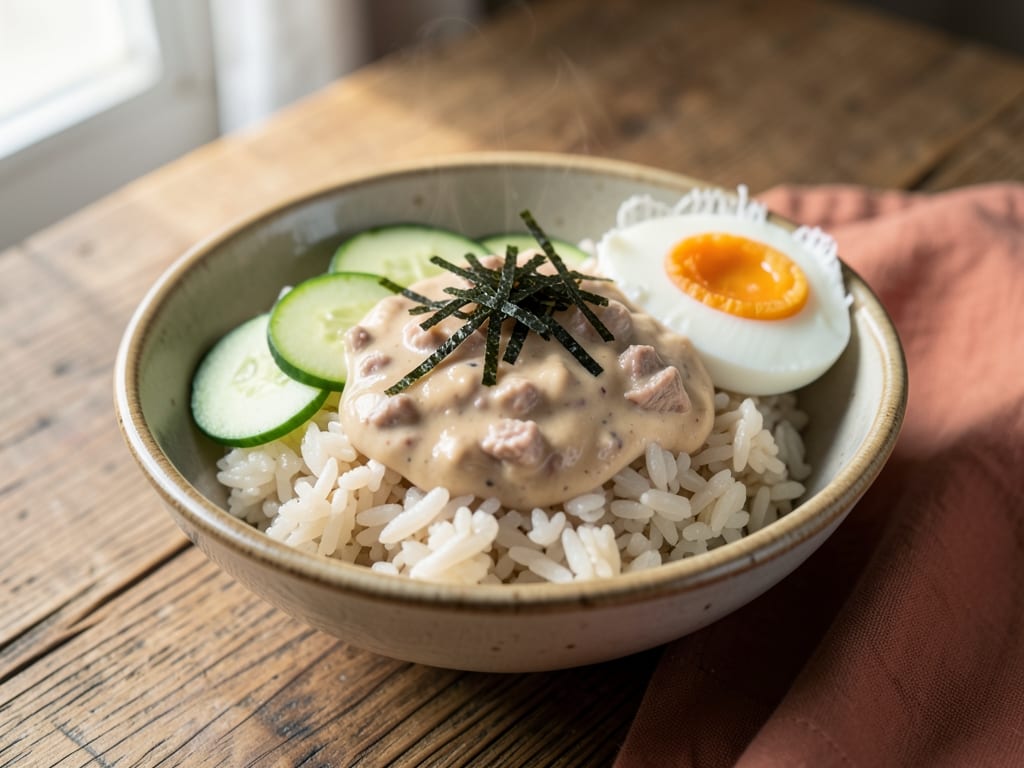
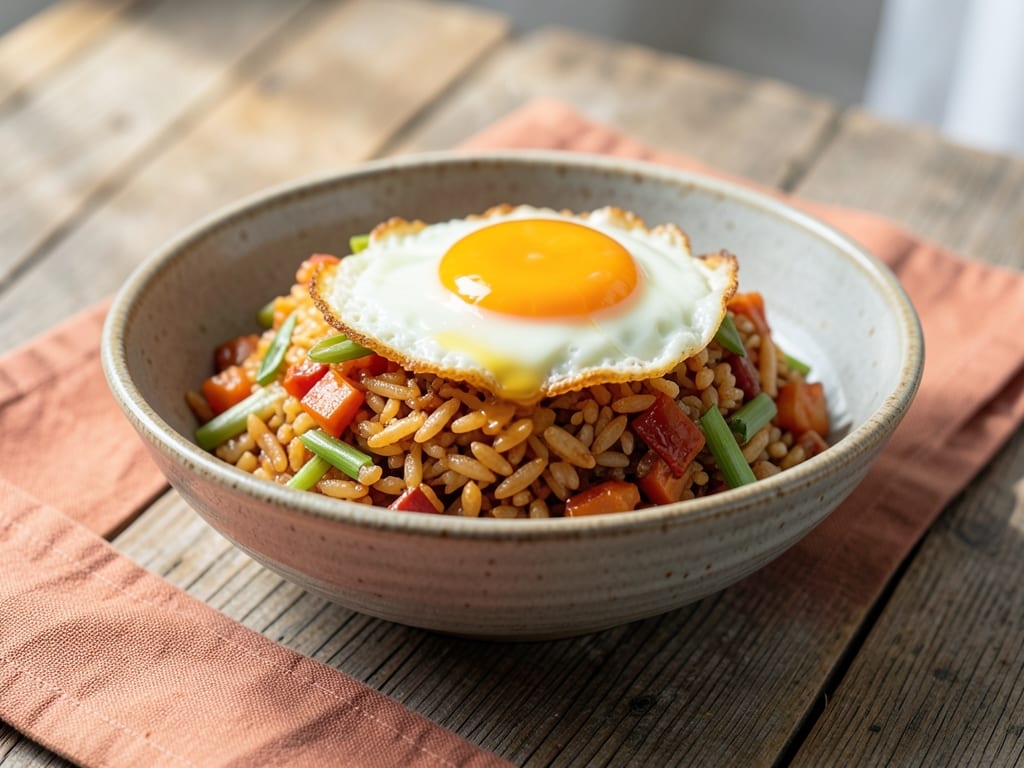
Korean Doenjang Anchovy Rice
A deeply savory Korean rice dish infused with the umami of doenjang (fermented soybean paste), dried anchovies, and kelp. The rice absorbs a fragrant broth made from anchovy-kelp stock, finished with a drizzle of sesame oil and toasted sesame seeds. Perfect as a comforting side or light meal on its own.
- Prep
- 10 min
- Cook
- 25 min
- Wait
- 15 min
- Total
- 50 min
- Makes
- 4 servings (about 3 cups cooked rice)
Steps
Before you start
- Rinse the short-grain rice under cold water until the water runs mostly clear (3–4 rinses)
- Have all ingredients measured and within reach before you begin
- Use a heavy-bottomed saucepan with a tight-fitting lid for even cooking
Make anchovy-kelp broth
- In a small saucepan, bring 2 cups (480 ml) water to a boil over high heat.
- Add the cleaned dried kelp and prepared dried anchovies (heads and guts removed).
- Reduce heat to medium-low and simmer for 8–10 minutes until the broth is fragrant and slightly golden.
- Strain through a fine-mesh strainer into a bowl, discarding the solids.
- You should have about 1¾ cups (420 ml) broth; if less, top up with water.
+ Show details− Hide details
Ready when: Broth is fragrant and pale golden; anchovies are soft
Tip: Do not boil the broth vigorously—this can make it bitter. A gentle simmer draws out clean, sweet umami flavors.
Toast sesame seeds
- While the broth simmers, place 1 tablespoon (10 g) white sesame seeds in a small dry skillet over medium heat.
- Toast, stirring occasionally with a wooden spoon, for about 1 minute until fragrant and lightly golden.
- Transfer to a small plate and set aside.
+ Show details− Hide details
Ready when: Seeds are lightly golden and fragrant
Tip: Watch carefully—sesame seeds burn quickly. Remove from heat as soon as they smell toasted.
Combine rice and broth
- Place the rinsed rice in a heavy-bottomed 3-quart saucepan.
- Pour the warm anchovy-kelp broth over the rice and stir gently with a wooden spoon to distribute evenly.
- Add the doenjang paste by dissolving it in a small amount of the broth first, then stirring it into the rice mixture until incorporated.
+ Show details− Hide details
Ready when: Rice is evenly coated and doenjang is fully incorporated
Tip: Dissolving doenjang in a bit of broth first prevents lumps and ensures even distribution of salty, umami flavor.
Bring to a boil
- Place the saucepan over high heat and bring the rice and broth to a boil, uncovered.
- You should see steam rising and hear a gentle bubbling, about 2–3 minutes.
- Stir once or twice to ensure nothing sticks to the bottom.
+ Show details− Hide details
Ready when: Rice and broth are at a rolling boil; steam is visible
Tip: Stir occasionally at this stage to prevent the bottom from scorching and to help the grains cook evenly.
Simmer covered
- Reduce the heat to low, cover the saucepan with a tight-fitting lid, and simmer for 12–15 minutes.
- The rice will absorb the broth and become tender.
- Do not lift the lid or stir during this time, as this releases steam and can result in unevenly cooked rice.
+ Show details− Hide details
Ready when: Rice is tender and has absorbed all the liquid; no broth remains at the bottom
Tip: Resist the urge to peek—every time you lift the lid, you release steam and add 1–2 minutes to the cooking time.
Rest the rice
- Remove the saucepan from heat and keep the lid in place.
- Let the rice rest for 5 minutes.
- This allows the grains to fully set and become fluffy.
+ Show details− Hide details
Ready when: Steam has settled and condensation appears on the lid
Tip: This resting period is essential—it makes the difference between fluffy, separate grains and sticky, dense rice.
Finish with sesame oil and seeds
- Remove the lid and fluff the rice gently with a wooden spoon or rice paddle, breaking up any clumps.
- Drizzle 1 tablespoon (15 ml) sesame oil over the rice and stir gently to distribute.
- Top with the toasted sesame seeds and sliced green onion (if using).
- Serve immediately while warm.
+ Show details− Hide details
Ready when: Rice is fluffy; sesame oil and seeds are evenly distributed
Tip: Add sesame oil just before serving—this preserves its fragrance and prevents it from being absorbed too deeply into the warm rice.
Good to know
Tips
- For a deeper doenjang flavor, increase the paste to 2 tablespoons (34 g), but taste the broth as you stir it in—the paste is salty and umami-forward, so adjust gradually.
- If your rice still has a slight firmness at the end of cooking (like crunchy rice), reduce heat to very low during the simmering step next time, or cover with a kitchen towel under the lid to trap more steam.
- Toasting the sesame seeds just before serving is key—it amplifies their nutty fragrance. If you toast them earlier, they lose their aroma.
- For extra richness, add 1 tablespoon (10 g) of unsalted butter or a splash of cream just before serving, though this is not traditional.
Make ahead
You can make the anchovy-kelp broth up to 2 days ahead; store it covered in the refrigerator and reheat gently before using. The rice is best cooked fresh and served immediately, but leftovers can be refrigerated for up to 3 days and reheated gently with a splash of water over low heat.
Storage & reheating
Store leftover rice in an airtight container in the refrigerator for up to 3 days. Reheat by spreading the rice in a small saucepan with 2–3 tablespoons water over low heat, covered, for 5–7 minutes, stirring gently until warmed through. Do not freeze, as the texture will become mushy.
Substitutions
- short-grain rice (such as sushi or Japanese rice), rinsed → medium-grain rice or arborio rice. The rice will be slightly softer and may absorb broth differently, but the dish will still be delicious. Avoid long-grain rice, as it doesn't absorb flavors as well.
- doenjang (Korean fermented soybean paste) → miso paste (use 1 tablespoon / 17 g white or red miso). Miso will provide similar umami and saltiness, though the flavor will be slightly different. Use white miso for a milder taste or red miso for deeper complexity.
- dried anchovies (멸치), heads and guts removed → dashi powder (use 1 teaspoon / 5 g) or bonito flakes (use 1 tablespoon / 3 g). Dashi powder dissolves easily and adds umami; bonito flakes can be strained out after simmering. Both are milder than whole anchovies.
- dried kelp (다시마), wiped clean → kombu or nori (seaweed sheet, torn into pieces). Kombu is similar and adds the same mineral, oceanic quality. Nori is more delicate; reduce simmering time to 3–4 minutes to avoid a fishy taste.