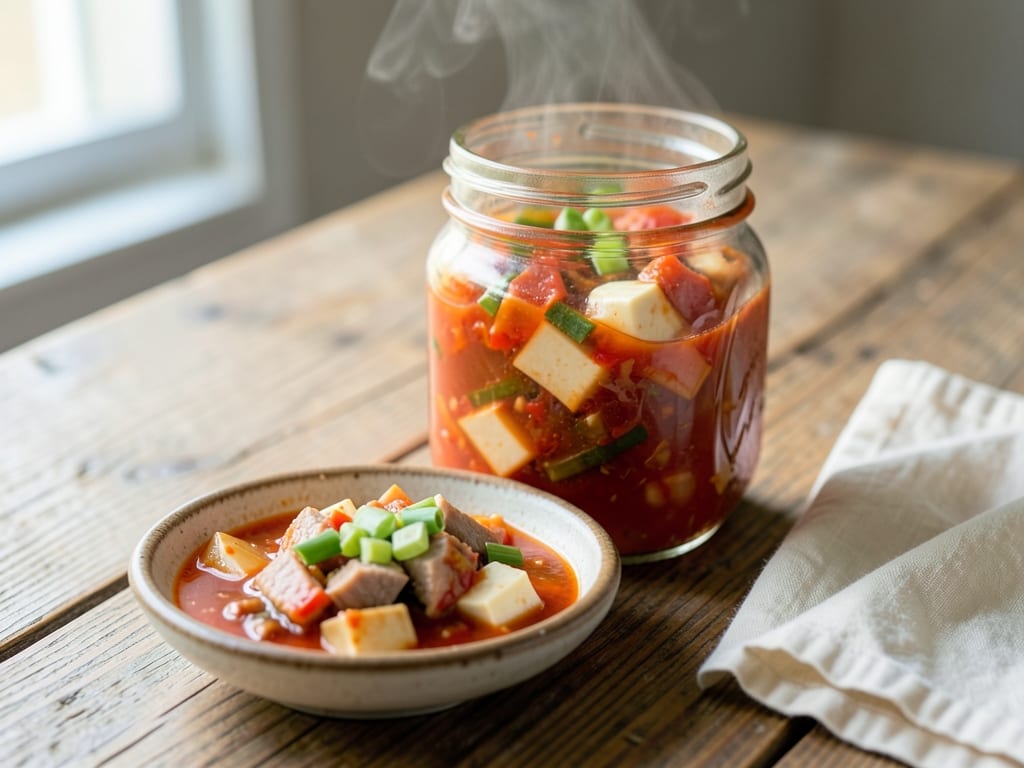
Kimchi Jjigae (Korean Kimchi Stew with Pork Belly and Tofu)
A deeply savory, tangy and spicy Korean stew built on well-fermented kimchi, rich pork belly and soft tofu. Sautéing the kimchi in pork fat before simmering gives the broth a rounded, mellow depth. Serve it bubbling hot over steamed rice.
- Prep
- 15 min
- Cook
- 35 min
- Total
- 50 min
- Makes
- About 6 cups (1.4 L) stew, serving 4
Steps
Before you start
- Use well-fermented (sour, aged) kimchi, ideally 2+ weeks old. Fresh kimchi will make a flatter, less tangy stew.
- Cook the rice first or start it while the stew simmers so both are hot at the same time.
- Slice the pork belly while partially frozen (about 20 minutes in the freezer) for easier, neater cuts.
- Gochugaru brands vary in heat. Start with the lower amount and adjust at the end.
Prep the ingredients
- Slice the pork belly, cut the kimchi into 1-inch (2.5 cm) pieces, mince the garlic, slice the onion, cut the tofu into ¾-inch (2 cm) slabs and cut the scallions, keeping whites and greens in separate piles.
- Measure ¼ cup (60 ml) of brine from the kimchi jar.
+ Show details− Hide details
Ready when: Everything is cut and arranged within reach of the stove.
Tip: Pat the tofu dry with paper towels so it doesn't dilute the broth.
Render the pork
- Set a 3-quart pot over medium heat and add the sesame oil and pork belly.
- Cook, stirring occasionally, for 5 to 6 minutes, until the pork has released fat and the edges are lightly golden and the pieces are no longer pink.
+ Show details− Hide details
Ready when: Pork is lightly golden at the edges with a visible layer of rendered fat in the pot.
Tip: If the pork is very fatty, spoon off all but about 2 tablespoons of fat before continuing.
Fry the kimchi
- Add the kimchi, onion, white parts of the scallions and the sugar to the pot.
- Stir and cook for 5 to 6 minutes, until the kimchi softens, looks slightly translucent and smells sweet-sour rather than sharp.
+ Show details− Hide details
Ready when: Kimchi is softened and glossy, and the onion is translucent.
Tip: This sauté step mellows the kimchi's sourness, so don't skip it.
Bloom the seasonings
- Reduce the heat to medium-low.
- Add the garlic, gochugaru and gochujang and stir constantly for 1 minute, until the paste coats everything and smells fragrant and toasty.
+ Show details− Hide details
Ready when: Everything is coated in red paste and smells fragrant; the garlic is not browned.
Tip: Keep stirring so the chili flakes and garlic don't scorch and turn bitter.
Add liquid and simmer
- Pour in the water and kimchi brine, and add the soy sauce.
- Raise the heat to high and bring to a boil, about 4 minutes.
- Reduce to medium-low, partially cover and simmer gently for 15 minutes.
+ Show details− Hide details
Ready when: Pork is tender when pressed with a spoon, and the broth is deep red and well flavored.
Tip: Skim any grayish foam from the surface during the first few minutes for a cleaner broth.
Add the tofu
- Slide the tofu slabs on top of the stew without stirring much.
- Simmer, uncovered, over medium-low heat for 5 minutes, until the tofu is heated through and has absorbed some of the red broth at the edges.
+ Show details− Hide details
Ready when: Tofu is hot throughout and its edges are tinged red.
Tip: Stir gently; soft tofu breaks easily.
Taste and adjust
- Taste the broth.
- Add a pinch more sugar if too sour, 1 teaspoon soy sauce if it needs salt, or an extra teaspoon of gochugaru for more heat.
- Simmer 1 minute more.
+ Show details− Hide details
Ready when: The broth tastes balanced: tangy, savory, spicy and slightly sweet.
Tip: Kimchi saltiness varies a lot, so always taste before adding more salt.
Finish and serve
- Scatter the scallion greens over the stew and turn off the heat.
- Bring the pot to the table while still bubbling, and serve in bowls with hot rice on the side.
+ Show details− Hide details
Ready when: Scallions are bright green and the stew is still steaming.
Good to know
Tips
- Sour, well-aged kimchi is the key to flavor; if yours is young, add 1 extra tablespoon of brine and a splash of rice vinegar.
- Use an earthenware pot if you have one; it keeps the stew bubbling at the table.
- Serve with fried eggs or a sheet of roasted seaweed and simple banchan for a complete meal.
- Don't overly boil after adding tofu, which can toughen it and cloud the broth.
Make ahead
"The stew tastes even better the next day. Cook through step 5, cool, and refrigerate up to 3 days; reheat and add the tofu fresh."
Storage & reheating
"Room temperature: up to 2 hours. Refrigerator: airtight container up to 4 days. Freezer: up to 2 months, best without tofu (tofu turns spongy). Reheat gently in a pot over medium-low heat, adding a splash of water, until steaming hot."
Substitutions
- skinless pork belly → pork shoulder, canned tuna in oil, or bacon. Use thinly sliced pork shoulder for a leaner stew; for tuna, add a drained 5 oz (140 g) can in step 5 and reduce the simmer to 10 minutes.
- gochujang (Korean chili paste) → additional gochugaru plus 1 tsp miso. Use 1 extra tablespoon gochugaru and 1 tsp miso for similar depth.
- water or unsalted anchovy stock → unsalted chicken broth or rice-rinse water. Adds richer body; reduce soy sauce if the broth is salted.
- firm or soft tofu → sliced rice cakes or enoki mushrooms. Add rice cakes with the liquid in step 5; add mushrooms with the tofu.
More stews
See all →

Find more like this
- Meal
- Dinner
- Cuisine
- Korean
- Diet
- Dairy-Free
- Method
- Stovetop
- Season
- Winter Comfort Food