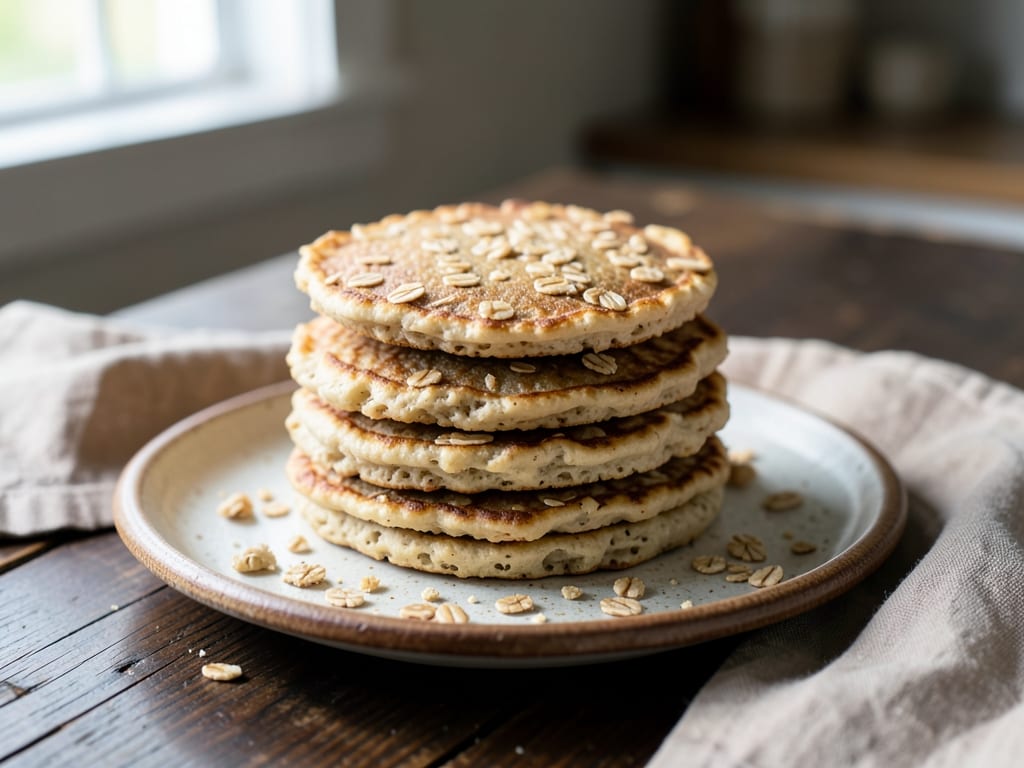
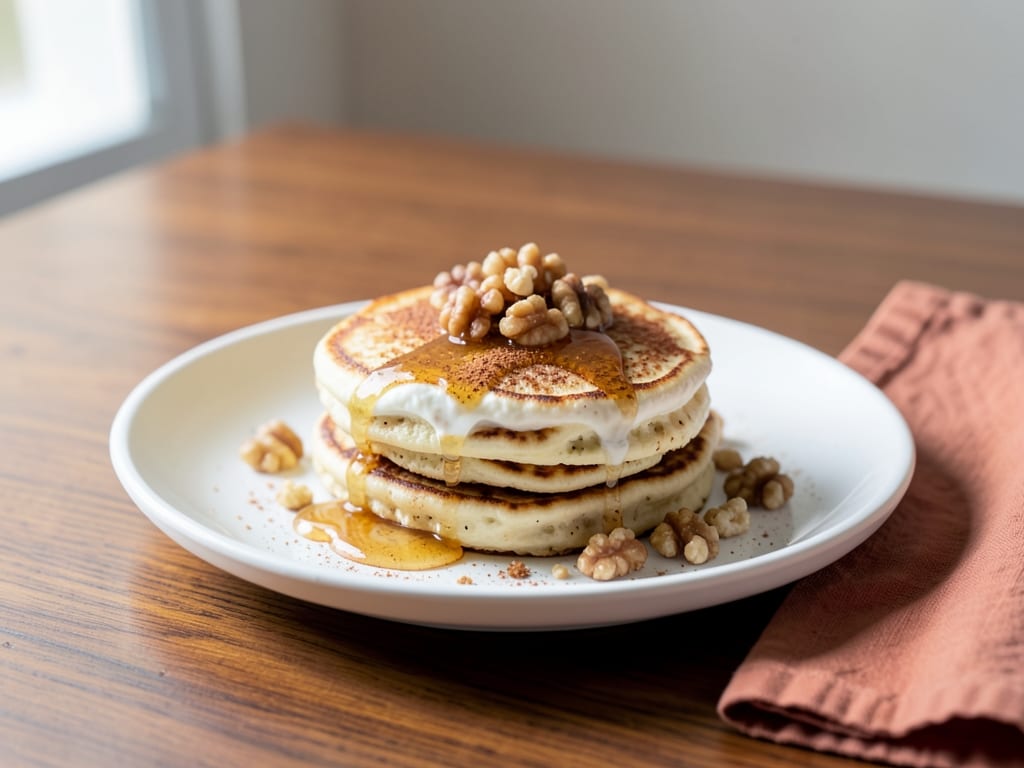
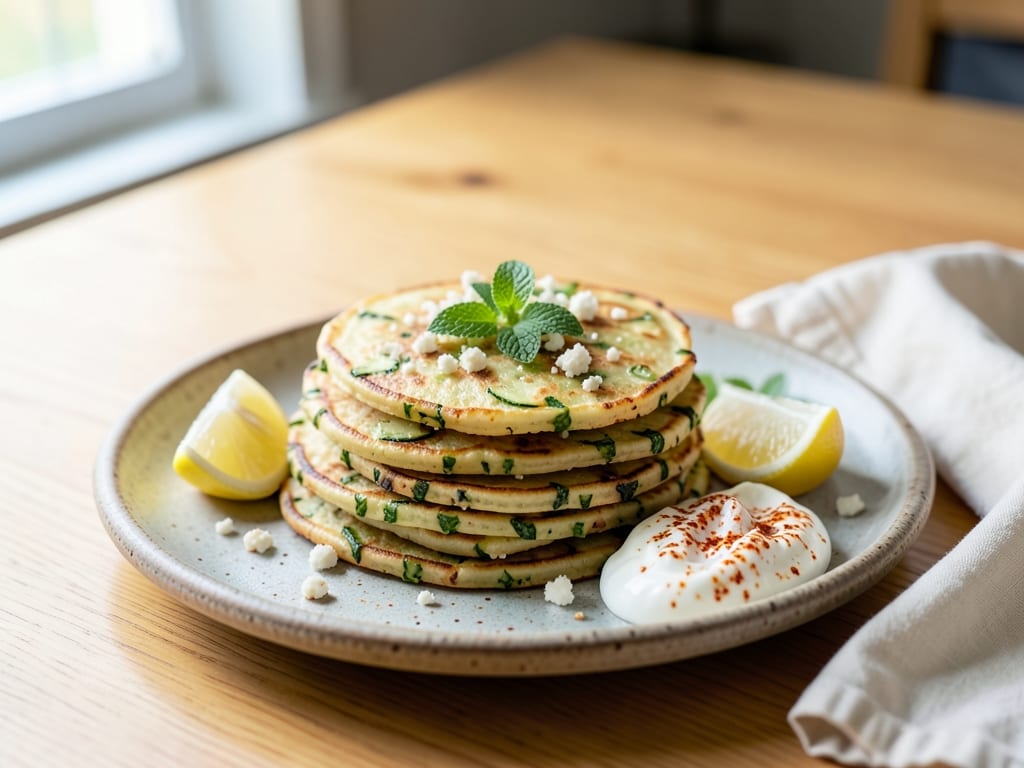
Japanese Soufflé Pancakes
Tall, jiggly, cloud-like pancakes made by folding a stable meringue into a rich batter and steaming them slowly on a covered skillet. Serve warm with butter, maple syrup and whipped cream.
- Prep
- 25 min
- Cook
- 24 min
- Total
- 49 min
- Makes
- 6 pancakes (3 servings of 2 pancakes)
Steps
Before you start
- Separate the eggs while cold (easier), then let the whites and yolks sit about 15 minutes. Make sure there is no trace of yolk in the whites.
- Wipe the mixing bowl and beaters with a little vinegar or lemon juice and dry them completely; any grease prevents the meringue from whipping.
- Make 6 collars: cut 6 strips of parchment 3 inches (8 cm) tall; or use greased 3-inch (8 cm) ring molds. Rings are optional but give the tallest pancakes.
- Have everything measured before you start; the meringue must be folded in and cooked right away or it deflates.
Prepare pan and rings
- If using rings, brush the insides lightly with oil.
- If using parchment, wrap each 3-inch (8 cm) strip into a ring and secure with a clip, then oil it lightly.
- Lightly wipe the skillet with oil using a paper towel; it should look barely glossy, not pooled.
- Set the skillet over the lowest heat for now, not yet hot.
+ Show details− Hide details
Ready when: Rings are oiled and skillet is lightly coated.
Tip: Too much oil makes the pancakes fry and brown unevenly.
Make the yolk batter
- In the medium bowl, whisk the egg yolks, milk and vanilla until smooth.
- Sift the cake flour and baking powder over the top.
- Whisk gently just until no dry flour remains and the batter is smooth and thick, about 30 seconds.
+ Show details− Hide details
Ready when: Smooth, pale yellow, thick batter with no lumps.
Tip: Don't overmix; it develops gluten and makes the pancakes dense.
Whip to foamy
- In the clean, dry large bowl, beat the egg whites and lemon juice on medium speed for about 1 minute until foamy and opaque, with small even bubbles.
+ Show details− Hide details
Ready when: Whites are white, foamy and just beginning to hold a trail.
Build the meringue
- With the mixer running on medium-high, add the sugar 1 tablespoon at a time, waiting about 20 seconds between additions.
- Then beat on high for 2–4 minutes until the meringue is glossy, stiff and holds a firm peak that stands straight up when the beaters are lifted.
- It should not be dry or grainy.
+ Show details− Hide details
Ready when: Stiff, glossy peaks that stand straight; the bowl can be tipped without the meringue sliding.
Tip: Stop as soon as peaks are stiff; overbeaten meringue turns clumpy and won't fold smoothly.
Fold batter and meringue
- Stir one-third of the meringue into the yolk batter with a whisk to loosen it.
- Add the lightened batter back to the remaining meringue and fold with a large spatula, cutting down the middle and sweeping up the side, rotating the bowl, about 15 to 20 strokes until no white streaks remain.
- Work quickly and gently.
+ Show details− Hide details
Ready when: Batter is uniform, billowy and thick enough to mound, with no streaks.
Tip: Use the batter immediately; it deflates within minutes.
Heat skillet and portionOven 275°F / 135°C
- Heat the oiled skillet over low heat for 1 minute (about 275°F / 135°C surface).
- Set the rings in the pan if using.
- Scoop or pipe the batter, filling rings about three-quarters full, or spoon 3 tall mounds about 3 inches (8 cm) wide, leaving 2 inches (5 cm) between them.
- Top each mound with a small second spoonful to make it tall.
- Work in two batches of 3.
+ Show details− Hide details
Ready when: Mounds stand about 1½ inches (4 cm) tall.
Tip: If the pan is too hot the bottoms will burn before the centers set; keep the heat low.
Steam first side
- Add 1½ tablespoons of the water to the empty spaces of the pan (not on the batter), and immediately cover with the lid.
- Cook over low heat for 6 minutes without lifting the lid.
- The bottoms should be pale golden and the tops should look slightly set.
+ Show details− Hide details
Ready when: Bottoms are pale golden brown and the tops are mostly set, with no wet batter at the surface edges.
Tip: Lifting the lid early lets steam escape and the pancakes may collapse.
Flip carefully
- Add 1 tablespoon more water to the pan, slide a thin spatula under each pancake (run it around the ring first to release) and flip in one confident motion.
- Lift off the rings if using.
- Cover and cook another 5 minutes.
+ Show details− Hide details
Ready when: Both sides are golden; a skewer into the center comes out clean and pancakes spring back lightly when tapped.
Tip: If a pancake looks wet in the middle, flip it back and cook 1–2 minutes longer.
Cook second batch
- Transfer the first batch to a plate.
- Wipe the pan, re-oil lightly, and repeat portioning and cooking with the remaining batter.
- Because the batter deflates as it waits, fold gently once more if it has settled.
+ Show details− Hide details
Ready when: Second batch is golden on both sides and cooked through.
Tip: Rinse and re-wipe the rings between batches so the batter doesn't stick.
Serve right away
- Stack 2 pancakes on each of 3 plates, top each with a pat of cold butter, and drizzle with warm maple syrup.
- Serve immediately while the pancakes are still tall and jiggly.
+ Show details− Hide details
Ready when: Pancakes jiggle when the plate is gently shaken.
Tip: They begin to settle within minutes, so serve right away.
Good to know
Tips
- A stable, stiff meringue is the key; stop whipping when peaks stand straight and glossy.
- Keep the heat very low: the pancakes should steam gently rather than sear. Adjust the burner if the bottoms color before 6 minutes.
- Flip with confidence using a wide thin spatula; hesitating tends to tear the pancake.
- Cooking in rings or parchment collars gives the tallest, neatest pancakes, but freeform mounds taste just as good.
Make ahead
Not recommended; the meringue must be folded and cooked right away. You can sift the dry ingredients and separate the eggs up to 1 day ahead (cover and refrigerate, then bring to cool room temperature).
Storage & reheating
Best eaten immediately. Cover leftovers and refrigerate up to 2 days; they will deflate. Freeze up to 1 month, separated by parchment. Reheat in the microwave 20–30 seconds or in a 300°F (150°C) oven for 5–8 minutes covered with foil.
Substitutions
- cake flour → 1 tablespoon cornstarch plus 2 tablespoons plus 2 teaspoons (about 32 g) all-purpose flour, sifted together. Approximates cake flour for a tender crumb.
- fresh lemon juice → ¼ teaspoon cream of tartar. Stabilizes the meringue equally well.
- whole milk → unsweetened oat or soy milk. Works well for a dairy-free batter; use a neutral oil spread or skip the butter topping.
- maple syrup → honey or powdered sugar with whipped cream. Serve with fresh berries if desired.