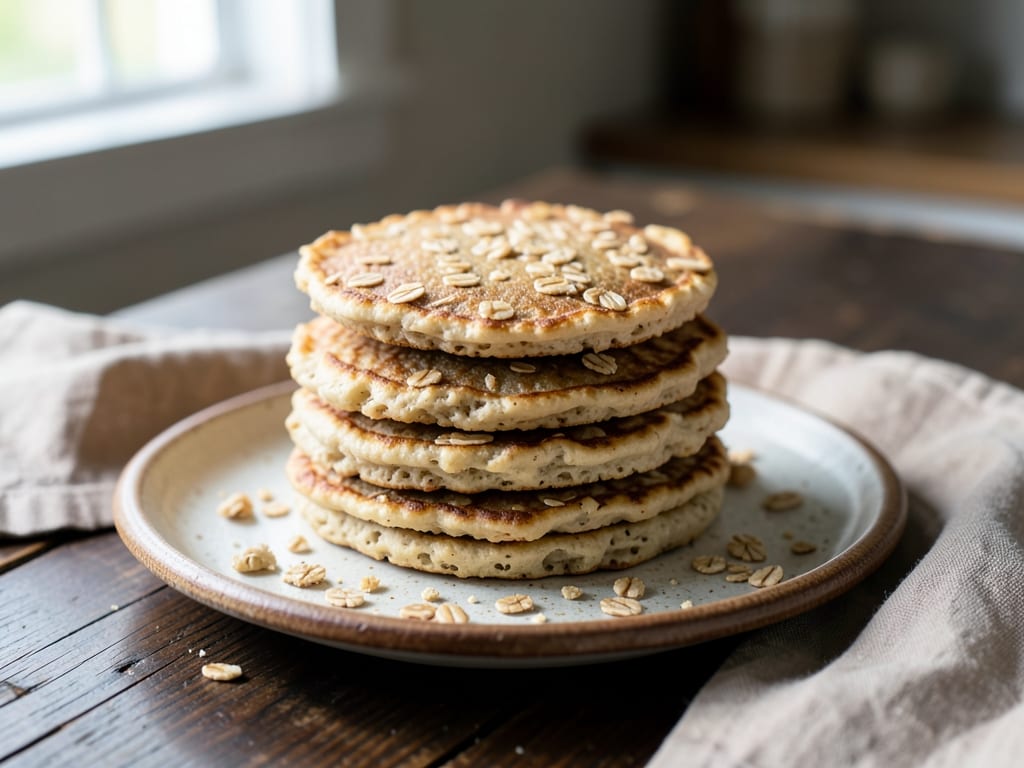
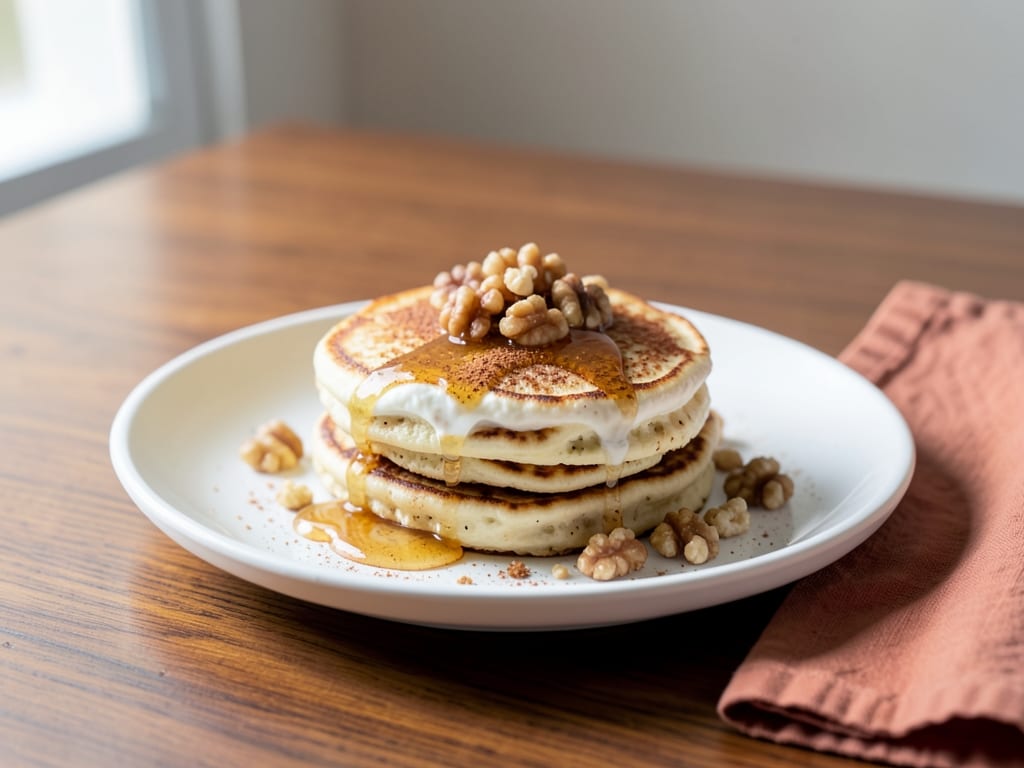
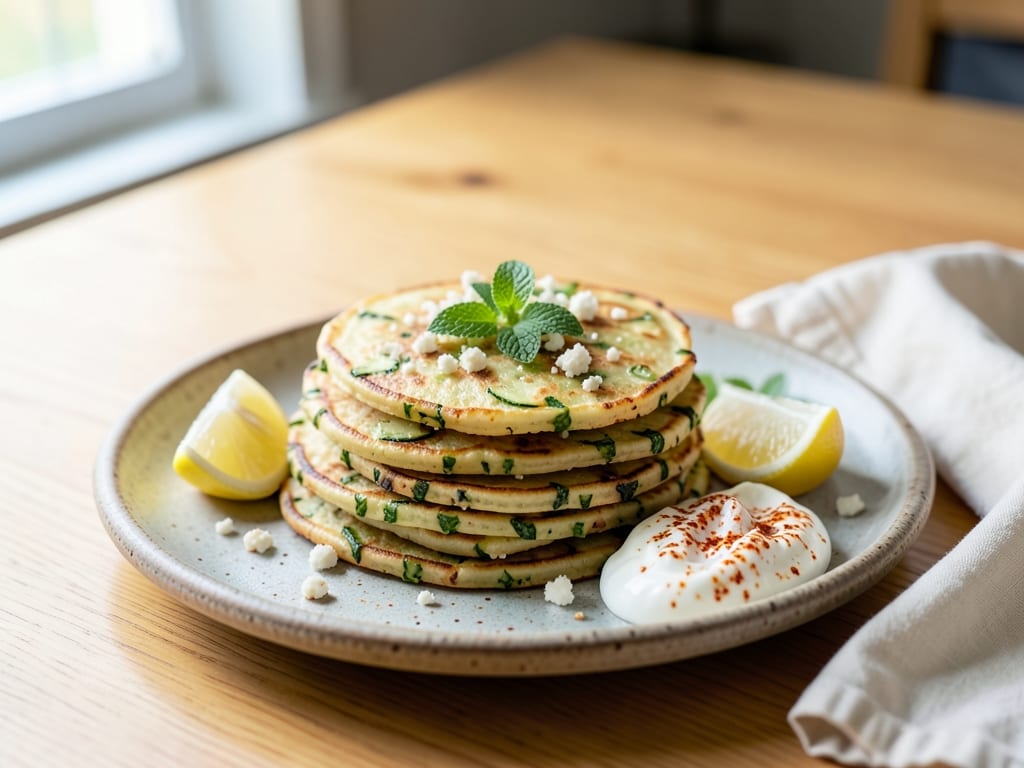
Fluffy Buckwheat Buttermilk Pancakes
Tender, nutty pancakes made with buckwheat flour and tangy buttermilk, with crisp golden edges and soft centers. A little all-purpose flour keeps them light, and a short rest in the bowl makes the batter thick and the pancakes fluffy.
- Prep
- 12 min
- Cook
- 20 min
- Wait
- 10 min
- Total
- 42 min
- Makes
- About 12 pancakes, each about 4 inches (10 cm) wide
Steps
Before you start
- Take the buttermilk and eggs out of the fridge 20 minutes ahead. Cold buttermilk makes the melted butter clump.
- Buckwheat flour is gluten-free, so the all-purpose flour gives these pancakes structure. Don't leave it out unless you use the gluten-free substitution below.
- The batter needs a 10-minute rest. Use that time to heat the pan and warm the oven.
- Plan on cooking in 3 batches. Keep finished pancakes warm in a low oven so everyone eats them hot.
Warm the ovenOven 200°F / 95°C
- Set a rack in the middle of the oven and heat to 200°F (95°C).
- Set a wire rack inside a baking sheet and put it on the rack.
- This is where you'll keep finished pancakes warm and crisp.
+ Show details− Hide details
Ready when: The oven is at 200°F (95°C).
Tip: Don't cover the pancakes with foil. Trapped steam makes them soggy.
Whisk the dry ingredients
- In a large bowl, whisk the buckwheat flour, all-purpose flour, sugar, baking powder, baking soda and salt for 30 seconds.
- Press out any lumps of buckwheat flour against the side of the bowl with the whisk.
+ Show details− Hide details
Ready when: The mixture is one even, gray-brown color with no streaks of white flour or lumps.
Mix the wet ingredients
- Melt the 3 tablespoons of butter in a small saucepan over low heat, or microwave it in 15-second bursts.
- Let it cool for 2 to 3 minutes.
- In a medium bowl, whisk the eggs until the yolks and whites are blended.
- Whisk in the buttermilk, the vanilla if using, and the cooled butter.
+ Show details− Hide details
Ready when: The mixture is smooth, with no streaks of egg white and no hard flecks of butter.
Tip: If the butter is hot, it will scramble the eggs. It should feel only warm.
Combine the batter
- Pour the wet mixture into the dry ingredients.
- Fold with a whisk or spatula for about 15 strokes, just until no dry flour remains.
- The batter will look thick and a little lumpy.
- Don't try to smooth it out.
+ Show details− Hide details
Ready when: No dry flour is visible and the batter falls from the spoon in a thick ribbon.
Tip: Overmixing makes the pancakes tough and flat.
Rest the batter
- Let the batter sit uncovered at room temperature for 10 minutes.
- The buckwheat absorbs liquid and thickens, and the baking powder starts to make bubbles.
+ Show details− Hide details
Ready when: The batter is noticeably thicker and has a few small bubbles on top.
Tip: If it gets too thick to pour, stir in 1 to 2 tablespoons of buttermilk or water.
Heat the pan
- Set a 12-inch (30 cm) nonstick skillet or griddle over medium heat for 3 to 4 minutes.
- Add about ¼ tablespoon of the cooking butter and swirl it to coat the surface.
+ Show details− Hide details
Ready when: The butter foams and sizzles gently but does not brown right away. A drop of water skitters across the pan before evaporating.
Tip: If the butter browns within 10 seconds, the pan is too hot. Lower the heat to medium-low.
Pour and cook first side
- Pour the batter in ¼-cup (60 ml) portions, leaving 1 inch (2.5 cm) between pancakes.
- Cook 4 pancakes at a time.
- Cook for 2 to 3 minutes without moving them.
+ Show details− Hide details
Ready when: The edges look dry and set, bubbles form across the surface and a few pop and stay open.
Tip: Buckwheat batter browns faster than plain flour batter. Check the underside early.
Flip and finish
- Slide the spatula fully under a pancake and flip it in one motion.
- Cook the second side for 1 to 2 minutes.
- Don't press down on the pancakes, which squeezes out the air.
+ Show details− Hide details
Ready when: The underside is deep golden brown, the pancake springs back when touched lightly in the center, and the center reaches 160°F (71°C).
Tip: The first batch is often a test. Adjust the heat before starting the next batch if it browned too fast or too slowly.
Cook remaining batchesOven 200°F / 95°C
- Move the finished pancakes to the rack in the oven in a single layer.
- Wipe the pan with a paper towel if it has dark bits.
- Add another ¼ tablespoon of cooking butter and repeat steps 7 and 8 to make 3 batches, about 12 pancakes in total.
+ Show details− Hide details
Ready when: All pancakes are evenly golden brown with set centers.
Tip: Stir the batter gently before each batch. If it thickens, loosen it with a splash of buttermilk.
Serve
- Stack 3 pancakes on each of 4 warm plates.
- Top with softened butter if using and pour warm maple syrup over the top.
- Serve right away.
+ Show details− Hide details
Ready when: The butter melts and the syrup soaks into the edges of the pancakes.
Tip: Warm the syrup for 20 seconds in the microwave so it doesn't cool the pancakes.
Good to know
Tips
- Measure the flour by spooning it into the cup and leveling it. Scooping packs in too much and makes the batter stiff.
- Keep the heat at medium or medium-low. Buckwheat browns quickly and can taste bitter if it scorches.
- Pour the batter from a ¼-cup measure so all the pancakes are the same size and cook at the same rate.
- Fold in a handful of blueberries or chopped toasted walnuts after combining the batter, or sprinkle them onto each pancake right after pouring.
Make ahead
"Whisk the dry ingredients together and store them in an airtight container for up to 1 week. Whisk the wet ingredients and keep them covered in the fridge overnight. Combine them just before resting the batter. Don't mix the full batter ahead of time, because the baking powder and baking soda lose their lift."
Storage & reheating
"Room temperature: up to 1 hour on a rack in a warm oven. Fridge: cool completely, then refrigerate in an airtight container for up to 3 days. Freezer: freeze in a single layer on a tray until firm, then bag for up to 2 months. Reheat from the fridge or freezer in a toaster or a 350°F (175°C) oven for 5 to 8 minutes, until hot in the center and crisp on the outside."
Substitutions
- buttermilk → 1 cup (240 ml) whole milk plus 1 tablespoon lemon juice or white vinegar, plus 1/4 cup (60 ml) more milk. Stir the acid into the milk and let it sit for 5 minutes before using. The texture will be slightly thinner.
- all-purpose flour → 1:1 gluten-free flour blend (63 g). This makes the pancakes gluten-free. They will be a little more delicate, so make them slightly smaller.
- large eggs → 1/2 cup (120 g) unsweetened applesauce plus an extra 1/2 teaspoon baking powder. The pancakes will be denser and softer.
- pure maple syrup → Honey, warm berry compote or sliced bananas with a pinch of cinnamon. Honey is sweeter, so use a little less.