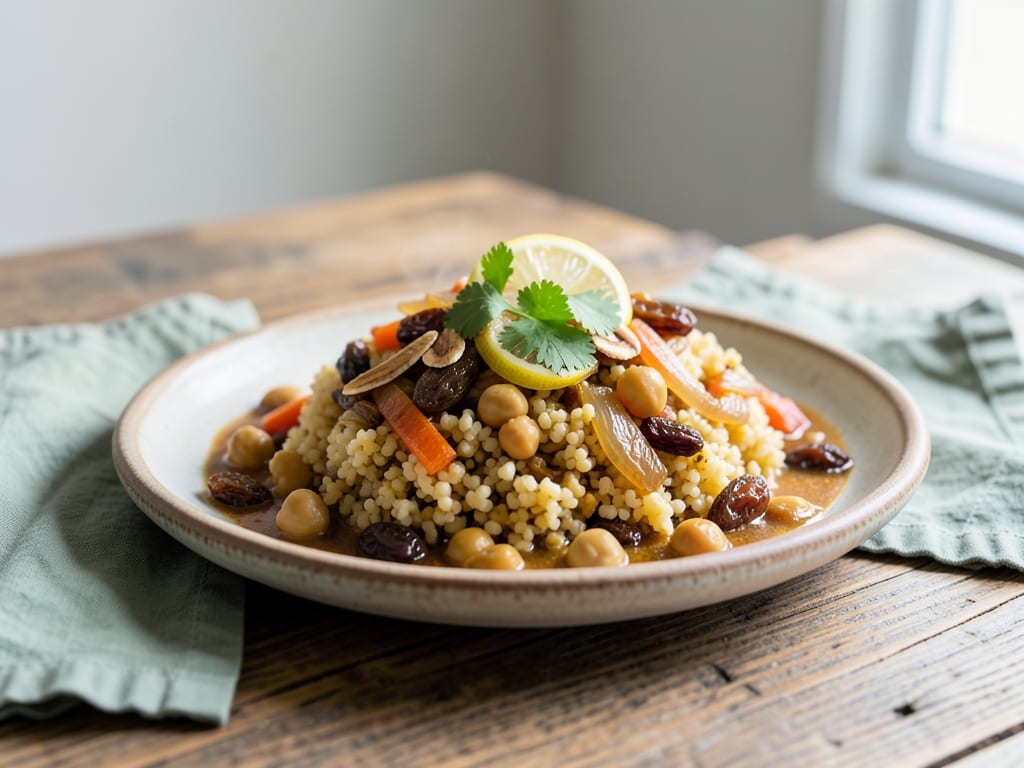
Japanese Miso and Ginger Pearl Couscous
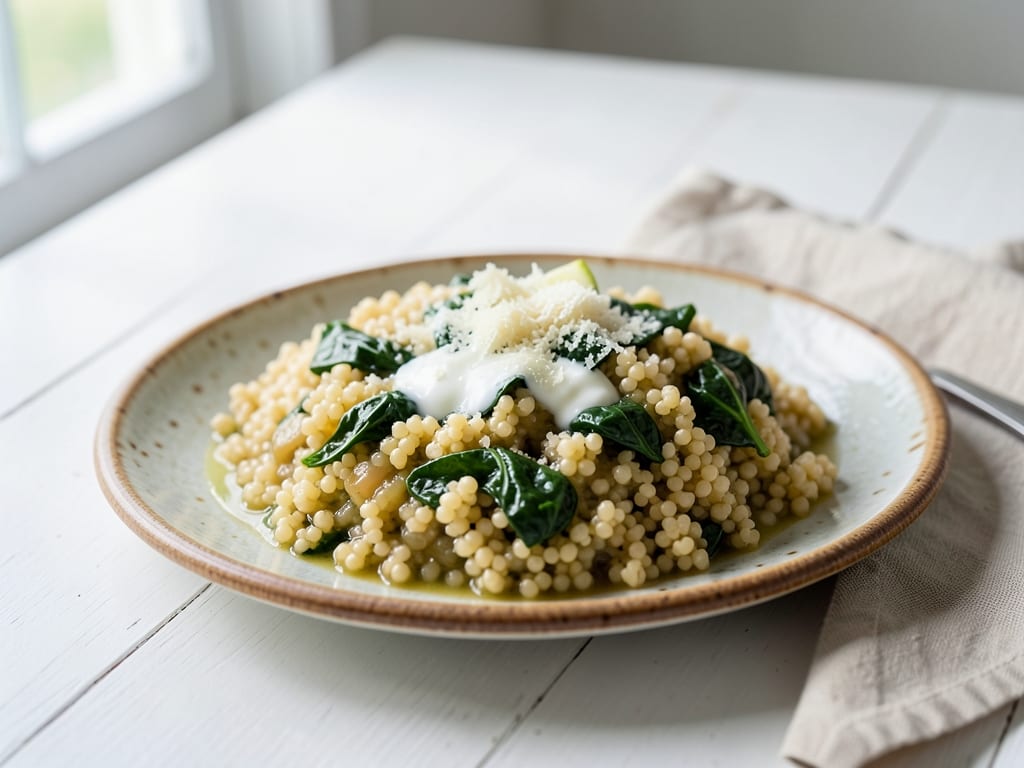
Pearl couscous simmered in a savory miso-ginger broth, finished with toasted sesame oil and fresh scallions. This Japanese-inspired side dish is light, aromatic, and deeply flavored with umami from white miso, warmth from fresh ginger, and a subtle nuttiness from toasted sesame oil. It takes just 25 minutes and pairs beautifully with grilled fish or roasted vegetables.
- Prep
- 10 min
- Cook
- 5 min
- Wait
- 12 min
- Total
- 27 min
- Makes
- 4 servings (about 4 cups)
Steps
Before you start
- Read through the full recipe to understand the sequence
- Measure out all ingredients before starting—the cooking moves quickly
- Separate scallion white and green parts beforehand
- Have your vegetable or dashi broth ready to use
Toast the couscous
- In a large saucepan or skillet (about 12 inches / 30 cm), heat 1 teaspoon of the sesame oil over medium-high heat.
- Add the pearl couscous and stir constantly for 2–3 minutes until lightly golden and fragrant.
- This toasting step develops a subtle nuttiness that deepens the final dish.
+ Show details− Hide details
Ready when: Couscous is light golden and smells toasted
Tip: Watch carefully—browning beyond golden will make the couscous taste bitter
Sauté aromatics
- Reduce heat to medium.
- Add the minced ginger, garlic, and white parts of the scallions to the toasted couscous.
- Stir constantly for 1–2 minutes until the mixture becomes very fragrant.
- The ginger and garlic will soften but should not brown.
+ Show details− Hide details
Ready when: Mixture is fragrant and garlic is softened but pale
Tip: Stir constantly to prevent the garlic from browning, which would taste acrid
Bloom miso in broth
- In a small bowl, whisk together the white miso paste and 2 tablespoons of the vegetable broth until completely smooth and lump-free.
- Set aside.
- Blooming the miso this way ensures it dissolves evenly into the cooking liquid without clumping.
+ Show details− Hide details
Ready when: Miso mixture is smooth with no visible lumps
Tip: Take time to whisk thoroughly—lumpy miso won't distribute evenly and will create pockets of oversalted couscous
Build the broth
- Pour the remaining 2¼ cups (540 ml) of vegetable broth into the pan with the toasted couscous and aromatics.
- Stir in the bloomed miso mixture and the soy sauce, stirring well to combine.
- The liquid should come to a gentle boil within 1–2 minutes.
+ Show details− Hide details
Ready when: Broth is simmering and miso is fully dissolved
Simmer couscous
- Once the broth reaches a gentle boil, reduce heat to medium-low and cover the pan with a lid.
- Simmer undisturbed for 10 minutes.
- The pearl couscous will absorb most of the liquid and become light and tender.
- Resist the urge to stir.
+ Show details− Hide details
Ready when: Couscous is tender and light, most of the liquid has been absorbed
Tip: Covering and leaving it undisturbed prevents the pearls from breaking and ensures even, fluffy texture
Finish and rest
- Remove from heat.
- Drizzle the remaining 1 tablespoon of sesame oil over the couscous and gently fold in the green parts of the scallions using a fork, breaking up any clumps.
- Cover and let rest for 2 minutes to allow the sesame oil aroma to infuse through the grain.
+ Show details− Hide details
Ready when: Couscous is fluffy and light, with vibrant green from the scallion greens
Tip: Use a fork to gently separate the pearls—a spoon can crush them
Garnish and serve
- Transfer to a serving bowl or platter.
- If using sesame seeds, sprinkle them generously over the top for added nuttiness and visual appeal.
- Serve warm as a side dish.
+ Show details− Hide details
Tip: Toast the sesame seeds in a dry skillet for about 2 minutes before sprinkling for deeper nutty flavor
Good to know
Tips
- Pearl couscous has larger granules than regular couscous and creates a more interesting, slightly chewy texture that holds up beautifully to the miso-ginger broth. Do not substitute regular couscous unless you reduce the liquid to 2 cups and the cooking time to 6–7 minutes.
- White miso is mild and slightly sweet; if you prefer stronger umami, use an equal amount of red miso, but reduce the soy sauce by half to prevent oversalting.
- Toast your sesame seeds in a dry skillet over medium heat for 2 minutes to unlock their nutty aroma and depth—it makes a significant difference in the final dish.
- For extra depth, make a simple dashi broth by steeping a 4-inch (10 cm) piece of kombu seaweed and a handful of bonito flakes (katsuobushi) in 2.5 cups of water for 5 minutes, then strain before using in place of vegetable broth.
Make ahead
Prepare through step 5, up to 2 days ahead. Store in an airtight container in the refrigerator. Gently reheat with a splash of broth over low heat (about 3–4 minutes), or cover with a damp paper towel and microwave (1–2 minutes), then finish with sesame oil and fresh scallion greens just before serving.
Storage & reheating
Room temperature: up to 1 hour. Refrigerator: up to 3 days in an airtight container. Freezer: up to 1 month (texture becomes slightly grainy on thaw, but still good for soups or grain bowls). Reheat gently in a saucepan over low heat with a splash of extra broth, stirring occasionally, or microwave covered until steaming.
Substitutions
- White miso paste → Red miso paste. Use the same amount (3 tablespoon). Red miso is more assertive, earthier, and saltier than white. Reduce soy sauce to 1 teaspoon if using red miso to avoid over-salting.
- Vegetable broth or dashi → Dashi or chicken broth. Dashi (kombu and bonito) will give deeper umami and is traditional. Chicken broth adds richness but shifts the dish toward savory rather than purely umami.
- Toasted sesame oil → Neutral oil like grapeseed or vegetable oil. The couscous will lose its sesame aroma but will still taste good. You can garnish with a small drizzle of sesame oil to recover some flavor.
- Low-sodium soy sauce → Tamari or coconut aminos. Tamari is a gluten-free soy sauce and has a slightly deeper flavor. Coconut aminos is milder and slightly sweet; start with ½ tablespoon and taste before adding more.