Italian Tomato Basil Baked Couscous
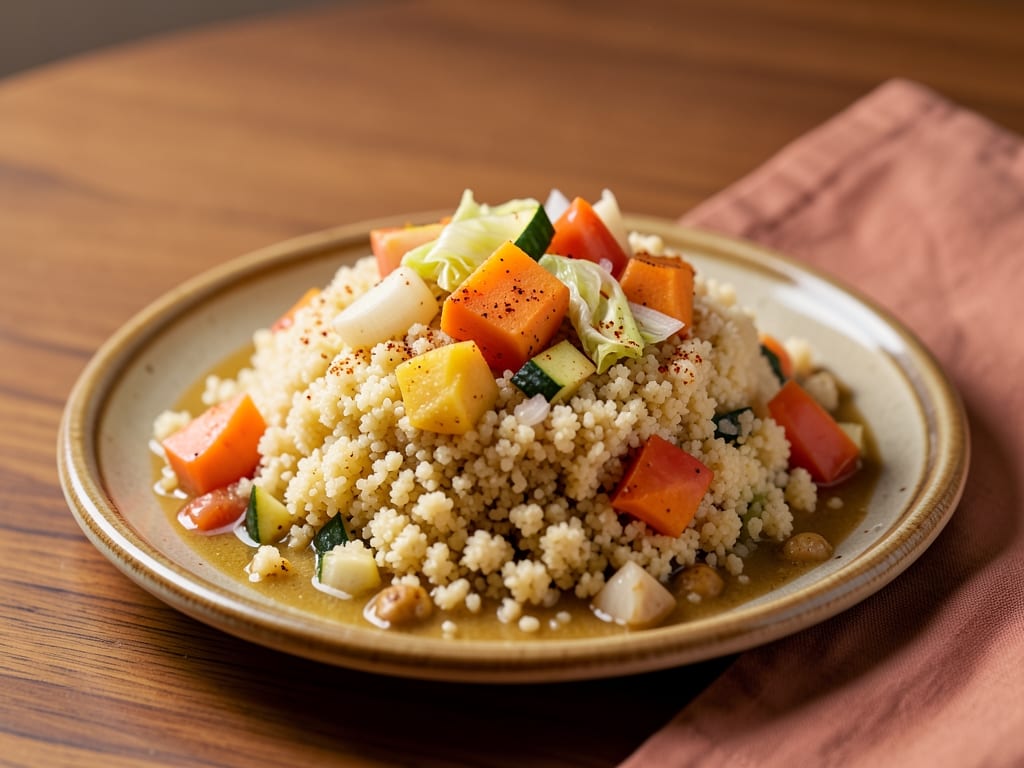
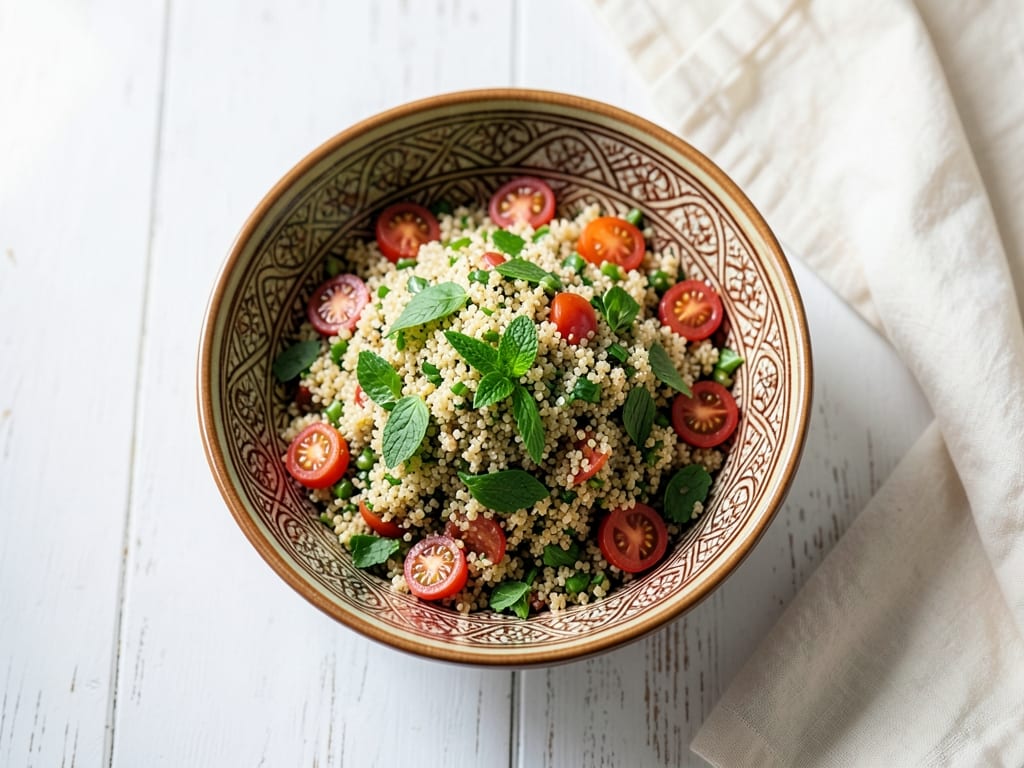
A rustic Italian grain dish where fluffy couscous is baked with aromatic tomatoes, garlic, and fresh basil. The couscous absorbs the flavorful broth and tomato juices, creating a tender, aromatic side dish or light main course that's restaurant-quality yet simple enough for a weeknight.
- Prep
- 10 min
- Cook
- 25 min
- Wait
- 5 min
- Total
- 40 min
- Makes
- 4–6 servings (4–6 cups)
Steps
Before you start
- Preheat your oven to 375°F (190°C)
- Dice the onion and mince the garlic so they are ready to add quickly
- Wash and roughly tear or chop the fresh basil
- Measure out all ingredients in advance
Preheat oven and prepare dishOven 375°F / 190°C
- Position a rack in the center of your oven and preheat to 375°F (190°C).
- Lightly coat a 9×13 inch (23×33 cm) baking dish with a thin film of olive oil or cooking spray.
- Set aside.
- The oven should be fully preheated before you begin cooking on the stovetop.
+ Show details− Hide details
Ready when: Oven has reached 375°F (190°C)
Tip: Don't skip preheating—a fully preheated oven ensures even cooking of the couscous.
Sauté onion and garlic
- Place a large oven-safe skillet or saucepan on the stovetop over medium heat.
- Add 3 tablespoons (45 ml) of olive oil.
- Once the oil shimmers and is hot (about 1 minute), add the diced onion.
- Cook for 3–4 minutes, stirring occasionally with a wooden spoon, until the onion softens and becomes translucent.
- Add the minced garlic and stir constantly for 1 minute until fragrant.
- The mixture should smell savory and aromatic—you're looking for the garlic to release its oils, not to brown it.
+ Show details− Hide details
Ready when: Onion is translucent and golden; garlic is fragrant but not browned
Tip: Keep the heat at medium; garlic can turn bitter and burnt very quickly at higher heat.
Add broth and tomatoes
- Pour 2 cups (480 ml) of vegetable broth into the pan.
- Then add the entire can of diced tomatoes with their juices (28 oz / 800 g), stirring well to combine.
- The mixture should smell bright and savory.
- Increase the heat to medium-high and let it come to a gentle simmer.
- You should see small bubbles breaking the surface at a steady pace, not a rolling boil.
- This should take 2–3 minutes.
+ Show details− Hide details
Ready when: Mixture gently simmers with small bubbles breaking the surface at regular intervals
Tip: Stir well when adding the tomatoes to ensure the onion and garlic are fully incorporated into the liquid.
Stir in couscous and season
- Once the mixture is simmering, stir in 1.5 cups (300 g) of couscous using your wooden spoon.
- Add a generous pinch of salt (about 1 teaspoon or 5 g to start) and a few grinds of freshly ground black pepper.
- Stir continuously for about 1 minute, making sure every grain of couscous is wet and no dry pockets remain.
- The mixture will look slightly soupy—this is correct.
- The couscous should be suspended in the liquid, not clumped together.
+ Show details− Hide details
Ready when: Couscous is evenly distributed throughout the liquid with no dry, white pockets
Tip: Stir immediately and vigorously after adding the couscous to prevent sticking and clumping at the bottom of the pan.
Transfer to baking dish and bakeOven 375°F / 190°C
- If your skillet is not oven-safe, carefully transfer the couscous mixture into the prepared 9×13 inch (23×33 cm) baking dish; if it is oven-safe, you can bake directly in the skillet.
- Cover tightly with aluminum foil or an oven-safe lid to trap steam.
- Place in the preheated 375°F (190°C) oven.
- Bake for 15–17 minutes, until the couscous is tender and has absorbed most of the liquid.
- The surface should look slightly moist and steaming, not dry or crusted over.
+ Show details− Hide details
Ready when: Couscous is tender; most liquid is absorbed but surface is still slightly moist and steaming
Tip: Don't peek too often—each time you uncover the dish, you release steam and may increase cooking time by 2–3 minutes.
Rest and fluff couscous
- Remove the baking dish from the oven and let it sit, still covered, for 5 minutes.
- The residual heat will finish cooking any remaining grains and allow them to soften and fluff.
- Carefully uncover the dish—steam will be hot, so keep your face and hands away—and gently fluff the couscous with a fork, breaking up any clumps.
- The grains should be light and separate, not mushy.
+ Show details− Hide details
Ready when: Couscous is tender, light, and individual grains are separate
Tip: Use a fork to fluff, not a spoon—a fork is gentler on the delicate grains and less likely to mash them.
Garnish with basil and serve
- Tear or roughly chop about 3/4 cup (20 g) of fresh basil and gently stir it into the warm couscous.
- The basil should be vibrant green and smell aromatic—don't overwork it or the leaves will bruise and darken.
- Taste a spoonful and adjust the seasoning with a pinch of salt and pepper if needed.
- If desired, top individual servings with finely grated Parmesan cheese (about 1 tablespoon / 7.5 g per serving).
- Serve immediately while warm, either as a side dish to accompany roasted vegetables or grilled fish, or as a light main course on its own.
+ Show details− Hide details
Ready when: Basil is mixed in; aroma is fresh and herbaceous; all ingredients are evenly distributed
Tip: Add the basil at the very end to preserve its bright flavor and color. If added earlier, the heat will darken it and dull its vibrant taste.
Good to know
Tips
- For extra creaminess and a risotto-like texture, stir in 2–3 tablespoons (30–45 ml) of heavy cream or a splash of whole milk after the couscous has rested.
- If your couscous still looks soupy after resting, place it back in the oven, uncovered, for 2–3 minutes to allow more liquid to evaporate.
- Taste and adjust seasoning carefully—salt can make a significant difference. Start with less and add more to taste, as some broths and canned tomatoes can be quite salty.
- To make this more substantial, stir in 1 cup (150 g) of cooked chickpeas, white beans, or crumbled feta cheese just before serving.
Make ahead
You can prepare the couscous through the end of Step 4 (before baking) up to 4 hours ahead. Cover the pan with plastic wrap and refrigerate. When you're ready to bake, stir well to break up any clumps, transfer to the baking dish if needed, cover with foil, and bake for 18–20 minutes (a few minutes longer since the mixture will be cold from the refrigerator).
Storage & reheating
Leftovers keep in an airtight container in the refrigerator for 3–4 days. Reheat gently in a 325°F (160°C) oven, covered, for 10–12 minutes, or in a covered saucepan over low heat on the stovetop, stirring occasionally and adding a splash of broth or water to restore moisture. This dish does not freeze well due to the texture of cooked couscous.
Substitutions
- canned diced tomatoes → 2 cups (500 g) fresh diced tomatoes (summer tomatoes are ideal). If using fresh tomatoes, add an extra 1/2 cup (120 ml) of broth since fresh tomatoes release less liquid than canned. The cooking time may increase by 1–2 minutes.
- vegetable broth or chicken broth → Chicken broth or water. Water will work but results in a milder dish. Chicken broth adds savory depth that complements the tomatoes and basil beautifully.
- fresh basil leaves → Fresh oregano, fresh thyme, or dried Italian seasoning (use 1 tablespoon / 3 g dried). The dish will taste differently but remains delicious. Add dried herbs during Step 3 (when adding tomatoes and broth) so they have time to bloom; add fresh herbs at the end.
- couscous → Israeli couscous, short-grain white rice, or small pasta such as orzo or ditalini. Israeli couscous will need an extra 2–3 minutes in the oven. Rice and small pasta may need 19–22 minutes total; stir halfway through to ensure even cooking.