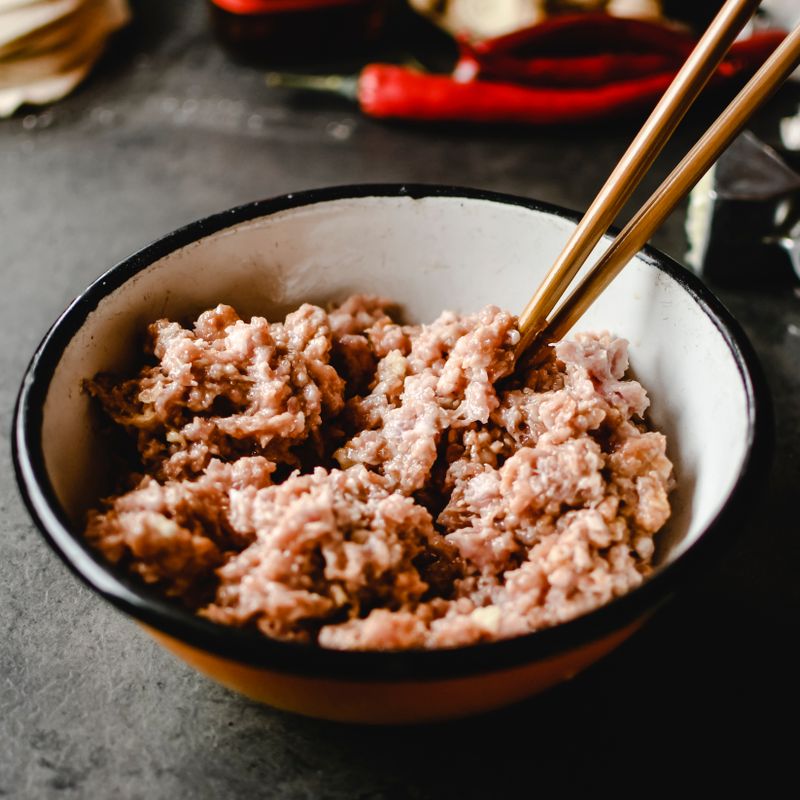
Italian-Spiced Ground Pork Sauce
A rustic, aromatic meat sauce built on ground pork, fennel seeds, and oregano. Garlic and onion form the flavor base, while crushed tomatoes and tomato paste create depth. Gentle simmering melds the spices into a rich, warming sauce that clings beautifully to pasta and improves with time.
- Prep
- 15 min
- Cook
- 45 min
- Total
- 1 hr
- Makes
- About 3½ cups (840 ml) sauce, enough for 1 lb (450 g) pasta
Steps
Before you start
- Have all ingredients prepped and measured before you start cooking
- Use freshly ground pork if possible, not pre-packaged, for better texture
- Read through the full recipe so you understand the simmer time and can adjust heat as needed
Heat oil and add aromatics
- Pour 2 tablespoons olive oil into a large heavy-bottomed saucepan or Dutch oven over medium-high heat.
- Once shimmering, add the finely diced onion and cook for 4–5 minutes, stirring occasionally, until softened and turning translucent at the edges.
- Add the minced garlic and stir constantly for 1 minute until fragrant.
+ Show details− Hide details
Ready when: Onion is soft and translucent; garlic is fragrant and just starting to color
Tip: Don't let the garlic brown—it will turn bitter. Stir constantly once it hits the pan.
Toast fennel seeds
- Add 1½ teaspoons fennel seeds directly to the pan and stir constantly for about 1 minute.
- The seeds will warm through and release their subtle anise aroma.
- This brief toasting brings out their flavor before the liquid is added.
+ Show details− Hide details
Ready when: Seeds are fragrant and you can smell the warm licorice notes
Tip: Toasting whole fennel seeds releases oils; ground fennel can scorch and turn bitter, so whole seeds work better here.
Brown the ground pork
- Add 1 pound ground pork to the pan, breaking it apart with a wooden spoon as it cooks.
- Increase heat to high and cook for 6–8 minutes, stirring often, until the pork loses its raw pink color and small pieces are light brown.
- Ground pork must reach an internal temperature of 160°F (71°C) for food safety; use an instant-read thermometer to check the thickest pieces.
- Do not drain the fat; it carries important flavor.
+ Show details− Hide details
Ready when: Pork is no longer pink; small curds are light golden-brown; internal temperature reaches 160°F (71°C)
Tip: Break the meat into small, even pieces so it browns evenly. If it sits in clumps, some will steam rather than brown. Check the temperature in the largest piece for accuracy.
Add tomato paste and oregano
- Stir in 2 tablespoons tomato paste and 1½ teaspoons dried oregano.
- Cook, stirring frequently, for 2–3 minutes so the paste caramelizes slightly and the oregano blooms into the fat.
- This concentrated cooking deepens the sauce's savory backbone.
+ Show details− Hide details
Ready when: Tomato paste darkens to a rust color and smells sweet and concentrated
Tip: This step is crucial—it removes the raw, metallic edge from canned tomato paste and makes the sauce taste homemade.
Deglaze and add tomatoes
- Pour in ½ cup water to deglaze the pan, scraping up any browned bits stuck to the bottom with your spoon—these are pure flavor.
- Add one 28-ounce can crushed tomatoes (800 g).
- Stir well to combine.
- The mixture will bubble and steam.
+ Show details− Hide details
Ready when: Liquid is fully incorporated and mixture is bubbling gently
Tip: Don't skip the water—deglazing dissolves caramelized bits that would otherwise stick to the pan.
Season and adjust heat
- Add ¾ teaspoon kosher salt and ¼ teaspoon freshly ground black pepper.
- Stir well.
- Bring the sauce to a gentle simmer over medium heat, then reduce the heat to low.
- The sauce should bubble lazily—a few small bubbles breaking the surface every second or two.
- This gentle simmer prevents the tomatoes from breaking down too fast and allows flavors to meld.
+ Show details− Hide details
Ready when: Sauce reaches a simmer, then you reduce heat to achieve a gentle, steady bubble
Tip: Low heat is essential—a rolling boil breaks down tomatoes and can make the sauce taste acidic.
Simmer to build flavor
- Let the sauce simmer gently, uncovered, for 35–40 minutes.
- Stir occasionally (every 10 minutes) to prevent sticking on the bottom and to ensure even cooking.
- The sauce will gradually thicken as water evaporates, and the flavors will deepen and marry together.
- By the end, it should coat the back of a spoon and break when you drag your finger across it.
+ Show details− Hide details
Ready when: Sauce is thick enough to coat a spoon and break easily; flavors taste mature and blended
Tip: Resist the urge to rush this step—low, slow simmering is what transforms separate flavors into one harmonious sauce. Taste after 30 minutes if you like; adjust salt or spices before the final 5–10 minutes.
Taste and finish
- Remove the sauce from heat.
- Taste a small spoonful (let it cool slightly).
- Adjust seasoning if needed: add a pinch more salt if it tastes flat, or a small pinch more oregano if you'd like more herbal notes.
- The sauce is now ready to serve warm over your favorite pasta.
+ Show details− Hide details
Tip: Taste before serving—even a tiny adjustment can make the difference between good and great.
Good to know
Tips
- Fennel seeds add subtle Italian sausage notes without overpowering the dish—they're the signature of this sauce, so don't skip them.
- Do not drain the fat from the browned pork; it's an essential part of the sauce's flavor and richness.
- Stir the sauce every 10 minutes during the simmer to prevent sticking and scorching on the bottom, which can make it taste bitter.
- Serve with thick, sturdy pasta shapes like pappardelle, rigatoni, or tagliatelle that hold the sauce well. Reserve 1 cup of pasta water to loosen the sauce if it's thicker than you like.
Make ahead
This sauce improves with time. Make it up to 3 days ahead and refrigerate in an airtight container. The flavors will deepen. Reheat gently over low heat, adding a splash of water if it has become too thick during storage.
Storage & reheating
Room temperature: up to 2 hours. Refrigerator: up to 3 days in an airtight container. Freezer: up to 3 months in a freezer-safe container or freezer bag. To reheat: thaw overnight in the refrigerator, then warm gently over low heat on the stovetop, stirring occasionally and adding a little water to loosen if needed. Do not microwave, as the heat is uneven.
Substitutions
- ground pork → Ground beef (85/15 blend) or ground lamb. Beef will give a more traditional Bolognese flavor; lamb will be richer and more robust. Use the same weight.
- fennel seeds → ½ teaspoon anise seeds or a pinch of ground fennel. Anise has a sharper licorice bite; use slightly less. Ground fennel is finer and toasts faster—watch it closely.
- dried oregano → 1 tablespoon fresh basil, added at the very end, or 1 teaspoon fresh oregano. Fresh herbs are more delicate; add them in the last minute of cooking to preserve their brightness.
- crushed tomatoes, canned → Two 14.5-ounce (411 g) cans diced tomatoes, or 1 cup crushed fresh tomatoes if in season. Diced tomatoes will give a chunkier texture; you may need to break them down slightly during simmering.
More pasta sauces
See all →



Find more like this
- Meal
- Dinner
- Cuisine
- Italian
- Main ingredient
- Ground PorkTomatoes
- Method
- Stovetop
- Quick & Easy
- EasyMake AheadFreezer Friendly