Roasted Garlic and Cannellini Bean Sauce
A silky vegetarian pasta sauce built on roasted garlic and creamy cannellini beans, enriched with fresh sage and bright tomatoes. The garlic transforms into sweet, mellow cloves during roasting, then blends into a velvety sauce that clings beautifully to any pasta shape. Ready in under 45 minutes and deeply satisfying.
- Prep
- 10 min
- Cook
- 30 min
- Wait
- 5 min
- Total
- 45 min
- Makes
- About 2 cups sauce (serves 4 over pasta)
Steps
Before you start
- Preheat your oven to 400°F (200°C)
- Gather all ingredients and equipment
- If using canned beans, drain and rinse them thoroughly
Roast the garlicOven 400°F / 205°C
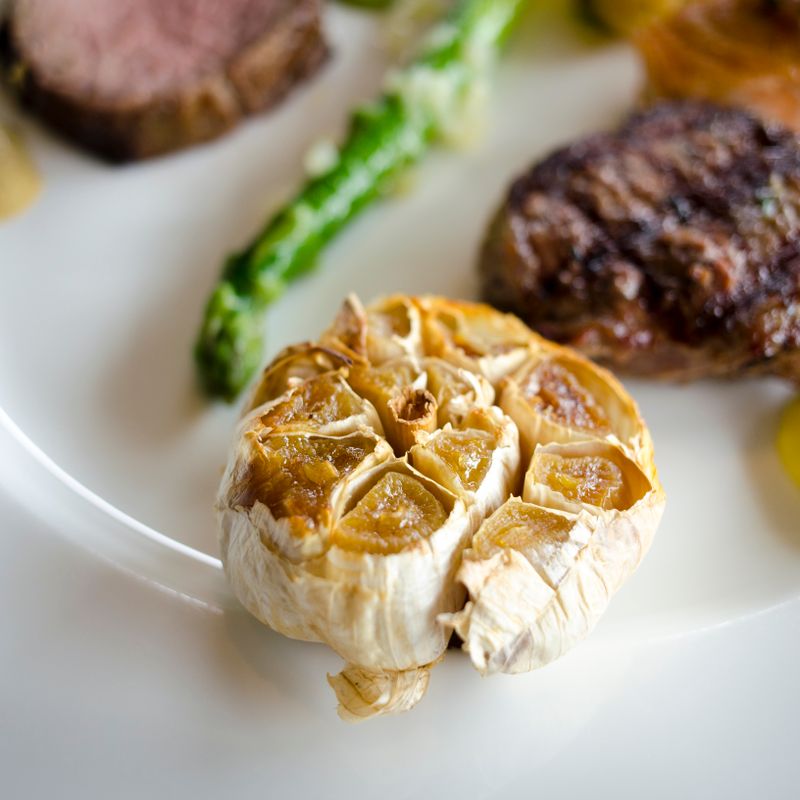
- Place the 2 prepared garlic heads cut-side up on a rimmed baking sheet.
- Drizzle with 1½ tablespoons (22 ml) of olive oil and season lightly with salt and pepper.
- Cover the sheet tightly with foil and roast in a preheated 400°F (200°C) oven for 25–30 minutes, until the garlic cloves are very soft and golden.
- The cloves should slip easily out of their skins when pressed.
+ Show details− Hide details
Ready when: Garlic cloves are soft, golden, and slip easily from their skins
Tip: Cover the garlic with foil to prevent the tops from burning while the insides soften.
Begin sauce base
- While the garlic roasts, warm the remaining 1½ tablespoons (22 ml) of olive oil in a large saucepan over medium heat.
- Add the torn sage leaves and cook for about 1 minute, stirring gently, until fragrant.
- The sage should darken slightly and the oil becomes infused with its flavor.
+ Show details− Hide details
Ready when: Sage is fragrant and slightly darkened
Tip: Keep the heat at medium to gently infuse the oil; high heat will burn the delicate sage.
Add tomatoes and broth
- Add the drained and rinsed cannellini beans and the canned diced tomatoes (with their juice) to the sage-infused oil.
- Pour in the vegetable broth and stir to combine.
- Bring the mixture to a simmer over medium heat.
+ Show details− Hide details
Ready when: Mixture reaches a gentle simmer with small bubbles breaking the surface
Squeeze in roasted garlic
- Once the garlic has finished roasting and cooled slightly, squeeze the soft garlic cloves out of their skins directly into the simmering sauce.
- You should have about 20–24 cloves.
- Stir well to distribute them throughout the liquid.
- Let the mixture simmer for 2 minutes to allow the garlic to meld with the other ingredients.
+ Show details− Hide details
Ready when: Garlic is fully incorporated and sauce bubbles gently
Tip: Squeeze the garlic gently so the cloves break apart in the pan; don't add the papery skin.
Blend until creamy
- Remove the saucepan from heat and let the mixture cool for 1–2 minutes.
- Using an immersion blender, blend the sauce until smooth and creamy, working in a few quick pulses to avoid splattering.
- If you prefer a slightly chunky texture, pulse just 6–8 times; for a fully velvety sauce, blend for 10–15 seconds.
- If using a food processor, work in batches and blend until you reach your desired consistency.
+ Show details− Hide details
Ready when: Sauce is smooth, creamy, and uniform in color
Tip: Never blend a hot liquid in a food processor with the lid closed—leave the lid ajar or use an immersion blender for safety.
Season to taste
- Return the blended sauce to the saucepan over low heat if necessary.
- Taste the sauce and season generously with sea salt and freshly ground black pepper.
- If using them, add the red pepper flakes for gentle heat and the lemon juice for brightness.
- Stir in a minute of gentle heat (or no heat if the sauce is still warm) to combine the seasonings.
+ Show details− Hide details
Ready when: Seasonings are fully dissolved and sauce tastes balanced
Tip: Taste as you season—the beans and garlic already add subtlety, so you may need less salt than you expect.
Finish and serve
- Spoon the warm sauce over your cooked pasta.
- If desired, garnish generously with grated Parmigiano-Reggiano and a pinch of extra red pepper flakes.
- Drizzle lightly with additional olive oil if you wish.
- Serve immediately while the sauce is hot.
+ Show details− Hide details
Tip: This sauce coats short, tubular pasta (penne, rigatoni) beautifully and also works well with wider ribbons (pappardelle).
Good to know
Tips
- Roasting garlic whole mellows its bite and turns it sweet and caramelized—don't skip this step or you'll have a harsh raw-garlic flavor.
- The sauce thickens as it cools; if you're making it ahead, add a splash of broth or pasta water when reheating.
- For extra richness, stir in 2–3 tablespoons (30–45 ml) of heavy cream or crème fraîche at the very end.
- This sauce pairs beautifully with hearty shapes like penne rigatoni, or with delicate egg pasta like fresh pappardelle.
Make ahead
Make the sauce completely up to 1 day ahead and refrigerate in an airtight container. Reheat gently on the stovetop over medium-low heat, stirring occasionally, until warm through (about 5 minutes). Add a splash of pasta water or vegetable broth if the sauce has thickened too much upon sitting.
Storage & reheating
Room temperature: up to 2 hours. Refrigerator: up to 4 days in an airtight container. Freezer: up to 3 months in a freezer-safe container; thaw overnight in the refrigerator, then reheat gently on the stovetop with a splash of broth or pasta water.
Substitutions
- canned cannellini beans → Great Northern beans or butter beans. Both have similar mild flavor and creamy texture; use equal amounts.
- fresh sage leaves → Fresh thyme or oregano. Use the same amount by volume, or reduce to 6 leaves if using stronger thyme.
- canned diced tomatoes → Tomato passata (strained tomatoes). Use 1 cup (240 ml) passata; this will yield a slightly smoother sauce.
- vegetable broth → Chicken broth or pasta water. Chicken broth adds subtle richness; pasta water adds starch for a silkier coating.
More pasta sauces
See all →
Find more like this
- Meal
- Dinner
- Cuisine
- Italian
- Main ingredient
- White BeansTomatoes
- Quick & Easy
- Easy