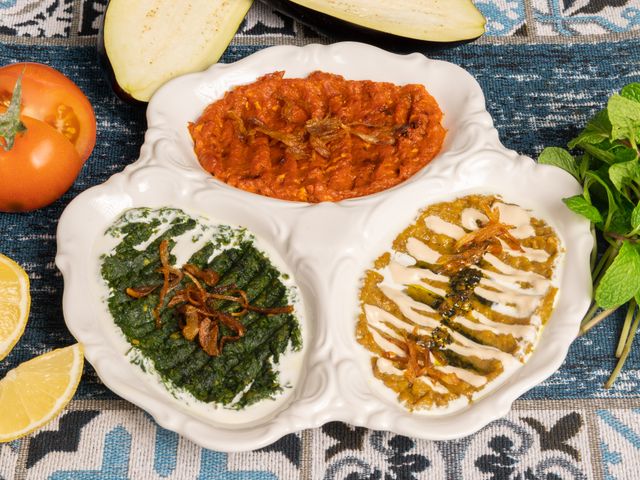
Italian Sicilian Caponata Spread
A classic Sicilian eggplant spread with deep, complex flavors from roasted eggplant and tomatoes, briny olives and capers, and a sweet-tangy balance from vinegar and a touch of sugar. Serve warm or at room temperature as a dip, spread, or side dish. This rustic preparation brings together roasted vegetables with Mediterranean pantry staples for an authentic taste of Sicily.
- Prep
- 20 min
- Cook
- 45 min
- Wait
- 15 min
- Total
- 1 hr 20 min
- Makes
- About 2½ cups (600 ml)
Steps
Before you start
- Preheat oven to 400°F (200°C)
- Cut eggplant into ¾-inch (2 cm) cubes to ensure even roasting
- Have all ingredients measured and prepped before starting
Roast eggplant and tomatoesOven 400°F / 205°C
- Preheat oven to 400°F (200°C).
- Divide the eggplant cubes between two large baking sheets, drizzle with half the olive oil (about 3 tablespoons / 45 ml per sheet), season with salt and pepper, and toss to coat.
- Spread in a single layer.
- On one of the baking sheets, arrange the tomato halves (cut side up) in an open area, drizzle with the remaining olive oil, and season lightly with salt and pepper.
- Roast both sheets for 35–40 minutes, stirring the eggplant halfway through, until the eggplant is deeply golden and tender and the tomato skins have collapsed and begun to blacken at the edges.
+ Show details− Hide details
Ready when: Eggplant is golden and very soft; tomato skins collapse and blacken slightly
Tip: Don't crowd the eggplant—it should roast, not steam. A single layer on two sheets is essential.
Cool and process roasted vegetables
- Remove both baking sheets from the oven and let cool for 3–5 minutes.
- Scoop the roasted eggplant into a large saucepan.
- Remove the tomatoes from the sheet, allow them to cool slightly, and then scoop them into the saucepan along with any juices and caramelized bits from the pan.
- Gently crush the tomatoes with a wooden spoon to break them down slightly; they should be soft enough to mash but need not be smooth.
+ Show details− Hide details
Ready when: Vegetables are combined and lightly mashed in the saucepan
Tip: Keep any charred bits and caramelized oil on the baking sheet—these add deep flavor.
Add olives, capers, and aromatics
- Place the saucepan over medium-low heat.
- Add the minced garlic to the eggplant and tomato mixture and stir to combine.
- Then add the chopped green olives and drained capers.
- Stir well to distribute the ingredients evenly.
+ Show details− Hide details
Ready when: Ingredients are evenly distributed
Tip: If using brined capers, rinse them well to avoid oversalting the spread.
Add vinegar and sugar, simmer
- Pour in the red wine vinegar and sprinkle the sugar over the mixture.
- Stir well to combine.
- Bring the mixture to a gentle simmer over medium-low heat, stirring occasionally, and let it simmer gently for 8–10 minutes.
- The mixture should bubble gently at the edges; do not let it boil vigorously.
- The caponata will reduce slightly and the flavors will meld.
+ Show details− Hide details
Ready when: Liquid has reduced by about one-third; mixture is fragrant and well-combined
Tip: A gentle simmer preserves the texture of the vegetables; violent boiling will break them down too much.
Taste and adjust seasoning
- Remove from heat and taste.
- Adjust salt, pepper, and the balance of sweet and tangy to your preference by adding more salt, pepper, vinegar, or a tiny bit more sugar if needed.
- The caponata should taste like a harmonious blend of sweet, savory, briny, and tangy—no single flavor should dominate.
+ Show details− Hide details
Ready when: Flavors are balanced to your taste
Tip: Add adjustments gradually; it's easier to add more salt or vinegar than to undo an overpowering amount.
Finish with basil and cool
- Stir in the torn fresh basil (if using) and remove from heat.
- Transfer the caponata to a serving bowl and let it cool to room temperature, about 15 minutes.
- The caponata can be served warm or at room temperature.
+ Show details− Hide details
Ready when: Caponata is cool enough to serve and flavors have set
Tip: Add basil at the end to preserve its fresh color and aroma; adding it earlier will turn it dark.
Serve
- Serve the caponata warm or at room temperature as a spread with crusty bread, crostini, or crackers, or as a side dish alongside grilled vegetables, meats, or cheeses.
- Garnish with toasted pine nuts if desired, and a drizzle of high-quality olive oil.
+ Show details− Hide details
Tip: Caponata tastes even better the next day as flavors continue to deepen; make it ahead if possible.
Good to know
Tips
- The key to great caponata is deeply roasted vegetables—don't skip the full 35–40 minutes of roasting. The caramelization creates the rich, complex base flavor.
- Caponata is a naturally vegan dish and gluten-free when served with gluten-free bread or crackers.
- Serve alongside warm crusty bread, bruschetta, crackers, or crudités. It's also excellent as a topping for grilled fish, spread on sandwiches, or stirred into pasta.
- Taste frequently during assembly and cooking—the balance of sweet, savory, tangy, and briny is personal. Start conservative with adjustments and build to your preference.
Make ahead
Make the caponata up to 3 days ahead. It actually improves overnight as the flavors deepen and marry. Cover and refrigerate; reheat gently over low heat if serving warm, or serve chilled or at room temperature straight from the fridge.
Storage & reheating
Room temperature (if serving within 2 hours): cover loosely. Refrigerator (up to 5 days): store in an airtight container, drizzle with a little extra olive oil to prevent drying. Freezer (up to 3 months): transfer to a freezer-safe container; thaw overnight in the fridge and reheat gently. The texture softens slightly after freezing but flavor remains excellent.
Substitutions
- pitted green Sicilian olives, or green Castelvetrano olives → Kalamata olives or a mix of green and black olives. Kalamata olives will give a deeper, earthier flavor and darker color; the spread will be less traditional but still delicious.
- red wine vinegar → White wine vinegar or sherry vinegar. White wine vinegar is slightly milder; sherry vinegar adds a subtle sweetness. Use the same amount.
- ripe plum tomatoes → Fresh Roma or San Marzano tomatoes, or 1 can (14 oz / 400 g) crushed San Marzano tomatoes, drained. If using canned, roast the eggplant separately on a second sheet, then combine with the canned tomatoes (no need to roast them). Reduce simmering time to 5 minutes.
- salted capers (or brined, rinsed and drained) → Chopped green olives in brine (increase to ¼ cup / 50 g) or omit if unavailable. Capers are essential to authentic caponata for their tangy, briny bite, but green olives alone can work in a pinch.