Sicilian Eggplant Caponata
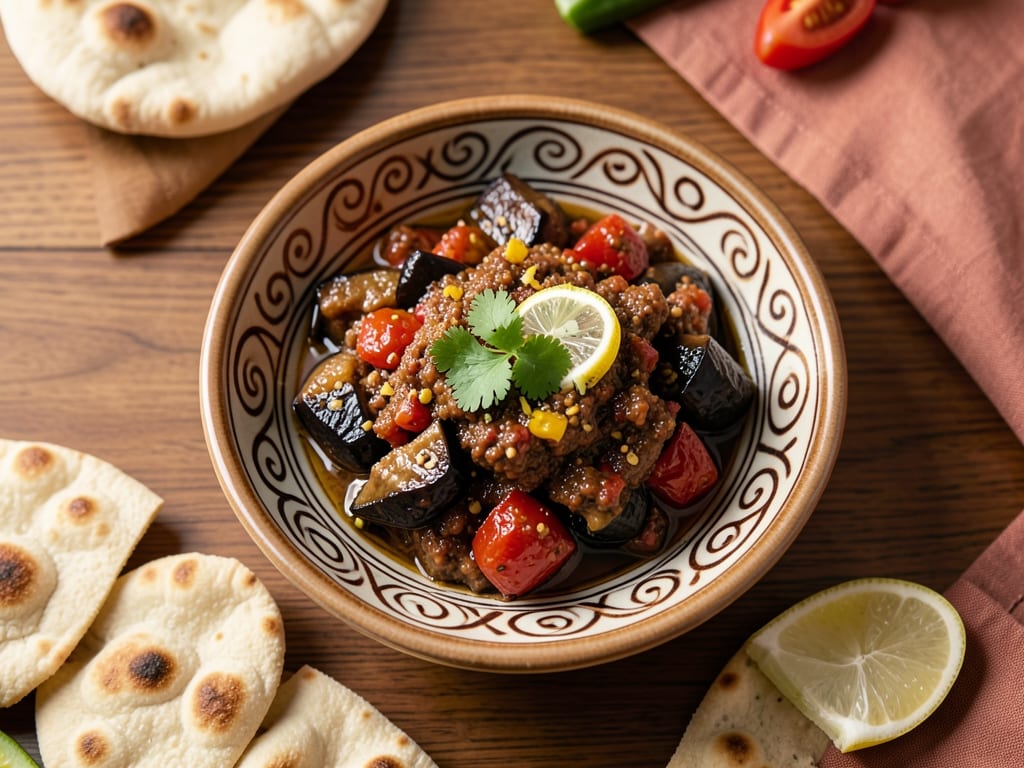
A rustic Sicilian vegetable stew of soft eggplant, tomatoes, olives, and capers, brightened with red wine vinegar and topped with toasted pine nuts. Served warm or at room temperature as a dip, appetizer, or side dish.
- Prep
- 25 min
- Cook
- 42 min
- Wait
- 1 hr
- Total
- 2 hr 7 min
- Makes
- 6 servings (about 3½ cups)
Steps
Before you start
- Gather and prepare all ingredients before you start cooking
- Salting the eggplant takes 30 minutes; prep other vegetables during this time
- Make caponata 1–2 days ahead if possible; flavors improve overnight
Salt and rest eggplant
- Cut the eggplant into ¾-inch cubes.
- Place in a colander and sprinkle with 1 tsp salt.
- Let sit for 30 minutes; this draws out moisture and prevents the eggplant from absorbing excess oil during frying.
- After 30 minutes, pat the eggplant thoroughly dry with paper towels—this step is crucial for getting a silky texture and reducing greasiness in the finished dish.
+ Show details− Hide details
Ready when: Eggplant releases visible liquid into the colander; pieces are noticeably drier after patting with paper towels
Tip: Don't skip the salting step; it makes the finished caponata less greasy and the eggplant silkier
Toast nuts and prep vegetables
- While eggplant rests, if using pine nuts: heat a dry skillet over medium heat, add pine nuts, and toast shaking pan frequently for 3–4 minutes until fragrant and light golden.
- Transfer to a small plate.
- Separately, dice the onion, celery, and garlic; pit and halve the olives; drain the capers.
- Keep all prep ingredients within arm's reach of the stove for quick assembly.
+ Show details− Hide details
Ready when: Nuts are fragrant and light golden brown; all vegetables are chopped and ready
Tip: Pine nuts burn quickly, so watch closely while toasting
Fry the eggplant
- Heat ¼ cup olive oil in a large (12-inch) skillet over medium-high heat.
- Once shimmering, add eggplant in a single layer (work in 2–3 batches if needed to avoid crowding the pan).
- Fry without stirring for 3–4 minutes until golden on one side, then stir and cook another 2–3 minutes until all sides are golden and the flesh is tender.
- Transfer fried eggplant to a paper-towel-lined plate.
- Add more oil between batches if the pan looks dry.
+ Show details− Hide details
Ready when: Edges are deep golden brown, flesh is translucent and tender when pierced with a fork
Tip: Crowding the pan steams the eggplant instead of frying it; work in batches for better caramelization and texture
Sauté the aromatic vegetables
- Add the remaining ¼ cup olive oil to the same skillet over medium heat.
- Add diced onion and celery; cook for 5 minutes, stirring occasionally, until soft and fragrant.
- Add minced garlic and cook for 1 minute more until very fragrant but not browned.
+ Show details− Hide details
Ready when: Onion is translucent and soft, garlic is fragrant without browning
Build the sauce base
- Pour the crushed tomatoes with all juice into the skillet.
- Add the fried eggplant back to the skillet along with any accumulated juices from the plate.
- Stir well to combine, scraping up any browned bits from the bottom of the pan (these add flavor).
- Reduce heat to medium-low.
+ Show details− Hide details
Ready when: All eggplant is distributed evenly and coated with tomato sauce
Simmer and meld flavors
- Simmer uncovered for 15 minutes, stirring occasionally, until the sauce thickens slightly and eggplant becomes very tender.
- Add the halved olives, drained capers, and red wine vinegar to the pan.
- Stir in the toasted pine nuts and/or golden raisins (if using) and sugar (if desired to balance acidity—optional).
- Taste and adjust seasoning with additional salt and freshly ground black pepper.
- Simmer for another 5 minutes uncovered to allow all flavors to blend and integrate.
+ Show details− Hide details
Ready when: Sauce coats the back of a spoon thickly, eggplant is very tender, all flavors are well integrated
Tip: The vinegar is essential; it provides a bright, sharp note that balances the richness of the olive oil and eggplant
Cool and serve
- Remove from heat.
- Let the caponata cool to room temperature (about 30 minutes), stirring occasionally.
- (Alternatively, serve warm if you prefer.) Just before serving, stir in the fresh basil if using.
- Check final seasoning and adjust salt, black pepper, or red wine vinegar to your taste.
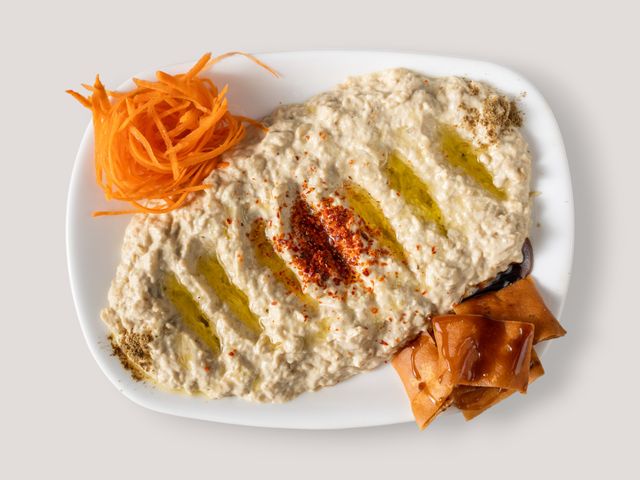
- Serve as a dip with crusty bread or crostini, as a side dish to grilled meats or fish, or spooned over fresh ricotta cheese.
+ Show details− Hide details
Tip: Caponata is equally delicious served warm, at room temperature, or chilled
Good to know
Tips
- You can salt the eggplant 1–2 hours ahead and leave it resting in the colander; the waiting time is flexible
- Don't rush the eggplant frying; golden, caramelized edges add depth of flavor and prevent a bland, greasy result
- Caponata is equally delicious served warm, at room temperature, or chilled, making it perfect for entertaining or meal prep
- Serve as a dip with crusty bread or crostini, as a side to grilled meats or fish, spooned over fresh ricotta, or tossed with warm pasta
Make ahead
Yes. Make caponata 1–2 days ahead; flavors improve overnight. Store in the refrigerator in an airtight container. Bring to room temperature or reheat gently before serving.
Storage & reheating
Room temperature (up to 2 hours, loosely covered). Refrigerator (up to 4–5 days in airtight container). Freezer (up to 3 months in airtight container or zip-top bag; thaw overnight in refrigerator, then warm gently). To reheat: warm gently in a skillet over low heat or in a 325°F (160°C) oven for 15–20 minutes.
Substitutions
- kalamata olives → Green Castelvetrano olives or other brined green olives. Green olives add a fresher, slightly less briny flavor; use the same quantity
- red wine vinegar → Balsamic vinegar or apple cider vinegar. Balsamic adds sweetness and depth; apple cider is lighter and more tart. Start with 2 tbsp and taste, adding more as needed
- capers → ¼ cup diced green olives. You lose the distinctive tiny-bud texture, but the salty-sour flavor is similar
- pine nuts → Golden raisins (¼ cup) or equal parts of both. Raisins add sweetness and chewiness; pine nuts add earthiness and crunch. Both are traditional; omit one or use both