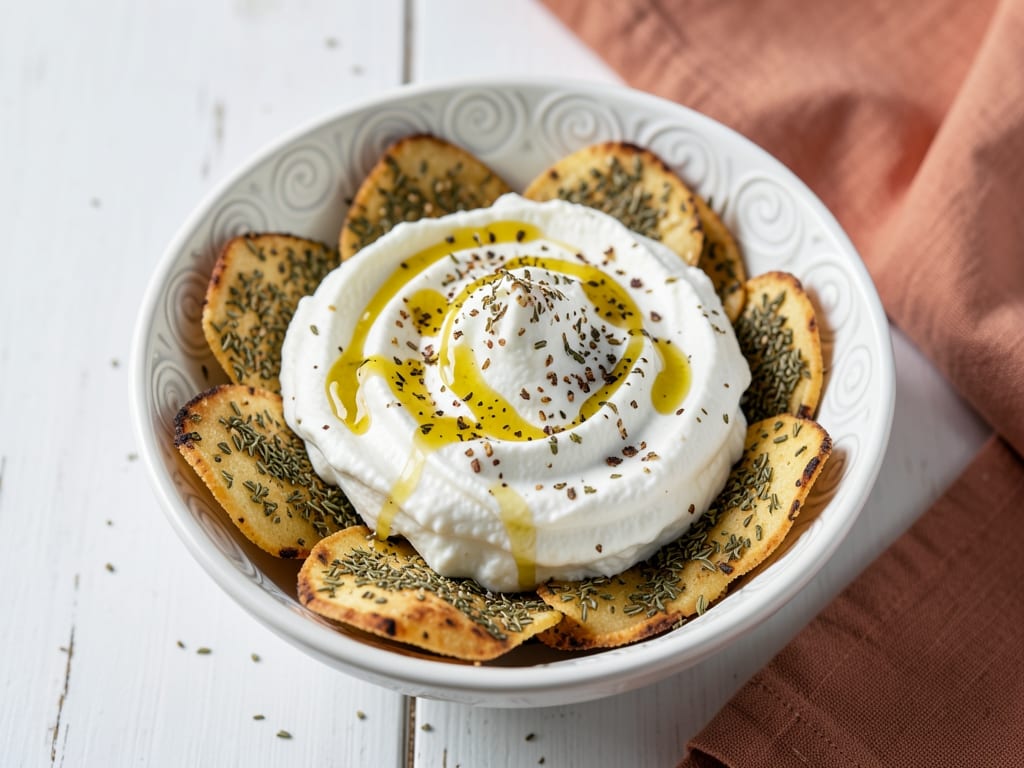
Italian Eggplant Caponata with Yogurt Ricotta Spread
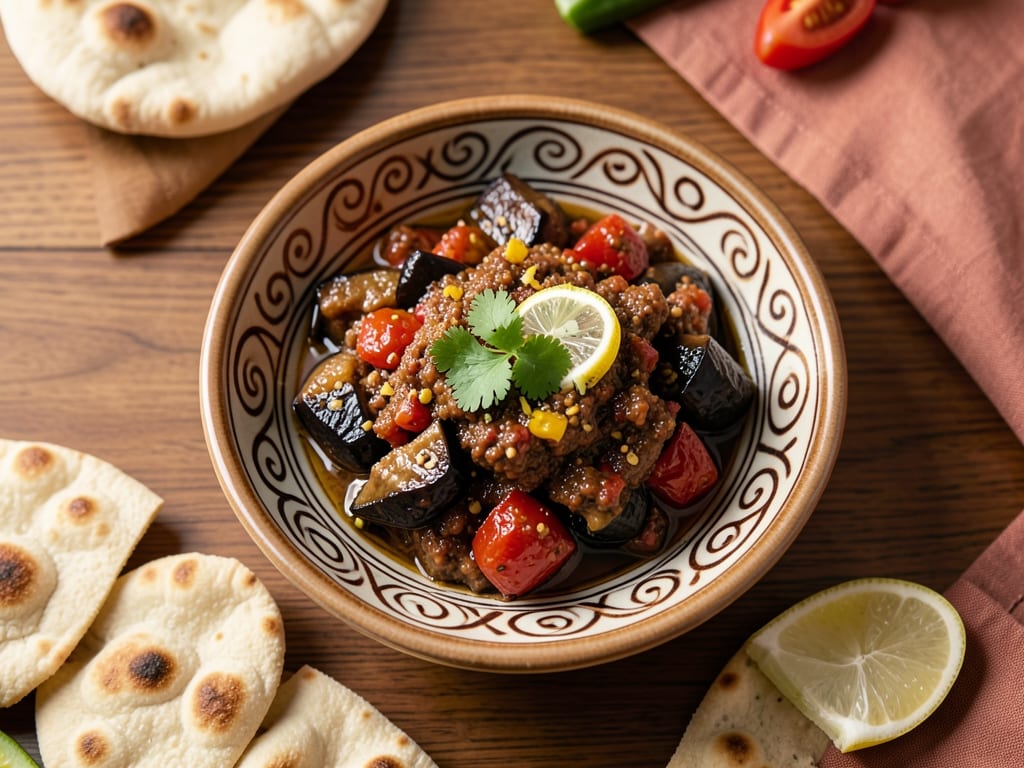
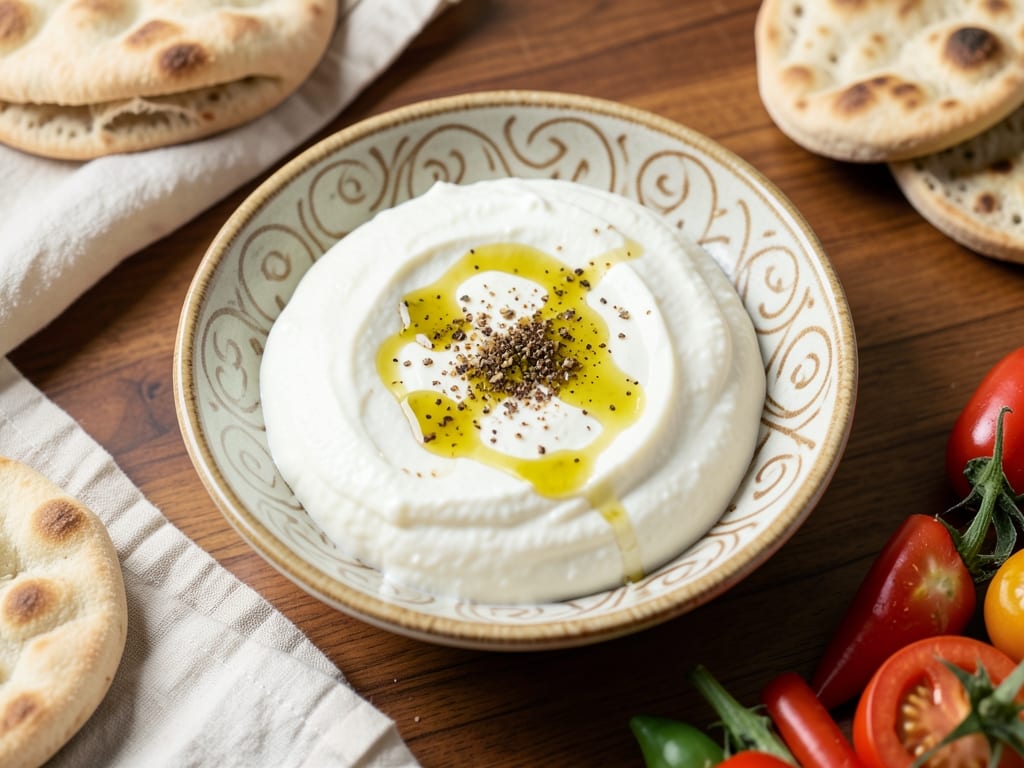
Silky caponata meets creamy yogurt-ricotta in this Italian-inspired appetizer. Slow-cooked eggplant, tomatoes, capers, and olives create a tender, sweet-sour base, topped with a cooling whipped spread. Serve at room temperature with toasted bread or crudités.
- Prep
- 20 min
- Cook
- 25 min
- Wait
- 30 min
- Total
- 1 hr 15 min
- Makes
- 4 servings (about 2.5 cups caponata, 1 cup spread)
Steps
Before you start
- Read through the recipe for timing and have all ingredients prepped before starting to cook (mise en place).
- The caponata can be made 1–2 days ahead and tastes even better, allowing flavors to meld.
- Serve at room temperature or slightly warm; both spreadable components should be made just before serving.
- Gather a large skillet (12-inch), cutting board, and colander.
Salt and dry eggplant
- Cut the eggplant into ¾-inch cubes.
- Place them in a colander and sprinkle with ½ teaspoon salt.
- Let sit for 10 minutes to draw out excess moisture—this prevents a soggy caponata and allows the eggplant to fry rather than steam.
- Pat the cubes dry thoroughly with paper towels; the surface should show beads of water.
+ Show details− Hide details
Ready when: Eggplant is very dry with no moisture on the surface
Tip: Don't skip this step—it is crucial for proper texture. Wet eggplant will steam and absorb too much oil.
Cook eggplant until golden
- Heat the olive oil in a large 12-inch skillet over medium-high heat.
- Once the oil shimmers, add the eggplant cubes in a single layer (work in batches if needed to avoid crowding).
- Cook for 4–5 minutes per side, stirring occasionally, until light golden brown and fork-tender.
- Transfer to a plate and set aside.
+ Show details− Hide details
Ready when: Eggplant is soft to the touch, light golden on all sides, not pale or translucent
Tip: Don't crowd the pan; give eggplant space to brown. If needed, sauté in two batches and add more oil for the second batch.
Sauté onion and garlic
- In the same skillet, add the diced red onion and minced garlic.
- Reduce heat to medium and sauté for 3–4 minutes, stirring occasionally, until the onion softens and becomes translucent.
- The garlic should be fragrant but not browned.
+ Show details− Hide details
Ready when: Onion is soft and beginning to turn golden at the edges; garlic is fragrant
Tip: Reduce heat to prevent garlic from burning. If it browns, the flavor becomes bitter.
Build the caponata base
- Stir the tomato paste into the onion and garlic, coating well, and cook for 1 minute until it darkens slightly and becomes very fragrant.
- Pour in the red wine vinegar, stirring to lift any browned bits from the bottom of the pan (this is called deglazing).
- Add the canned tomatoes with their juice, breaking them up gently with a spoon—leave some chunks for texture.
- Stir in the drained capers and halved Kalamata olives.
+ Show details− Hide details
Ready when: Tomato paste darkens, vinegar sizzles, and all components are mixed
Tip: Breaking up tomatoes by hand gives better texture than pureeing; leave some chunks for rustic texture.
Simmer caponata and meld flavors
- Return the sautéed eggplant to the skillet, stirring gently to combine.
- Reduce heat to medium-low and simmer uncovered for 15–20 minutes, stirring occasionally.
- The caponata is done when the eggplant is very tender, the liquid has reduced and thickened slightly, and the flavors have melded.
- The mixture should look jammy but not dry.
- Taste and season with salt and black pepper as needed.
+ Show details− Hide details
Ready when: Eggplant breaks apart easily; sauce clings to vegetables and is not watery or runny
Tip: Stir occasionally but not constantly—allow the bottom to caramelize slightly for depth of flavor.
Finish with pine nuts and basil
- Remove the skillet from heat.
- Stir in the pine nuts if using.
- Fold in the fresh basil gently until just combined; the residual heat will soften it slightly while keeping it bright green and fresh.
- Let the caponata cool for 5–10 minutes, or let it come to room temperature (it tastes even better at room temperature).
+ Show details− Hide details
Ready when: Pine nuts are distributed evenly; basil is gently wilted and fragrant
Tip: Don't cook the basil—add it off heat to preserve its fresh color and flavor. If basil is added while the pan is hot, it will turn dark.
Whip yogurt ricotta spread
- While the caponata cools, combine the Greek yogurt and ricotta cheese in a small bowl.
- Add the fresh lemon juice and mince one small garlic clove, adding it to the bowl.
- Stir with a spoon until smooth and creamy, breaking up any lumps of ricotta.
- Season with a pinch of salt and black pepper to taste.
- The spread should be fluffy and spreadable.
+ Show details− Hide details
Ready when: Spread is smooth and creamy with no ricotta lumps remaining
Tip: Use cold yogurt and ricotta straight from the refrigerator for the smoothest result. Don't overmix, as this can make it grainy or break the emulsion.
Plate and serve
- Spoon the caponata into a shallow serving bowl or onto individual plates.
- Top with a dollop of the yogurt ricotta spread, or serve the spread on the side for guests to add as they like.
- Drizzle lightly with olive oil and garnish with a fresh basil leaf if desired.
- Serve with toasted bread, crudités, or crackers.
+ Show details− Hide details
Tip: This dish is best served at room temperature, which allows the flavors to shine. Make it 2–4 hours ahead and let it rest covered at room temperature.
Good to know
Tips
- Caponata is a peasant dish meant to be forgiving—don't aim for uniformity in the eggplant cubes. Irregular pieces add charm and variation in texture.
- If making this a day ahead, store the caponata and spread separately in airtight containers (they don't mix well when cold), then combine just before serving.
- The yogurt ricotta spread also works as a dip for vegetables or crackers on its own. Make a double batch and keep it on hand for quick appetizers.
- The eggplant is properly salted if beads of water form on its surface after 10 minutes. This ensures it fries rather than steams, giving you tender rather than mushy results.
Make ahead
The caponata can be made up to 2 days ahead and stored covered in the refrigerator; the flavors actually improve as it sits. Make the yogurt ricotta spread no more than 4 hours ahead. Both should be served at room temperature or gently warmed. Combine them just before serving for the best presentation.
Storage & reheating
Caponata: Keeps in an airtight container in the refrigerator for up to 4 days. Freeze for up to 3 months (thaw overnight in the fridge, then bring to room temperature). Reheat gently in a skillet over low heat, stirring occasionally, or serve cold. Yogurt Ricotta Spread: Keeps in the refrigerator for 3–4 days in an airtight container. Do not freeze. Stir well before serving.
Substitutions
- Kalamata olives → Castelvetrano olives or green Sicilian olives. Green olives are less briny and buttery; reduce added salt slightly to avoid over-seasoning.
- pine nuts → Toasted almonds or walnuts, chopped. Almonds are more assertive in flavor; use slightly less. Walnuts add earthiness.
- Greek yogurt → Sour cream or plain whole-milk yogurt. Sour cream will be tangier and richer; yogurt will be lighter. Both work well.
- red wine vinegar → Balsamic vinegar or sherry vinegar. Balsamic adds natural sweetness; use only 2 tablespoons. Sherry vinegar is milder; use 3.5 tablespoons.