
Baba Ganoush with Roasted Eggplant
Creamy, smoky baba ganoush made with roasted eggplant charred until the flesh is entirely soft. Tahini and lemon juice create tang, garlic adds punch, and olive oil brings richness. Serve at room temperature with pita bread for scooping.
Steps
Before you start
- Preheat the oven to 450°F (230°C) for at least 15 minutes
- Line a large baking sheet with aluminum foil for easy cleanup
- Have a medium bowl ready for cooling the roasted eggplant
Prepare and oil eggplants
- Pat the eggplant halves dry with a paper towel.
- Brush the cut sides generously with 2 tablespoons of olive oil.
- Season both the flesh and skin sides evenly with kosher salt and black pepper.
- Place the halves cut-side down on the foil-lined baking sheet.
+ Show details− Hide details
Tip: Oiling the cut side prevents sticking and helps the flesh soften evenly. Pat the eggplant dry so the oil adheres and doesn't pool.
Roast until deeply charredOven 450°F / 230°C
- Place the baking sheet in the preheated 450°F (230°C) oven.
- Roast for 30–35 minutes, until the skin is blackened in spots and the flesh is completely soft when pierced with a fork.
- The eggplant should collapse easily when pressed with a utensil.
+ Show details− Hide details
Ready when: Skin is blackened in spots; flesh yields completely to a fork and collapses when pressed
Tip: High heat is essential for developing the smoky, charred flavor that defines great baba ganoush. Don't skip the blackening.
Cool and scoop flesh
- Remove the baking sheet from the oven and let the eggplant halves cool for 10–15 minutes until cool enough to handle.
- Using a fork or spoon, scoop the soft flesh away from the charred skin, leaving the skin behind on the sheet.
- Transfer the warm flesh to a medium bowl.
+ Show details− Hide details
Ready when: Eggplant is cool enough to touch without burning
Tip: Discard all the blackened skin—you want only the pale, creamy interior flesh. A fork works better than a spoon for scraping clean.
Blend eggplant with tahini and lemon
- Place the warm eggplant flesh in a food processor with the tahini, lemon juice, and minced garlic.
- Pulse and blend until the mixture is completely smooth and creamy, about 1–2 minutes.
- Scrape down the sides as needed.
+ Show details− Hide details
Ready when: Mixture is entirely smooth and uniform, no chunks visible
Tip: Blending the warm eggplant helps it emulsify with the tahini smoothly. If it seems too thick, add the water 1 tablespoon at a time.
Adjust seasoning and texture
- Taste the baba ganoush and adjust salt and pepper to your preference.
- If the mixture seems thick or grainy, add the optional water, 1 tablespoon at a time, blending until you reach a smooth, spreadable consistency.
- The final texture should be creamy but still hold its shape slightly.
+ Show details− Hide details
Ready when: Consistency is creamy and spreadable; seasoning is balanced
Tip: Tahini can vary in thickness between brands. Start with no water and only add if needed; over-thinning will make the dip lose its appeal.
Transfer and garnish
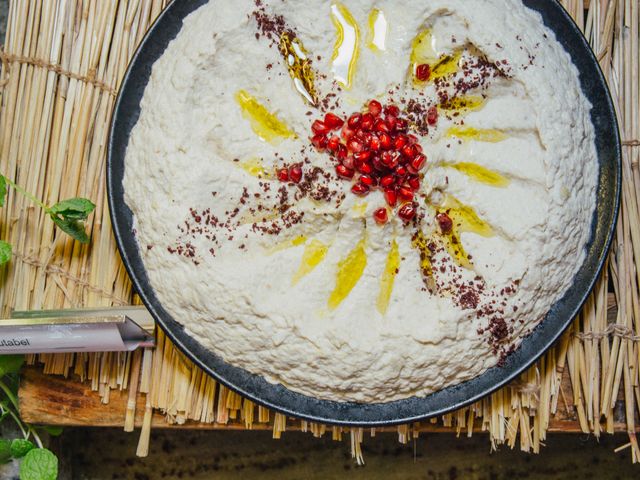
- Spoon the baba ganoush into a shallow serving bowl.
- Drizzle with the remaining 1 tablespoon of olive oil.
- Top with the optional pomegranate seeds and chopped parsley for color and freshness.
- Serve at room temperature with warm pita bread or vegetable crudités.
+ Show details− Hide details
Tip: A drizzle of olive oil on top and fresh garnish make the dip look restaurant-quality. Room temperature is ideal for maximum flavor.
Good to know
Tips
- Charring the eggplant skin is key to authentic flavor. Don't be timid—blackened spots are desirable, not a mistake. They impart the smoky character that defines baba ganoush.
- Room-temperature tahini blends more smoothly with warm eggplant. If your tahini is cold, let it sit out for 30 minutes before using, or warm it gently in the microwave for 10 seconds.
- Serve baba ganoush at room temperature for the best texture and flavor. Cold eggplant becomes pasty; warm is creamier and more inviting.
- This dip pairs beautifully with warm pita bread, fresh vegetables (cucumber, tomato, bell pepper), or crudités. It's also excellent as a spread on sandwiches or alongside grilled lamb or chicken.
Make ahead
Prepare up to 3 days ahead; store in an airtight container in the refrigerator. Bring to room temperature and stir gently before serving, adding a splash of lemon juice or olive oil if it has dried out slightly.
Storage & reheating
Room temperature: 2 hours. Refrigerator: 3 days in an airtight container. Freezer: up to 1 month in a freezer-safe container. Thaw in the refrigerator overnight and stir before serving.
Substitutions
- tahini (sesame paste) → Greek yogurt or labneh (strained yogurt). Use 3 tablespoons Greek yogurt or 2 tablespoons labneh for a tangier, lighter dip. Reduce lemon juice to 2 tablespoons. The texture will be slightly less rich.
- fresh lemon juice → lime juice or red wine vinegar. Use the same amount. Lime juice adds a different brightness; vinegar creates a more subtle tang. Adjust to taste.
- globe eggplants (medium, about 8 ounces each) → Japanese or Italian eggplants (use 3–4 smaller ones). Smaller eggplants have thinner skins and cook in 20–25 minutes. Check for doneness by piercing with a fork; flesh should collapse.
- pomegranate seeds (arils) → toasted pine nuts or paprika. Pine nuts add richness and crunch; use 2 tablespoons toasted. A pinch of Aleppo or smoked paprika adds color and depth.
More dips & spreads
See all →




Find more like this
- Meal
- Snack
- Cuisine
- Middle Eastern
- Main ingredient
- Eggplant
- Method
- Oven
- Quick & Easy
- 5 Ingredients or LessEasyBeginner