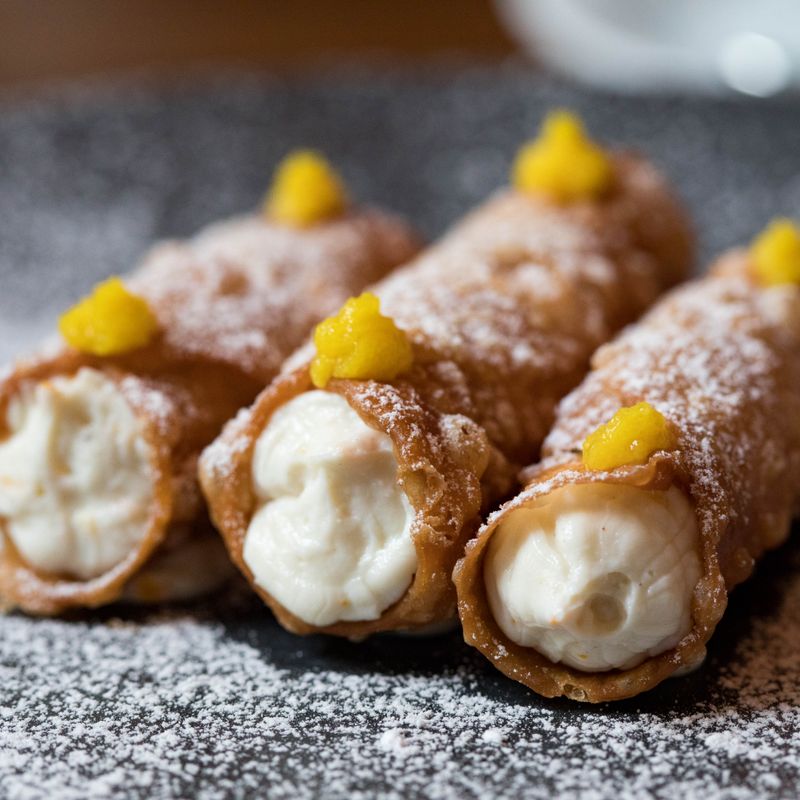
Italian Sfogliatelle with Ricotta Filling
Crispy, flaky sfogliatelle pastries filled with a sweet ricotta mixture studded with candied fruit and orange zest, finished with a light honey glaze. These Neapolitan shells feature buttery phyllo layers that shatter delightfully when bitten, revealing a creamy, fragrant filling.
- Prep
- 40 min
- Cook
- 25 min
- Wait
- 10 min
- Total
- 1 hr 15 min
- Makes
- 12 pastries
Steps
Before you start
- Preheat oven to 375°F (190°C) 15 minutes ahead
- Have phyllo sheets at room temperature for 30 minutes before use
- Line two baking sheets with parchment paper
- Measure all filling ingredients and have them ready before assembling
Mix the ricotta filling
- In a medium bowl, combine the drained ricotta, powdered sugar, candied orange peel, candied citron, fresh orange zest, ground cinnamon, and salt.
- Fold gently with a spatula until evenly mixed, taking care not to overmix.
- The filling should be creamy but not wet.
- Set aside at room temperature.
+ Show details− Hide details
Ready when: filling is creamy and fruit is evenly distributed
Tip: If your ricotta is very wet, drain it in cheesecloth for 15 minutes before mixing to prevent soggy pastries.
Prepare the honey glaze
- In a small saucepan over low heat, warm the honey with 2 tablespoons of water, stirring occasionally, until slightly thinned and pourable—about 2–3 minutes.
- Do not boil.
- Pour into a shallow bowl and set aside to cool slightly while you assemble the pastries.
+ Show details− Hide details
Ready when: honey is warm and pourable, not bubbling
Tip: Warm glaze will soak into hot pastries; slightly cooled glaze will coat the surface better for a glossy finish.
Lay and butter the phyllo base
- Take one phyllo sheet and lay it flat on a work surface.
- Brush lightly with warm melted butter using a pastry brush, covering most of the sheet.
- Continue layering 3 more phyllo sheets on top, brushing each with butter.
- The stack should be about 4 sheets thick.
- This is your base layer.
+ Show details− Hide details
Ready when: 4 phyllo layers are stacked and all brushed with butter
Tip: Work quickly with phyllo—keep unused sheets covered with a damp towel to prevent drying out.
Roll and form the first log
- Starting at the long edge closest to you, spread a thin line of ricotta filling (about 2 tablespoons) along the edge in a 1-inch-wide strip.
- Tightly roll the phyllo stack toward you, creating a long log.
- Place the log seam-side down on a prepared baking sheet.
- You should have enough filling and phyllo for 3 logs total.
+ Show details− Hide details
Ready when: log is tightly rolled and seam is sealed beneath
Tip: Use about 2 tablespoons of filling per log—too much will burst through the pastry and too little wastes phyllo. Keep tension as you roll.
Prepare additional logs
- Repeat steps 3 and 4 two more times to create 3 phyllo-ricotta logs total.
- Arrange them spaced 2 inches apart on the two prepared baking sheets.
+ Show details− Hide details
Ready when: 3 filled logs are on baking sheets, evenly spaced
Tip: If phyllo becomes sticky or hard to work with, refrigerate it for 5 minutes to firm it up.
Cut the logs into shells
- Using a sharp paring knife or bench scraper, trim the ends of each log, then cut each log diagonally into 4 pieces (each about 3–4 inches long), creating a shell-like appearance.
- Lightly brush the cut edges and top of each piece with remaining melted butter.
+ Show details− Hide details
Ready when: 12 diagonal-cut pieces are on baking sheets, all brushed with butter
Tip: Dip your knife in hot water and wipe dry between cuts for cleaner, less-crumbly edges.
Bake the sfogliatelleOven 375°F / 190°C
- Place both baking sheets in a preheated 375°F (190°C) oven and bake for 22–25 minutes, rotating the sheets halfway through (about 12 minutes in), until the pastries are deep golden brown and crispy-looking.
- The phyllo should be very flaky and no longer soft.
+ Show details− Hide details
Ready when: pastries are deep golden brown, phyllo is crispy and shattered, filling is slightly visible and not oozing
Tip: If the tops brown too quickly, tent loosely with foil for the last 5 minutes, then remove foil to crisp again.
Cool briefly
- Remove the baking sheets from the oven and place on cooling racks.
- Let the sfogliatelle cool for 5–10 minutes until they are warm but manageable to handle.
+ Show details− Hide details
Ready when: pastries are still warm to the touch, no longer steaming
Tip: Cooling slightly allows the filling to set and the pastry to firm up, making them easier to glaze without the glaze running off.
Glaze and serve
- While the sfogliatelle are still warm, dip the top of each pastry into the cooled honey glaze or brush a generous coat on top, letting excess drip back into the bowl.
- Arrange the glazed sfogliatelle on a serving platter and let cool to room temperature before serving.
- The glaze will firm up and become sticky-glazed as they cool.
+ Show details− Hide details
Ready when: all sfogliatelle are glossy with honey glaze
Tip: Glaze while warm so the honey adheres and creates a beautiful glossy finish—glazing cold pastries will look dull.
Good to know
Tips
- Phyllo dries out quickly—keep unused sheets covered with a damp kitchen towel. If your phyllo becomes brittle or cracks, run a steam-filled kettle over it briefly to rehydrate, then cover.
- The key to crispy sfogliatelle is thorough buttering between each layer and a hot oven. Underbutter and they'll be chewy; low heat makes them soggy rather than shattered.
- For authentic shell-shaped sfogliatelle, some cooks layer phyllo in a rectangular mold before rolling, but rolling logs and cutting diagonally is a simpler home method that achieves excellent flaky results.
- Make sure your ricotta is not overly wet—use fresh, high-quality ricotta or drain watery versions overnight in a sieve lined with cheesecloth to prevent filling from leaking and making the pastry soggy.
Make ahead
The ricotta filling can be made up to 2 days ahead and refrigerated in an airtight container. Let it return to room temperature before assembling. The unfilled phyllo logs can be wrapped tightly and frozen for up to 1 week; thaw at room temperature for 30 minutes before baking, adding 2–3 minutes to the bake time.
Storage & reheating
Store sfogliatelle in an airtight container at room temperature for up to 2 days (they will soften slightly). Refrigerate for up to 5 days; warm in a 300°F (150°C) oven for 8–10 minutes to re-crisp. Freeze baked pastries (without glaze) for up to 3 weeks in a freezer-safe container; thaw and re-crisp at 350°F (175°C) for 10 minutes before serving. You can also freeze the unbaked, unglazed pastries for up to 1 week.
Substitutions
- candied citron or mixed candied fruit, finely chopped → candied lemon peel or additional candied orange peel. Use the same weight. Candied lemon peel provides a slight bitter note; extra orange peel is sweeter and milder.
- honey → light corn syrup or light agave nectar. Equal amount creates a glossy finish with a less floral sweetness. The texture will be slightly thinner.
- whole milk ricotta cheese → a mixture of 1 cup whole milk ricotta and 1 cup creamy mascarpone. Creates a richer, creamier filling; slightly reduce powdered sugar to 1/2 cup if using this blend to avoid excessive sweetness.
- ground cinnamon → finely grated fresh nutmeg. Use 1/4 teaspoon; nutmeg gives a warmer, slightly earthy spice that complements the ricotta and candied fruit beautifully.
More pies & tarts
See all →



Find more like this
- Meal
- Dessert
- Cuisine
- Neapolitan
- Diet
- VegetarianHalal
- Method
- Oven