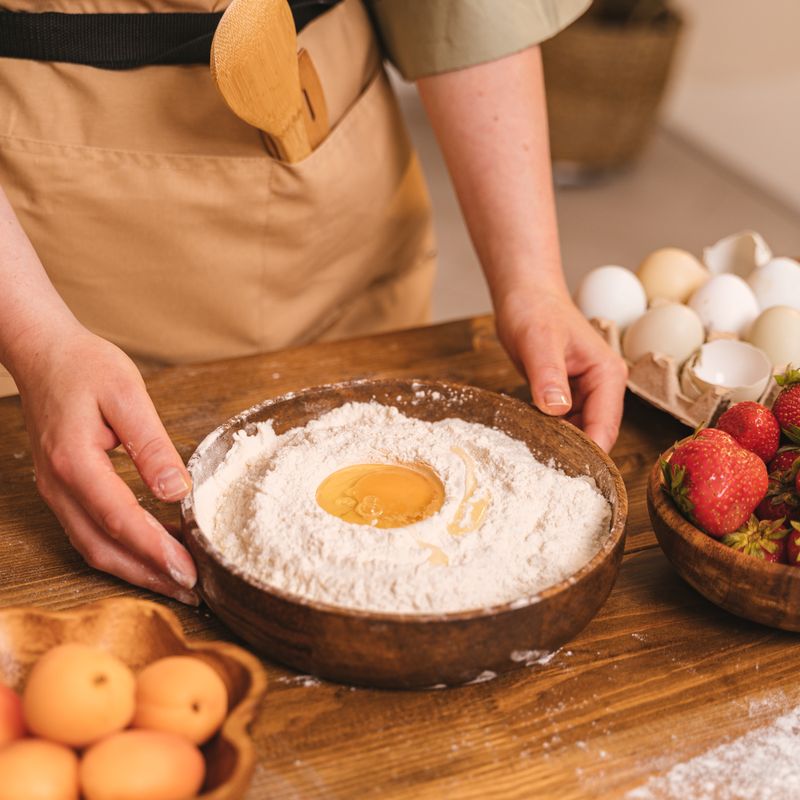
Italian Sbrisolona Shortbread Cake with Corn Flour
Sbrisolana is a delicate, crumbly Italian shortbread cake from Lombardy with a rich butter base, toasted almonds, and the distinctive texture from combining wheat flour and polenta. The name comes from "sbriciolata," meaning crumbly—it breaks apart into sandy, buttery fragments when cut or broken. Serve it with espresso or sweet wine, or crumble it over mascarpone cream.
- Prep
- 15 min
- Cook
- 35 min
- Wait
- 20 min
- Total
- 1 hr 10 min
- Makes
- 1 cake (9 inches / 23 cm), about 12 slices
Steps
Before you start
- Preheat oven to 350°F (175°C)
- Have all ingredients at room temperature
- Lightly toast the almonds in a dry skillet over medium heat for 3–4 minutes (optional but improves flavor), then chop roughly
- Line a 9-inch (23 cm) round cake pan with parchment paper or butter it generously
Cream butter and sugar
- In a large mixing bowl, beat the softened butter and granulated sugar together with an electric mixer on medium-high speed for 3–4 minutes, until the mixture is pale, fluffy, and lighter in color.
- Scrape down the sides of the bowl as needed.
+ Show details− Hide details
Ready when: Mixture is pale, fluffy, and increased in volume
Tip: Do not skip this step—creaming incorporates air and creates the tender crumb texture essential to sbrisolona.
Add egg yolk and flavoring
- Add the egg yolk and vanilla extract (if using) to the creamed mixture.
- Beat on medium speed for 1 minute until fully incorporated and the mixture looks smooth and slightly glossy.
+ Show details− Hide details
Ready when: Mixture is smooth and glossy with no streaks of yolk visible
Tip: A single yolk adds richness without making the cake dense; the rest of the egg white is omitted to preserve the sandy texture.
Combine dry ingredients
- In a small bowl, whisk together the all-purpose flour, polenta or cornmeal, baking powder, and sea salt until evenly distributed.
- Add the lemon zest (if using) and stir to combine.
+ Show details− Hide details
Ready when: Mixture is uniform with no lumps and lemon zest is evenly distributed
Tip: Whisking the dry ingredients ensures even distribution of baking powder and prevents pockets of dense cake.
Fold in dry ingredients and almonds
- Add the dry ingredients to the butter mixture and fold together gently with a spatula, stirring just until combined—do not overmix, as this keeps the crumb tender.
- Fold in the chopped almonds until evenly distributed throughout the dough.
+ Show details− Hide details
Ready when: Dry ingredients are barely incorporated with visible almond pieces throughout; small lumps of dough remain
Tip: Undermixing here is critical—the dough should look slightly shaggy, not smooth. Overmixing develops gluten and makes the cake tough instead of crumbly.
Press into pan
- Transfer the dough to the prepared 9-inch (23 cm) cake pan.
- Using your fingertips or the heel of your hand, gently press the dough evenly across the bottom and slightly up the sides of the pan.
- The dough will be crumbly; work calmly so it holds together without overworking.
+ Show details− Hide details
Ready when: Dough is evenly pressed into the pan and covers the bottom completely
Tip: Do not use a rolling pin or press too hard—the cake should bake with a slightly uneven, rustic surface and remain tender.
Bake until goldenOven 350°F / 175°C
- Bake in a preheated 350°F (175°C) oven for 30–35 minutes, until the cake is uniformly golden brown on top and a light golden color on the sides.
- The cake should spring back slightly when gently pressed in the center.
+ Show details− Hide details
Ready when: Cake is golden brown on top and sides; it springs back slightly when gently pressed in the center
Tip: Watch carefully during the final 5 minutes—the cake can overbake and become dry. It should look lightly golden, not dark brown.
Cool and serve
- Remove the cake from the oven and let it cool in the pan for 10 minutes.
- Run a small knife around the edges to loosen it gently.
- Place a serving plate on top of the pan and invert the cake onto the plate, or serve directly from the pan by breaking into rustic shards.
- Cool to room temperature before serving.
+ Show details− Hide details
Ready when: Cake has cooled to room temperature and is stable when broken
Tip: Sbrisolona is traditionally served broken into irregular pieces, not sliced neatly—embrace the crumbly nature of the cake.
Good to know
Tips
- Sbrisolona is meant to be crumbly and break into rustic shards when served. Do not expect or attempt a neat slice—that's the charm of this cake.
- Toasting the almonds lightly before chopping (3–4 minutes in a dry skillet) brings out their flavor and adds visual appeal with deeper color.
- Do not overmix the batter once you add the dry ingredients. A slightly shaggy dough yields a tender crumb; a smooth batter produces a cake that is closer to pound cake.
- Store leftover sbrisolona in an airtight container with parchment between layers if you'd like to break it into pieces in advance. It will stay fresh and crumbly for 3 days at room temperature.
Make ahead
Bake the cake up to 2 days ahead and store it in an airtight container. The cake stays fresh and crumbly at room temperature and actually improves slightly as flavors meld.
Storage & reheating
Room temperature (airtight container): up to 3 days. Refrigerator: up to 5 days (the texture remains crumbly but may soften slightly). Freezer: up to 1 month (wrap well in plastic wrap, then foil). Thaw at room temperature for 2–3 hours. Do not reheat; serve at room temperature.
Substitutions
- raw or roasted almonds, roughly chopped → Hazelnuts or pine nuts. Use the same weight; chop hazelnuts roughly, or toast them lightly to enhance their flavor. Pine nuts may be left whole.
- polenta or cornmeal (finely ground) → Finely ground semolina flour. Use the same weight. Semolina will give a slightly different, more granular crumb and is traditional in some regional versions.
- lemon zest, finely grated → Orange zest or a pinch of ground cardamom. Use zest from 1 medium orange, or ⅛ tsp ground cardamom for a more aromatic, spice-forward flavor.
- vanilla extract → Omit entirely or use ¼ tsp almond extract. Vanilla is optional; almond extract (use sparingly) reinforces the almond flavor in the cake.