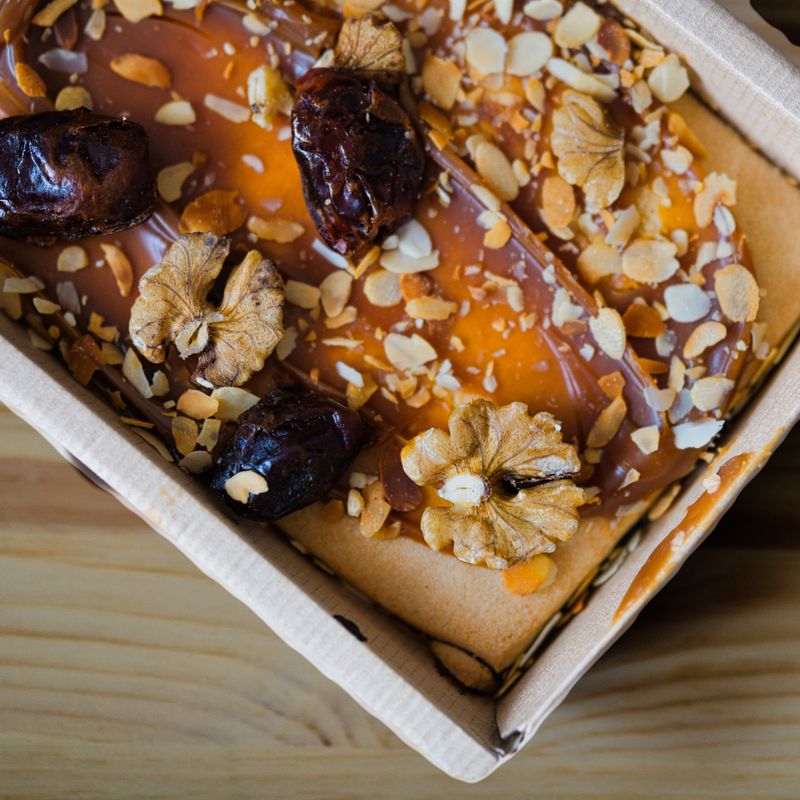
Skillet Date and Oat Cake
A moist, tender skillet cake studded with plump dates and rolled oats, baked in a cast-iron pan until the edges are caramelized and the center remains soft. The combination of brown sugar, butter, and whole grains creates a naturally sweet, slightly nutty crumb with chewy pockets of softened dates. Warm from the oven with a drizzle of caramel or a dollop of whipped cream, it's an unfussy, rustic dessert perfect for weeknight dinners or casual gatherings.
- Prep
- 15 min
- Cook
- 35 min
- Wait
- 15 min
- Total
- 1 hr 5 min
- Makes
- 1 skillet cake (8 slices)
Steps
Before you start
- Preheat oven to 350°F (175°C)
- Use a 10-inch cast-iron skillet or 9-inch round cake pan
- Chop dates into roughly ½-inch pieces
- Let butter and eggs come to room temperature
Prepare skillet and dry ingredients
- Butter a 10-inch cast-iron skillet or 9-inch round cake pan with the 1 tablespoon of butter, coating the bottom and sides evenly.
- In a medium bowl, whisk together flour, rolled oats, baking powder, cinnamon, and salt.
- Set aside.
+ Show details− Hide details
Tip: Don't skip the butter on the skillet sides—it creates a golden, caramelized edge.
Cream butter and sugar
- In a large bowl, whisk the softened butter and brown sugar together for about 2 minutes until light and fluffy, with a pale color and texture like wet sand.
+ Show details− Hide details
Ready when: Mixture is pale, fluffy, and noticeably lighter than the original brown sugar
Tip: Whisking by hand works fine here; don't use a mixer for such a small batch as it can overwork the batter.
Add eggs and vanilla
- Add the eggs one at a time to the butter mixture, whisking well after each addition for about 15 seconds until combined.
- Whisk in the vanilla extract.
+ Show details− Hide details
Ready when: Batter is smooth and emulsified with no streaks of egg white
Tip: Add eggs slowly so they emulsify properly—if added all at once, the batter may look curdled.
Fold in dry ingredients
- Pour the dry ingredient mixture into the wet ingredients.
- Using a rubber spatula, fold gently with about 8–10 strokes until just combined.
- Do not overmix; small lumps of flour are fine.
+ Show details− Hide details
Ready when: Dry ingredients are barely visible and batter is thick but uniform
Tip: Overmixing develops gluten and makes the cake tough—fold gently and stop as soon as no flour streaks remain.
Fold in dates
- Fold in the chopped dates with 2–3 gentle strokes, distributing them evenly throughout the batter.
+ Show details− Hide details
Ready when: Dates are evenly distributed with no dry flour visible
Tip: Chop dates into small, uniform pieces so they bake evenly and add texture throughout.
Transfer to skillet and smooth
- Scrape the batter into the prepared skillet, spreading it evenly with the spatula so it reaches the edges and corners.
- The top should be level.
+ Show details− Hide details
Ready when: Batter fills the skillet evenly with a level surface
Tip: Use an offset spatula or the back of a spoon for a smooth, even top that bakes consistently.
Bake the cakeOven 350°F / 175°C
- Bake at 350°F (175°C) for 32–38 minutes, until a wooden pick inserted into the center comes out with just a few moist crumbs (not wet).
- The edges should be puffed and golden, and the top should spring back lightly when touched.
+ Show details− Hide details
Ready when: Wooden pick has a few moist crumbs, not batter; edges are golden and puffy; top springs back when pressed
Tip: Start checking at 32 minutes—oat cakes bake faster than you might expect, and overbaking will dry out the dates.
Cool in skillet
- Remove the skillet from the oven and let the cake rest in the pan for 10 minutes.
- During this time, the structure will set slightly, making it easier to slice without falling apart.
+ Show details− Hide details
Ready when: Cake is still warm and has shrunk slightly from the pan edges
Tip: Don't skip this resting step—the cake is fragile when hot and will hold together better after 10 minutes.
Turn out or serve
- If serving directly from the skillet (rustic-style), simply cut into wedges and serve warm.
- To turn out, run a thin knife around the edge, place a plate over the skillet, and flip carefully.
- Serve warm or at room temperature.
+ Show details− Hide details
Tip: Cast-iron skillets make flipping easier due to their heat retention and even cooking surface.
Good to know
Tips
- Cast-iron skillets conduct heat beautifully and create a caramelized, crispy edge that's part of the charm—avoid glass pans for this recipe.
- Let butter and eggs come to room temperature; cold eggs won't emulsify properly with the butter and can make the batter grainy.
- Don't overbake: the cake should still be tender and slightly moist in the center, not dry. Oats and dates continue to soften as the cake cools.
- Serve warm with whipped cream, Greek yogurt, or a drizzle of caramel or toffee sauce for extra decadence.
Make ahead
Batter can be assembled up to 4 hours ahead and refrigerated in the prepared skillet; add 2–3 minutes to the bake time if baking from cold. Baked cake keeps covered at room temperature for 2 days.
Storage & reheating
Room temperature, covered loosely with foil or a kitchen towel, for up to 2 days. Refrigerator, covered, for up to 4 days (rewarm briefly in a 300°F oven or microwave). Freezer, wrapped tightly in plastic wrap and foil, for up to 1 month; thaw at room temperature and warm gently before serving.
Substitutions
- pitted Medjool dates, chopped → chopped dried figs or dried apricots. Use the same weight; figs and apricots will add a slightly different flavor but similar moisture and chewiness.
- old-fashioned rolled oats → quick oats. Use the same amount but reduce bake time by 1–2 minutes since quick oats absorb liquid faster and bake quicker.
- all-purpose flour → whole wheat flour or spelt flour. Whole grains add nuttiness but absorb more liquid—use 1⅛ cup (140 g) and add 2 tablespoons extra milk or water to the batter.
- packed light brown sugar → granulated sugar plus 1 tablespoon molasses. Mix them together before creaming with butter for similar depth of flavor and moisture.
More cakes
See all →


Find more like this
- Meal
- Dessert
- Diet
- VegetarianHalal
- Method
- Oven
- Quick & Easy
- EasyMake Ahead