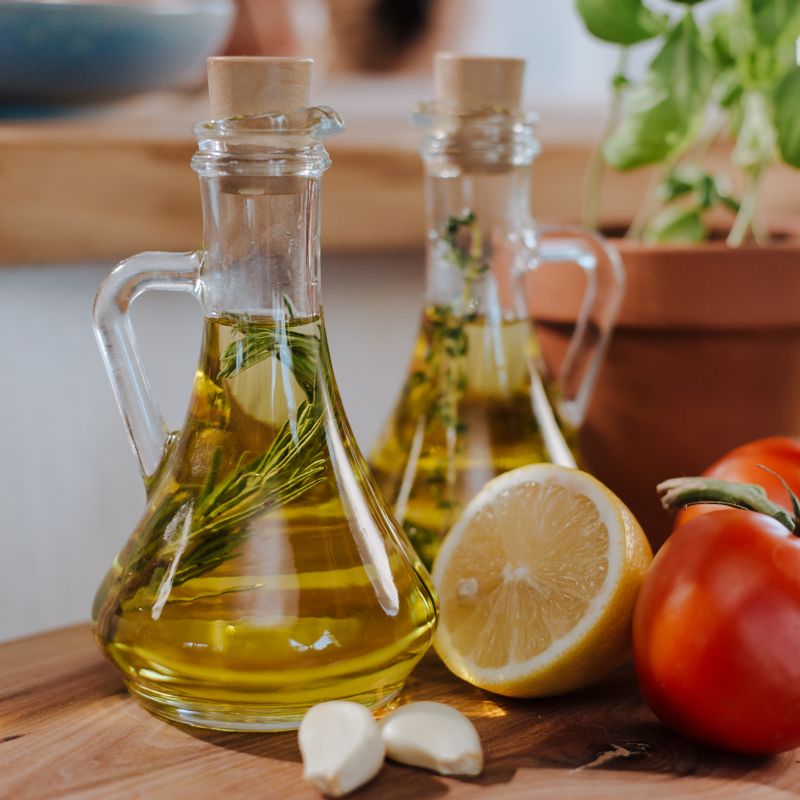
Italian Herb Oil Vegetable Marinade
A bright, aromatic marinade built on good olive oil, garlic, and fresh or dried herbs. This emulsion-style marinade clings beautifully to vegetables and works equally well for grilling, roasting, or broiling. The red wine vinegar adds acidity that keeps vegetables tender while boosting flavor. Make it ahead and let the herbs infuse the oil for maximum depth.
- Prep
- 10 min
- Cook
- —
- Wait
- 15 min
- Total
- 25 min
- Makes
- About 1 cup (240 ml), enough to coat 2–3 pounds (900 g–1.4 kg) of vegetables
Steps
Before you start
- Use fresh herbs if you have them—they give a brighter, more delicate flavor than dried, but dried work well too (use half the amount).
- If your garlic cloves are very large, halve them so they infuse evenly and don't overpower the oil.
- Prepare your vegetables (cut, pat dry) while the marinade infuses, so everything is ready at once.
Combine oil, vinegar, and mustard
- Pour the olive oil, red wine vinegar, and Dijon mustard into a small bowl or mason jar.
- Whisk or shake vigorously for about 30 seconds to emulsify.
- The mixture will look slightly creamy and thickened.
- The mustard acts as an emulsifier, helping the oil and vinegar stay blended rather than separating.
+ Show details− Hide details
Ready when: Oil and vinegar emulsify into a slightly creamy mixture
Tip: Use a mason jar with a tight lid so you can shake instead of whisking—it's faster and the seal keeps the marinade fresh.
Add herbs and seasonings
- If using fresh herbs, add the torn basil and chopped oregano to the bowl or jar.
- If using dried herbs, add the dried oregano and dried basil.
- Either way works well—fresh gives a brighter, more delicate flavor; dried is more concentrated and works especially well for longer marinating or if you prefer earthier tones.
- Stir in the minced garlic, lemon juice, salt, black pepper, and red pepper flakes (if using).
- Stir or shake well to combine.
+ Show details− Hide details
Ready when: All ingredients are evenly distributed and the garlic is submerged in oil
Tip: Don't skip the salt at this stage—it brings out the herb flavors and begins seasoning your vegetables from the start.
Let the marinade infuse
- Let the marinade sit at room temperature for 15 minutes while you prepare your vegetables (wash, cut, and pat dry).
- This resting time allows the garlic and herbs to fully flavor the oil.
- If you have time, infuse it longer—up to 1 hour at room temperature or up to 12 hours in the refrigerator for even deeper flavor.
+ Show details− Hide details
Ready when: Oil is fragrant and herbs have begun to release their oils
Tip: If you know you'll be marinating vegetables for more than 2 hours, use dried herbs instead of fresh—fresh herbs can develop off-flavors in prolonged marinating.
Coat vegetables and marinate
- Place your prepared vegetables (zucchini, bell peppers, eggplant, mushrooms, onions, cherry tomatoes, asparagus, or a mix) in a large bowl or on a rimmed baking sheet.
- Pour the marinade over the vegetables and toss well, using your hands or two spoons to coat every surface.
- For vegetables going on a grill, marinate for at least 30 minutes to 1 hour for good flavor and some char-friendly oil on the surface.
- For roasting, 20–30 minutes is sufficient.
- You can marinate longer (up to 4 hours refrigerated) if time allows—the vegetables will only get more flavorful.
+ Show details− Hide details
Ready when: Vegetables are evenly coated with oil and herb marinade
Tip: If marinating longer than 1 hour, cover and refrigerate. Remove from the fridge 15 minutes before grilling or roasting so the oil comes closer to room temperature for more even cooking.
Good to know
Tips
- For the best flavor, use fresh herbs if you have them on hand. If using dried herbs, add them at the beginning of the infusing time so they have time to bloom and release flavor.
- Pat your vegetables completely dry before marinating—excess water dilutes the marinade and prevents good browning on the grill or in the oven.
- This marinade also works beautifully on grilled meats (chicken, pork, fish) or as a finishing oil drizzled over soups, grilled bread, or fresh mozzarella.
- For a thicker, more emulsified dressing that clings better to vegetables, add 1 tablespoon of finely minced shallot or 1/2 teaspoon of xanthan gum (bloomed in the lemon juice first).
Make ahead
The marinade can be made up to 24 hours ahead and stored covered in the refrigerator. Let it come to room temperature before using. Marinated vegetables can sit refrigerated for up to 4 hours; longer marinating risks the fresh herbs breaking down or the vegetables becoming waterlogged.
Storage & reheating
Unused marinade keeps, covered, in the refrigerator for up to 1 week. Marinated vegetables are best used within 4 hours of mixing; cook them right away or store them covered in the fridge for up to 2 hours. Leftover cooked vegetables can be refrigerated for up to 3 days and served cold, at room temperature, or reheated gently.
Substitutions
- red wine vinegar → balsamic vinegar or white wine vinegar. Balsamic will be slightly sweeter and more mellow; white wine vinegar is brighter and crisper. Use the same amount.
- fresh basil leaves → fresh parsley or fresh mint. Parsley gives a fresh, grassy note; mint adds brightness. Use the same amount and combine with dried oregano if you prefer.
- Dijon mustard → 1 teaspoon whole grain mustard or 1/2 teaspoon mayonnaise. Whole grain mustard gives texture and slightly less tang; mayonnaise emulsifies well but adds richness. Adjust salt slightly to taste.
- kosher salt → sea salt or table salt. Use slightly less table salt (about 1/2 teaspoon) since its crystals are smaller and denser. Taste and adjust.
More marinades
See all →


Find more like this
- Meal
- Dinner
- Cuisine
- Italian
- Method
- OvenGrill & BBQ