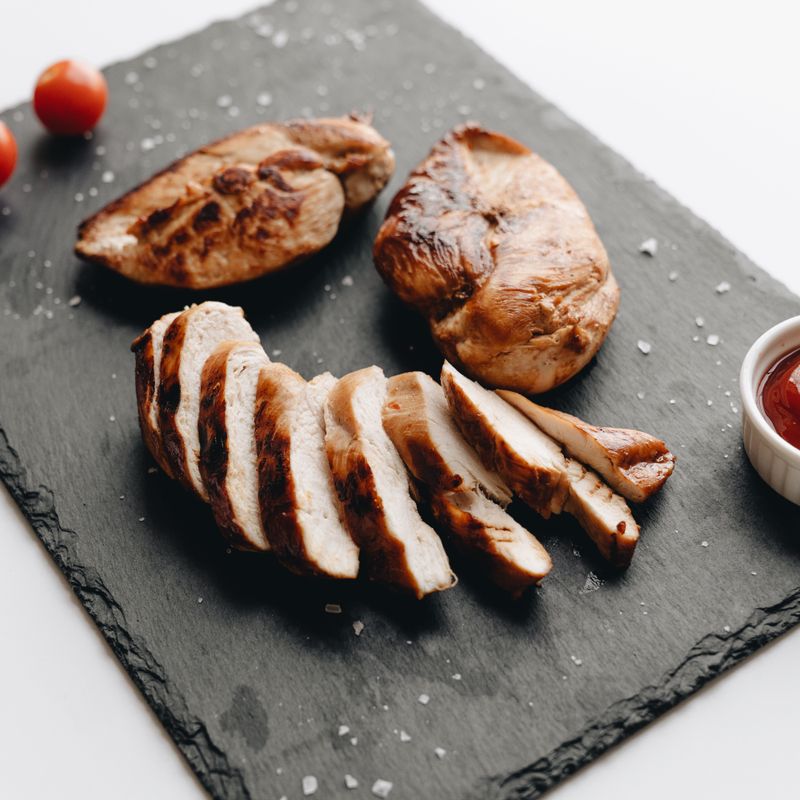
Balsamic Vinegar Chicken Breast Marinade
A balanced Italian-inspired marinade that infuses chicken breasts with sweet-tangy depth from aged balsamic vinegar, complemented by garlic, fresh herbs, and fruity olive oil. Works equally well on the grill or in the oven, tenderizing the meat while building complex flavor. Ready in 30 minutes for quick cooking, or marinate overnight for maximum penetration.
- Prep
- 10 min
- Cook
- —
- Wait
- 30 min
- Total
- 40 min
- Makes
- ¾ cup (180 ml) marinade, enough for 4 boneless chicken breasts (about 6 oz / 170 g each)
Steps
Before you start
- Pat chicken breasts dry with paper towels so the marinade adheres properly
- Use a non-reactive bowl or zip-top bag (glass, ceramic, or food-safe plastic—avoid aluminum or unlined cast iron)
- Have all herbs fresh if possible; dried herbs work but use half the amount (1½ teaspoons each)
- Plan ahead: marinate for at least 30 minutes (better flavor at 2–4 hours, or overnight if time allows)
Combine wet ingredients
- In a medium bowl or measuring cup, pour the ½ cup (120 ml) balsamic vinegar and ¼ cup (60 ml) olive oil.
- Whisk together until combined.
- The mixture will look separated initially, which is normal.
+ Show details− Hide details
Ready when: Vinegar and oil are visibly mixed together
Tip: Don't over-whisk; the oil and vinegar don't need to fully emulsify.
Add aromatics and seasoning
- Add the minced garlic (4 cloves, about 20 g), finely chopped basil (3 tablespoons / 9 g), stripped thyme leaves (1 tablespoon / 3 g), Dijon mustard (1 teaspoon / 5 g), honey (1 teaspoon / 7 g), kosher salt (¾ teaspoon / 4 g), and freshly ground black pepper (½ teaspoon / 1 g).
- Stir well with a whisk or fork until all ingredients are evenly distributed.
- Taste and adjust salt or pepper if needed.
+ Show details− Hide details
Ready when: All ingredients are fully combined with no dry bits visible
Tip: Stir from the bottom of the bowl to ensure the salt dissolves and the honey is evenly distributed.
Add optional heat
- If you like a subtle kick, stir in the ¼ teaspoon (0.5 g) red pepper flakes now.
- This is optional but adds a pleasant finish.
+ Show details− Hide details
Ready when: Red flakes are evenly dispersed throughout
Tip: You can always add more heat, but you can't take it out—start with less if you're unsure.
Marinate the chicken
- Place 4 boneless chicken breasts (about 6 oz / 170 g each, pat dry) into a large zip-top bag or non-reactive bowl.
- Pour the ¾ cup (180 ml) prepared marinade over the chicken, ensuring all pieces are coated.
- If using a bag, seal and gently massage to distribute the marinade evenly.
- If using a bowl, turn the chicken pieces a few times to coat.
- Refrigerate for at least 30 minutes for a quick meal, 2–4 hours for better flavor, or up to 12 hours for maximum depth.
- If marinating longer than 2 hours, turn or shake the bag halfway through.
+ Show details− Hide details
Ready when: Chicken is fully submerged and coated with marinade
Tip: Don't marinate longer than 12 hours or the acid in the balsamic will start to break down the chicken's texture, making it mushy.
Good to know
Tips
- For grilling: Remove chicken from the marinade and let excess drip back into the bag for 10 seconds. Grill over medium-high heat (400–450°F / 200–230°C) for 6–7 minutes per side, or until an instant-read thermometer reads 165°F (74°C) in the thickest part.
- For baking: Preheat the oven to 400°F (200°C). Arrange marinated chicken in a single layer on a parchment-lined baking sheet. Bake for 18–22 minutes, depending on thickness, until an instant-read thermometer reads 165°F (74°C).
- Save the leftover marinade from the bag: if it hasn't touched raw chicken, you can strain it, brush it on the cooked chicken at the end of cooking for a glossy finish, or drizzle it over the finished dish as a light sauce.
- For deeper browning and caramelization, let marinated chicken sit at room temperature for 15–20 minutes before cooking. This ensures faster, more even cooking.
Make ahead
Prepare the marinade (steps 1–3) up to 3 days ahead and store in an airtight container in the refrigerator. Add chicken and marinate for the desired time before cooking.
Storage & reheating
Leftover marinade (without raw chicken) keeps in an airtight glass container in the refrigerator for up to 5 days. Do not reuse marinade that has been in contact with raw chicken unless you boil it first for 1 minute to destroy any bacteria.
Substitutions
- fresh basil leaves → 1½ teaspoons dried basil or 1 tablespoon fresh oregano. Dried basil is more concentrated, so use half the amount. Oregano adds a more Mediterranean earthiness if fresh basil is unavailable.
- fresh thyme sprigs → 1½ teaspoons dried thyme or fresh rosemary (½ teaspoon, finely chopped). Dried thyme is stronger; use less. Rosemary pairs beautifully with balsamic but has a piney flavor—adjust to taste.
- Dijon mustard → 1 teaspoon whole-grain mustard or 1 teaspoon yellow mustard. Whole-grain adds texture and a milder tang; yellow mustard is more subtle in flavor.
- honey → 1 teaspoon maple syrup or 1 teaspoon brown sugar. Maple syrup adds a darker, woodsy sweetness; brown sugar dissolves slower but adds molasses notes.
More marinades
See all →


Find more like this
- Meal
- Dinner
- Cuisine
- Italian
- Method
- OvenGrill & BBQ