Italian Black Olive and Fennel Seed Biscuits
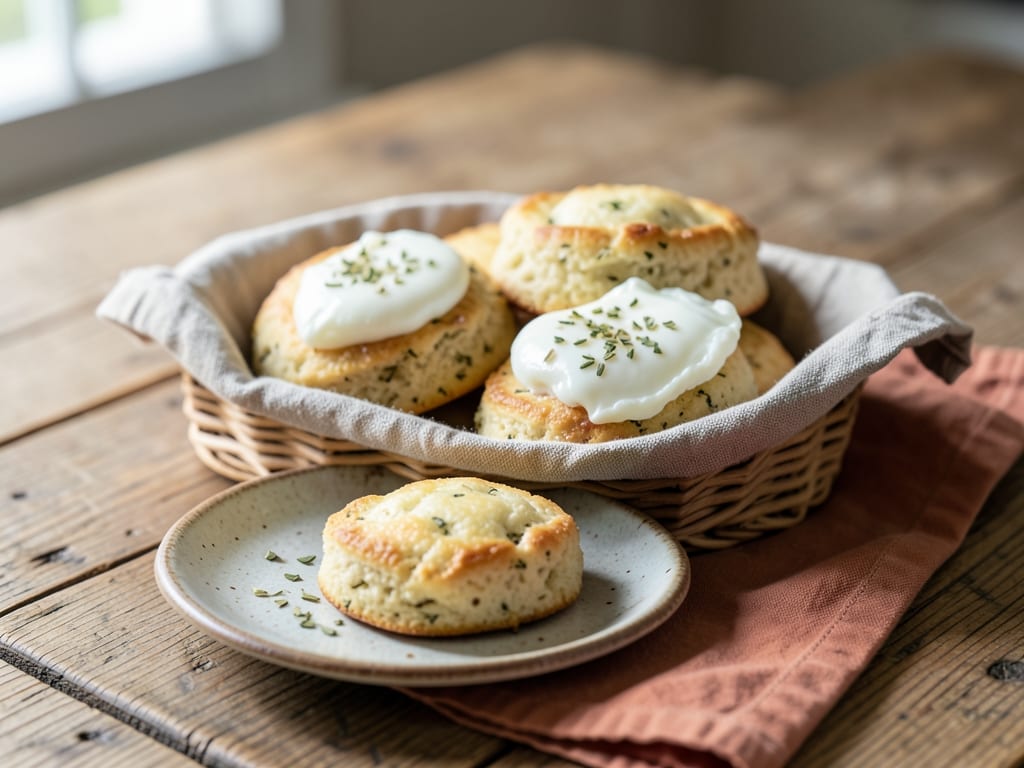
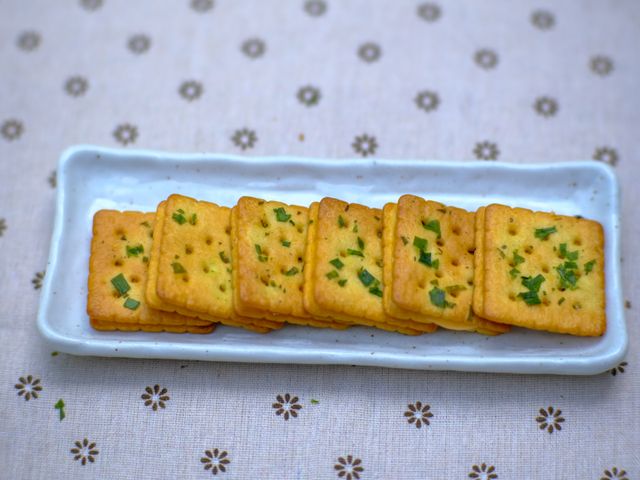
Crispy, herb-flecked savory biscuits studded with briny black olives and fragrant fennel seeds. A rustic Italian-inspired cracker with a tender crumb and thin, crunchy texture. Serve warm with cheese, cured meats, or alongside soup or salad.
Steps
Before you start
- Cut the butter into ½-inch cubes and keep cold
- Pit and roughly chop the black olives
- Preheat your oven to 400°F (200°C)
- Line two baking sheets with parchment paper
Mix dry ingredients
- In a stand mixer fitted with the paddle attachment, combine flour, salt, baking powder, fennel seeds, oregano, and black pepper.
- Mix on low speed for 30 seconds until the spices are evenly distributed.
- If mixing by hand, whisk these ingredients together in a large bowl.
+ Show details− Hide details
Ready when: Spices are evenly distributed throughout the flour
Cut in the butter
- Add the cold butter cubes to the flour mixture.
- With the mixer on low speed, blend until the mixture resembles coarse breadcrumbs with some pea-sized pieces of butter visible (about 1 minute).
- If mixing by hand, use a fork or your fingertips to work the butter into the flour until it resembles coarse meal.
- Do not overmix.
+ Show details− Hide details
Ready when: Mixture resembles coarse breadcrumbs with pea-sized butter pieces visible
Tip: Avoid overworking the butter—you want small chunks to create flaky layers
Add olives and wet ingredients
- Add the chopped olives to the butter-flour mixture.
- With the mixer on low, add the olive oil and ice water in a thin stream, mixing just until the dough comes together into a shaggy ball.
- Stop as soon as you see no dry flour at the bottom of the bowl.
+ Show details− Hide details
Ready when: Dough just comes together; no dry flour visible
Tip: Add water slowly—you may not need the full amount. The dough should be slightly sticky but not wet
Rest the dough
- Turn the dough out onto a lightly floured surface and gently press it into a flat disk about ¾ inch (2 cm) thick.
- Wrap in plastic wrap and refrigerate for 10 minutes.
+ Show details− Hide details
Ready when: Dough is firm and cold
Tip: A cold dough prevents the butter from melting into the flour, keeping the biscuits flaky
Roll and cut the biscuits
- On a lightly floured surface, roll the chilled dough to ¼ inch (6 mm) thickness.
- Using a 2½-inch (6 cm) round cutter, cut out biscuits and place them 1 inch (2.5 cm) apart on the prepared baking sheets.
- Gather scraps, gently re-roll, and cut again until all dough is used.
+ Show details− Hide details
Ready when: All biscuits are cut and arranged on the baking sheets
Tip: Keep the rolling surface and cutter lightly floured to prevent sticking, but avoid adding too much extra flour, which will toughen the dough
Pierce and bakeOven 400°F / 205°C
- Using a fork, gently prick the top of each biscuit 2–3 times (this prevents them from puffing too much and creates a more cracker-like texture).
- Bake at 400°F (200°C) for 12–14 minutes until the edges are light golden brown and the biscuits are set and slightly firm to the touch.
+ Show details− Hide details
Ready when: Edges are light golden; biscuits are firm to the touch
Tip: Watch carefully toward the end of baking—they brown quickly and burn easily once the edges turn color
Cool on a wire rack
- Transfer the hot biscuits to a wire rack and let cool for 5 minutes before serving.
- They will continue to firm up as they cool.
+ Show details− Hide details
Ready when: Biscuits are completely cool and crispy
Tip: Serve warm or at room temperature—they are best eaten the day they are made, but reheat gently in a 300°F (150°C) oven for 3 minutes to refresh crispness
Good to know
Tips
- To crush fennel seeds lightly, place them in a small bowl and press them gently with the back of a spoon—you want to break them slightly to release their oil without grinding them to powder.
- For a more rustic look, cut the biscuits into rough triangles or 1½-inch squares instead of rounds; the irregular shapes feel more homemade and are just as delicious.
- Serve these warm alongside soft cheeses like ricotta or burrata, cured meats, or as a accompaniment to minestrone or white bean soup.
- If you prefer a thinner, crisper biscuit, roll the dough to ⅛ inch (3 mm) and reduce baking time to 10–12 minutes.
Make ahead
The unbaked biscuit dough can be wrapped tightly and refrigerated for up to 2 days, or frozen for up to 1 month. Bake from chilled or frozen (add 1–2 minutes to baking time if frozen).
Storage & reheating
Store in an airtight container at room temperature for up to 4 days. Refresh in a 300°F (150°C) oven for 3 minutes to restore crispness. Do not refrigerate. Freeze in an airtight container for up to 2 months; refresh in the oven before serving.
Substitutions
- pitted Kalamata olives or other briny black olives → Oil-cured black olives or green Castelvetrano olives. Use the same amount. Green olives will give a fresher, less briny flavor; oil-cured olives will be richer and more concentrated.
- fennel seeds → Caraway seeds or anise seeds. Use the same amount. Caraway is earthier; anise is sweeter and more licorice-like.
- dried oregano → Dried thyme or Italian seasoning. Use the same amount. Thyme is more floral; Italian seasoning blends in basil and marjoram.
- extra virgin olive oil → Unsalted butter, melted. Use 3 tablespoons (45 g). The biscuits will be slightly less tender but still flaky and delicious.