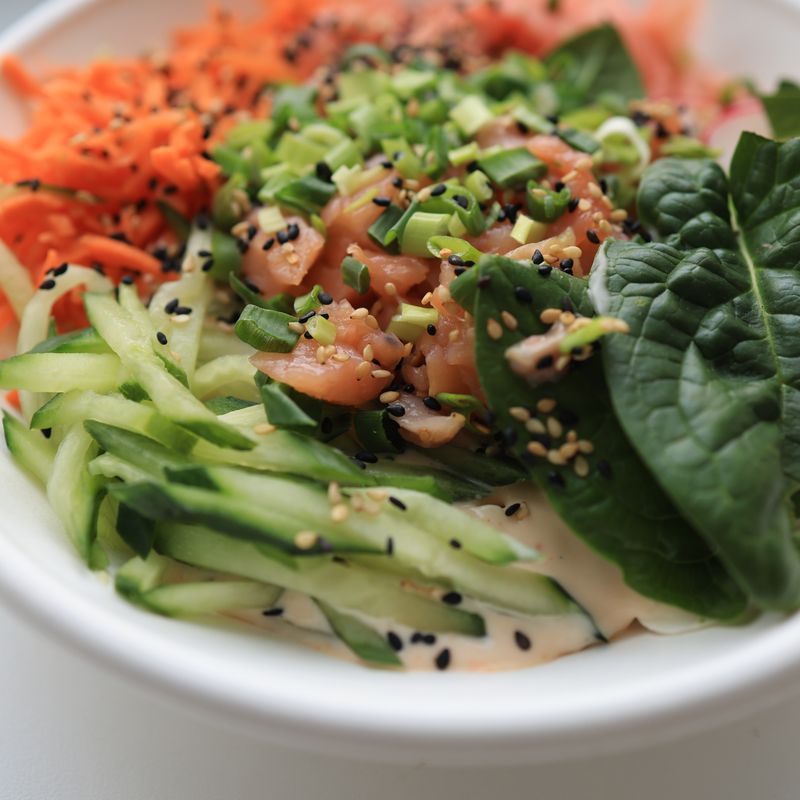
Instant Pot Miso-Glazed Salmon and Cucumber Noodle Salad
A vibrant Japanese fusion dish combining tender miso-glazed salmon cooked in the Instant Pot with cold cucumber noodle salad. The glaze develops a caramelized exterior while the salmon stays moist inside, then sliced and tossed with chilled ramen noodles, crisp cucumber, and a wasabi-spiked dressing. Ready in under 30 minutes.
- Prep
- 15 min
- Cook
- 8 min
- Wait
- 5 min
- Total
- 28 min
- Makes
- 4 servings (1¼ cups salad + 4–5 oz salmon per person)
Steps
Before you start
- Read the full recipe—the Instant Pot cooks salmon very quickly
- Have a trivet or steamer basket ready for the pot
- Chill a large mixing bowl in the fridge for the noodles
Make the miso glaze
- In a small bowl, whisk together white miso paste, sake, honey, and rice vinegar until smooth.
- The glaze should be thick and spreadable, with no lumps.
+ Show details− Hide details
Ready when: Smooth, uniform glaze with no visible miso chunks
Tip: Whisk vigorously to break up the miso—lumps will make the glaze uneven on the salmon
Prepare the Instant Pot
- Add 1 cup (240 ml) of water to the Instant Pot and place the trivet or steamer basket in the bottom.
- Cut a 4-inch (10 cm) square of parchment paper or aluminum foil and place it on the trivet—this prevents the salmon from sticking and is easier than oiling.
+ Show details− Hide details
Ready when: Trivet sits flat in the pot, parchment centered on top
Tip: The parchment paper lifts out with the salmon, making cleanup and serving easier
Glaze and arrange the salmon
- Pat the salmon dry with paper towels.
- Place it skin-side down on the parchment.
- Spread the miso glaze evenly across the top and sides of the salmon (don't coat the bottom skin).
- The glaze should be about ¼ inch (6 mm) thick.
- Reserve any extra glaze in the bowl.
+ Show details− Hide details
Ready when: Salmon fully coated with an even layer of glaze
Tip: Dry salmon = better glaze adhesion. A wet surface will cause the glaze to slide off during cooking
Cook the salmon
- Close the Instant Pot lid and set to high pressure for 5 minutes (for center-cut salmon 1.5 inches / 4 cm thick).
- Start the timer.
- The pot will take about 1–2 minutes to come to pressure.
+ Show details− Hide details
Ready when: Pin drops and the pot shows it is at high pressure
Tip: Don't open the pot early. The brief 5 minutes avoids overcooking the salmon and keeps it moist
Release pressure and check doneness
- When the timer goes off, perform a quick release by moving the valve to vent.
- Open the pot carefully once no more steam escapes (about 30 seconds total).
- The salmon should be opaque at the edges and flake easily with a fork.
- The thickest part should register 145°F (63°C) on an instant-read thermometer.
- If underdone, close the lid and cook 1 more minute under pressure.
+ Show details− Hide details
Ready when: Salmon flakes with a fork and internal temp reaches 145°F (63°C)
Tip: Quick release is safe here—it's just vegetables and protein underneath. Slow release would cause the glaze to steam off
Cool and slice the salmon
- Lift the salmon on its parchment out of the pot with tongs and place it on a cutting board.
- Let it rest for 2–3 minutes.
- The residual heat will continue to cook it slightly and firm it up.
- Once cool enough to handle, carefully peel away the parchment.
- Cut the salmon into 8 equal slices or bite-sized chunks, angling your knife to break apart the flakes neatly.
- If there is any extra miso glaze in the bowl from step 1, spoon it over the salmon.
+ Show details− Hide details
Ready when: Salmon is cool enough to handle but still warm, glaze has begun to set
Tip: Slice while still slightly warm—cold salmon will shatter. A sharp knife and a gentle sawing motion prevent chunks from crumbling
Cook the noodles
- If your Instant Pot is still hot (it is), carefully pour out the liquid from the bottom and add 4 cups (960 ml) of fresh water.
- Return the trivet, close the lid, and bring to high pressure for the noodle package's recommended time (typically 2–3 minutes for fresh ramen, 4 minutes for frozen).
- Alternatively, cook the noodles in a separate pot of boiling water for the same time, then drain and rinse with cold water.
+ Show details− Hide details
Ready when: Noodles are tender but still have a slight chew, not mushy
Tip: Fresh ramen cooks faster than frozen. Check the package; if in doubt, use the shorter time and taste after one minute of simmering
Chill the noodles
- Drain the noodles in a colander and rinse under cold running water, stirring gently with your hands or chopsticks to separate any clumps.
- This stops the cooking and cools them down.
- Tip them into a chilled large mixing bowl.
+ Show details− Hide details
Ready when: Noodles are cool to the touch and fully separated
Tip: Chilling the bowl first means the noodles stay cold longer and the salad won't wilt before serving
Prepare the dressing
- In a small bowl, combine low-sodium soy sauce, rice vinegar, wasabi, and sesame oil.
- Whisk until the wasabi dissolves and the dressing is smooth.
- Taste and adjust wasabi for heat level (start with ¼ teaspoon if you prefer mild).
+ Show details− Hide details
Ready when: Dressing is smooth, wasabi is fully incorporated, no visible lumps
Tip: Add wasabi gradually—a little goes a long way. You can always add more heat, but you cannot take it out
Assemble the salad
- Add the julienned cucumber and sliced scallions to the chilled noodles.
- Pour in the dressing and toss gently with two forks until the noodles and cucumber are evenly coated and separated.
- The noodles should smell fragrant from the sesame oil and wasabi, and the cucumber should be distributed throughout.
+ Show details− Hide details
Ready when: All noodles are coated with dressing, cucumber is evenly mixed in, no dry noodles at the bottom
Tip: Toss gently and steadily—rough handling breaks the noodles and makes them mushy. Use two forks and turn from the bottom, like tossing a salad
Plate and garnish
- Divide the noodle salad among four bowls or plates.
- Top each portion with 2–3 slices of the miso-glazed salmon.
- Sprinkle with toasted sesame seeds and thinly sliced nori if using.
- Serve immediately while the salmon is still warm and the noodles are cold—the contrast is part of the appeal.
+ Show details− Hide details
Ready when: Bowls are filled and garnished, ready to serve
Tip: Place the warm salmon directly on the cold noodles just before serving—this keeps the fish moist without heating the salad
Good to know
Tips
- The salmon glaze will not brown or caramelize like oven-roasted miso—instead, it steams and sets on the surface, creating a soft, glossy coat. This is intentional and keeps the salmon moist.
- If you don't have an Instant Pot, steam the salmon in a bamboo steamer or metal steamer basket over boiling water for 6–8 minutes, covered, with the glaze applied. Monitor the time closely.
- Prep the cucumber while the salmon is cooking and cooling—that's the best use of your active time and keeps the dish fresh.
- For a vegetarian version, replace the salmon with pressed tofu, sliced thick and glazed the same way. Reduce pressure cooking time to 2 minutes, as tofu cooks faster and may fall apart.
Make ahead
The miso glaze can be made up to 1 day ahead and stored in an airtight container in the fridge. The cucumber can be julienned up to 4 hours ahead and kept in a damp paper towel in a sealed bag. Assemble the salad no more than 30 minutes before serving so the noodles don't become soggy.
Storage & reheating
Leftovers keep best when stored separately: salmon in an airtight container in the fridge for up to 2 days, and noodles in a separate container for up to 3 days. Reheat the salmon gently in a 300°F (150°C) oven for 5 minutes (do not microwave, which dries it out). The noodle salad can be eaten cold straight from the fridge or tossed with a splash of sesame oil and extra soy sauce to refresh.
Substitutions
- white miso paste → red or barley miso. Red miso is earthier and slightly more pungent. Use the same amount; the glaze will be darker and richer-tasting
- sake (or dry sherry) → dry sherry or white wine. Sake adds a delicate sweetness; sherry and white wine are slightly more acidic but work well. Use the same volume
- fresh or frozen ramen noodles (not instant) → soba, udon, or egg noodles. Soba has a nuttier flavor and thinner texture. Udon is chewier and thicker. Adjust cook time according to package directions
- wasabi paste (or powder mixed with water) → Dijon mustard or sriracha. Mustard adds a sharper heat, sriracha is sweeter and smokier. Start with half the amount and taste before adding more
More pasta salads
See all →
Find more like this
- Meal
- Lunch
- Cuisine
- Japanese
- Main ingredient
- Salmon
- Diet
- Dairy-Free
- Method
- Instant Pot