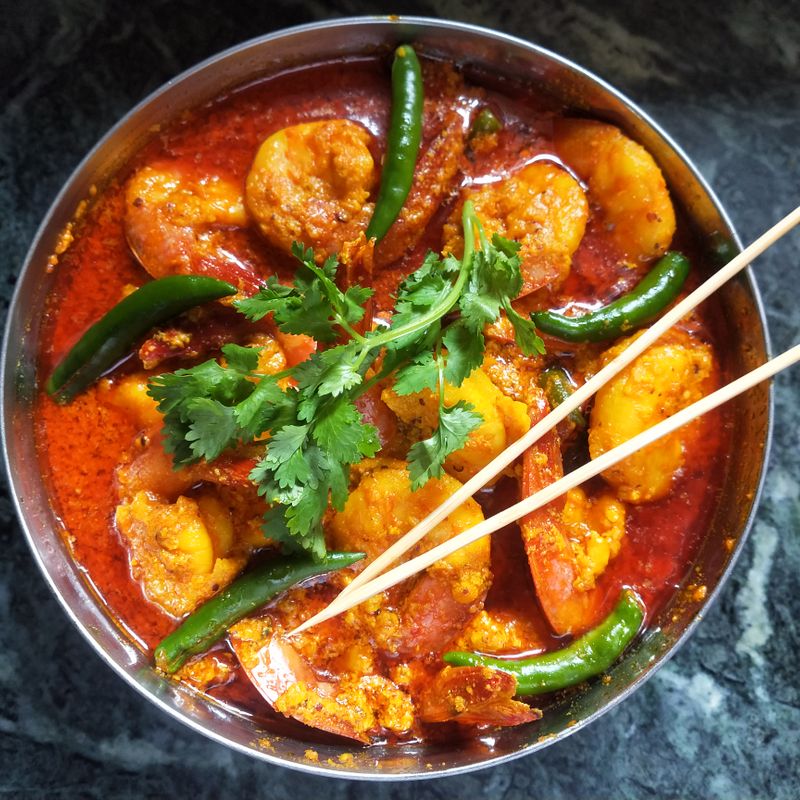
Instant Pot Green Curry Shrimp
Tender shrimp infused with fragrant Thai green curry paste, coconut milk, and lime leaves, cooked quickly in the Instant Pot for a restaurant-quality dish ready in minutes. The shrimp marinates briefly in the curry paste before pressure cooking, developing deep flavor while staying perfectly tender.
- Prep
- 15 min
- Cook
- 5 min
- Wait
- 25 min
- Total
- 45 min
- Makes
- 4 servings (about 1½ cups curry with shrimp each)
Steps
Before you start
- Pat shrimp completely dry with paper towels so they sear properly
- Have all ingredients measured and ready (mise en place) since cooking happens very quickly
- If using fresh lime leaves, snip or tear them slightly to release oils
- Thaw frozen shrimp fully and drain well to avoid excess moisture
Make the marinade
- In a small bowl, whisk together green curry paste, 2 tablespoons (30 ml) of the coconut milk, and fish sauce until smooth.
- This creates a concentrated marinade base.
+ Show details− Hide details
Ready when: Mixture is smooth and well combined with no paste streaks
Tip: Whisking the paste with a small amount of coconut milk prevents lumps and ensures even coating on the shrimp
Marinate the shrimp
- Add the dried, patted shrimp to the curry paste mixture and toss gently but thoroughly, coating each piece.
- Let sit for 10 minutes at room temperature while you prepare the Instant Pot.
+ Show details− Hide details
Ready when: All shrimp pieces are evenly coated with green paste
Tip: Don't marinate longer than 15 minutes or the citric acid in the curry may start to cook the shrimp raw
Sauté the curry base
- Press the Sauté button on the Instant Pot and set to HIGH.
- Heat oil for 1 minute, then add the marinated shrimp in a single layer.
- Sear for 90 seconds on the first side without stirring (you want some color and depth).
- Stir and sear another 60 seconds on the second side.
- Pour in remaining coconut milk (about 11.5 oz/345 ml), chicken broth, and lime juice.
- Scrape any stuck curry from the bottom of the pot.
+ Show details− Hide details
Ready when: Shrimp has light color on both sides; oil shimmers and curry is fragrant
Tip: Sear the shrimp to build depth of flavor—rushing this step makes the curry taste flat. If the pot shows 'burn' warning, deglaze thoroughly and proceed.
Add aromatics and seasonings
- Stir in torn lime leaves and palm sugar.
- Press Cancel to end sauté mode.
- The mixture should have about 2 cups (480 ml) liquid.
- If there's significantly less, add a splash of broth.
+ Show details− Hide details
Ready when: Lime leaves are submerged and sugar is dissolved
Tip: Lime leaves release their aromatic oils during pressure cooking, giving authentic Thai flavor. Don't skip them if possible.
Pressure cook
- Close the lid and set the valve to SEALING.
- Press the Pressure Cook button and set to 1 minute at high pressure.
- Allow 5 minutes natural pressure release (NPR), then manually release any remaining pressure.
+ Show details− Hide details
Ready when: Float valve drops; shrimp are opaque, firm, and coiled; liquid has reduced and thickened slightly
Tip: High-pressure cooking at just 1 minute keeps shrimp tender and prevents them from becoming rubbery. Longer times ruin the texture.
Taste and adjust
- Open the lid carefully (steam is very hot).
- Stir the curry gently.
- Taste a shrimp and the sauce.
- Add more lime juice if you want brightness, a touch more fish sauce for depth, or a pinch of sugar for balance.
+ Show details− Hide details
Ready when: Sauce tastes well-balanced: savory, slightly sweet, with bright lime and coconut cream notes
Tip: Thai curries should have layers of flavor. If it tastes one-dimensional, it's usually missing acid (lime) or salt (fish sauce).
Serve
- Ladle the shrimp and curry sauce into bowls.
- Garnish with sliced fresh red chilies and torn Thai basil or cilantro if desired.
- Serve over jasmine rice or with rice noodles.
+ Show details− Hide details
Tip: Fresh herbs and chilies added at the end preserve their brightness and textural contrast against the rich, cooked sauce.
Good to know
Tips
- Green curry paste brands vary in spice level and saltiness. Start with 3 tablespoons and taste the finished curry; you can stir in more paste if you prefer deeper flavor, but you can't remove it. Many pastes contain salt, so taste before adding extra.
- Pat shrimp completely dry before marinating—excess moisture dilutes the marinade and causes steaming instead of searing. Use paper towels and don't rush this step.
- The 1-minute pressure cook is intentional for tender shrimp. Even 2 minutes at pressure can make them tough. If you prefer larger shrimp or want more tender texture, use 30 seconds instead, but reduce NPR time to 3 minutes.
- Serve with jasmine rice, brown rice, or rice noodles. A squeeze of fresh lime and a sprinkle of cilantro at the table lets each diner customize the brightness and heat to taste.
Make ahead
The green curry paste marinade can be prepared up to 2 days ahead and refrigerated in a covered container. Add the raw, dried shrimp no more than 15 minutes before cooking. The cooked curry (shrimp and sauce) keeps refrigerated for up to 2 days and can be gently reheated in the Instant Pot on low sauté or over stovetop medium heat, stirring occasionally.
Storage & reheating
Room temperature: not recommended for leftovers (shrimp spoils quickly). Refrigerator: store in an airtight container for up to 2 days; reheat gently on the stovetop over medium heat or in the microwave in 30-second intervals, stirring. Freezer: curry keeps frozen for up to 3 months; thaw overnight in the refrigerator and reheat as above.
Substitutions
- fresh or frozen kaffir lime leaves → Zest of 1 lime added at the end of cooking instead of during pressure cooking. Fresh zest keeps more brightness and texture than cooked leaves; add it after the pressure release for a brighter finish if lime leaves are unavailable.
- Thai green curry paste → Red curry paste (use the same amount) or homemade green curry made from fresh green chilies, garlic, lemongrass, and lime juice. Red curry will be slightly earthier and less grassy; both work beautifully. Homemade paste is fresher-tasting but takes more prep time.
- fish sauce → Soy sauce or coconut aminos (use 1 tablespoon/15 ml, or to taste). Soy sauce gives umami depth but lacks the pungent, distinctive fish sauce flavor; the curry will taste milder and less authentically Thai.
- palm_sugar → Brown sugar or honey (use the same amount). Brown sugar works fine; honey dissolves instantly but adds slight caramel notes. Both balance spice and acid similarly.
More curries
See all →


Find more like this
- Meal
- Dinner
- Cuisine
- Thai
- Main ingredient
- Shrimp
- Method
- Instant Pot
- Quick & Easy
- Easy