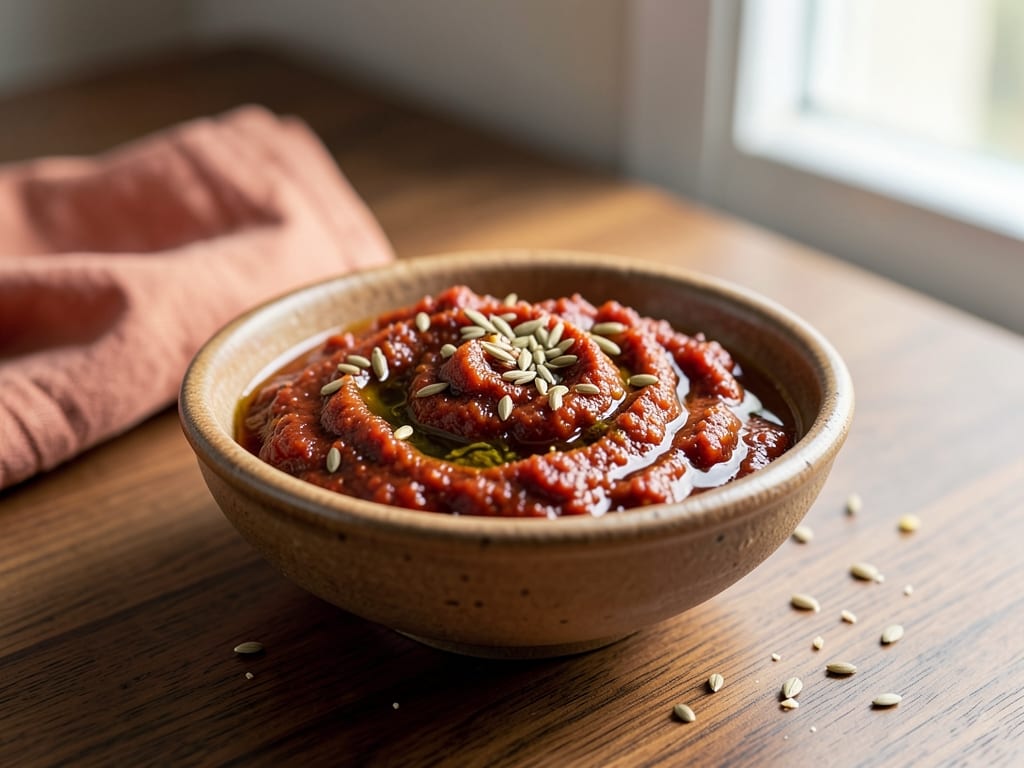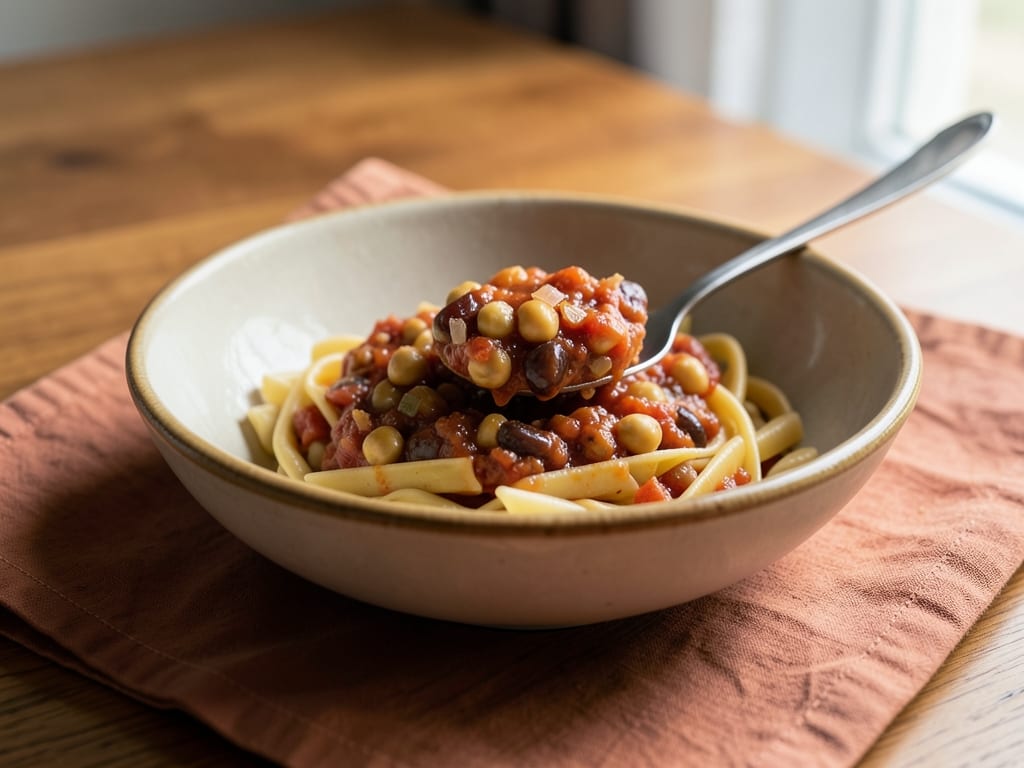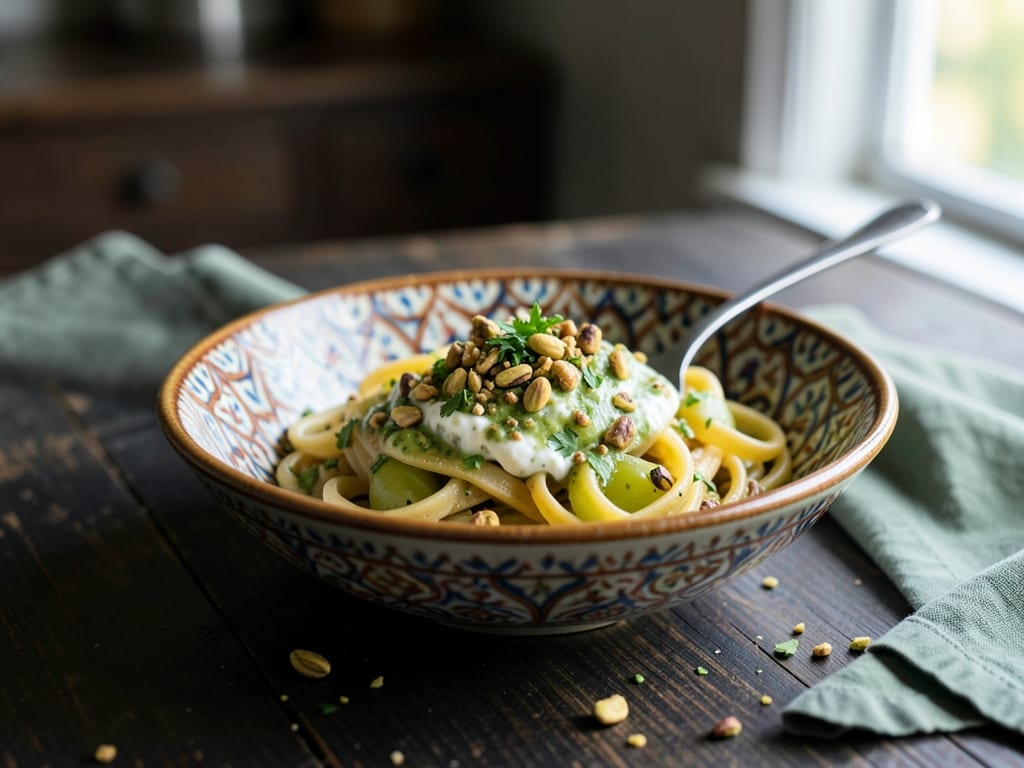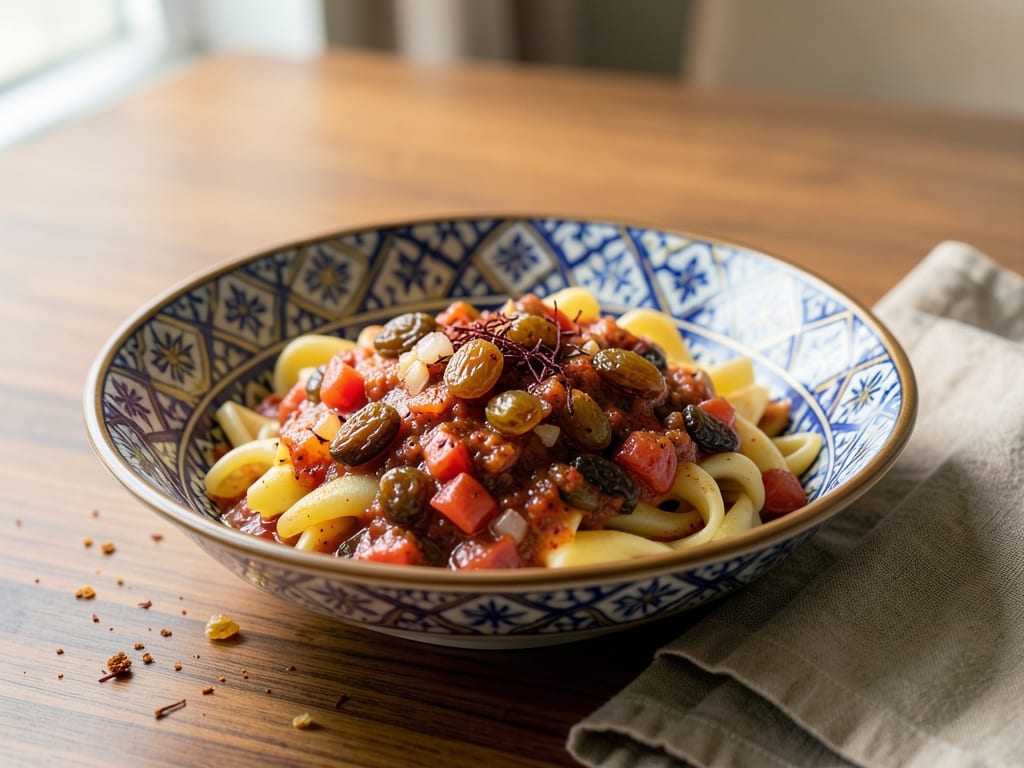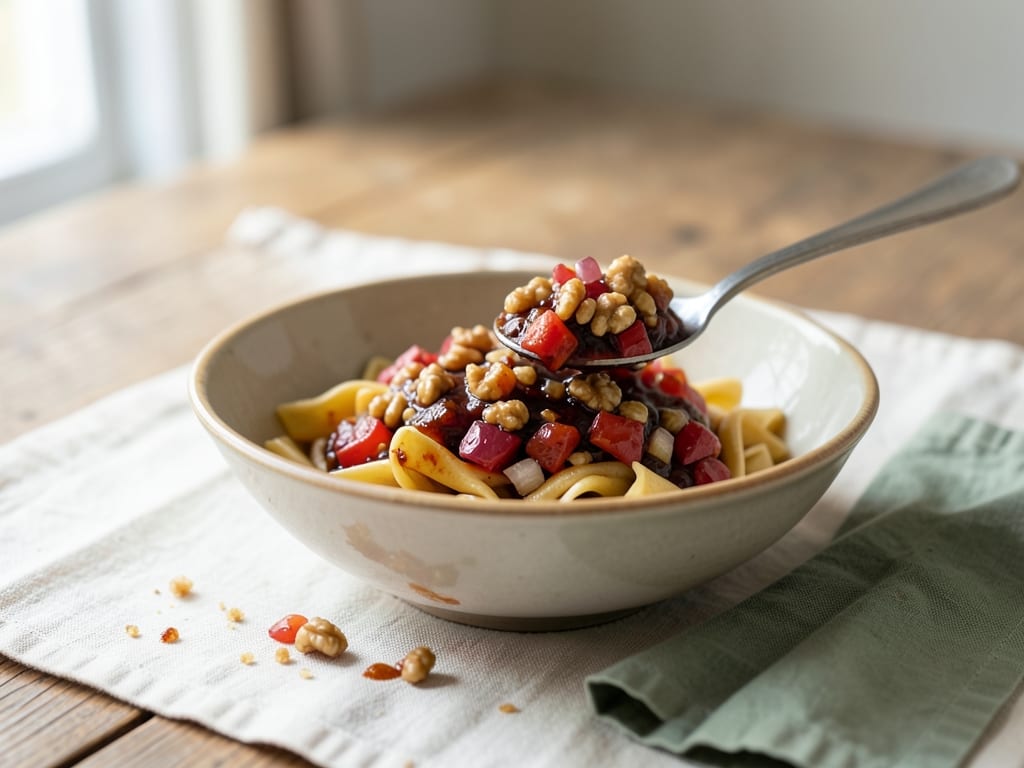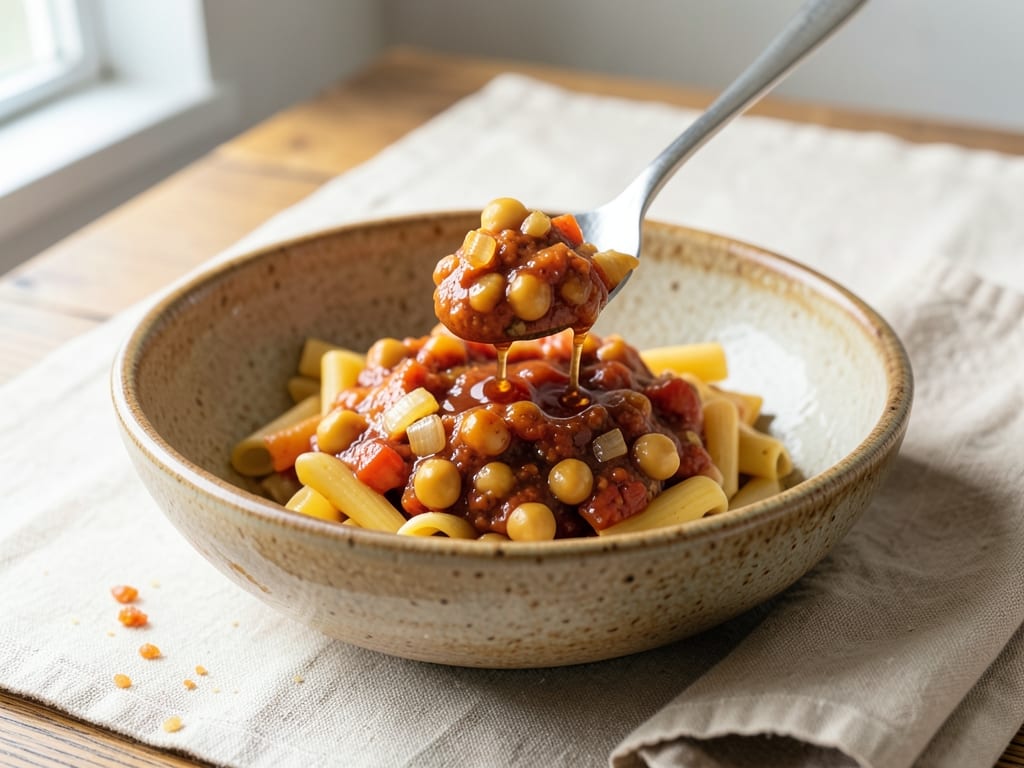
Honey Harissa Chickpea Sauce
A vibrant North African sauce that marries the bold heat of harissa paste with floral honey sweetness, enriched with tender chickpeas and tomatoes. This versatile sauce pairs beautifully with pasta, couscous, or warm bread, and is especially cherished during Ramadan and Eid celebrations. The sauce develops deeper flavor as it simmers, with each spoonful delivering balanced spice, richness, and subtle sweetness.
- Prep
- 10 min
- Cook
- 20 min
- Total
- 30 min
- Makes
- About 3 cups (750 ml), serving 4
Steps
Before you start
- Have all ingredients measured and prepped before you start cooking
- Use full-fat canned chickpeas or recently cooked dried chickpeas for the best texture
- If using harissa paste for the first time, start with 2 tablespoons and add more after tasting
Sauté aromatics
- Warm the olive oil in a large heavy-bottomed saucepan or Dutch oven over medium heat for about 1 minute.
- Add the diced onion and cook, stirring frequently, until softened and starting to turn golden, about 4 minutes.
- The onion should be translucent at the edges.
- Add the minced garlic and cook for another 30 seconds until fragrant.
+ Show details− Hide details
Ready when: Onion is translucent and softened; garlic is fragrant
Tip: Don't let the garlic brown—it will turn bitter. Keep the heat at medium, not medium-high.
Bloom harissa paste
- Stir in the harissa paste, breaking it apart with the wooden spoon so it disperses evenly throughout the oil and onion mixture.
- Cook for 1 minute, stirring constantly.
- This brief cooking releases the complex spice flavors and mellows any raw paste taste.
+ Show details− Hide details
Ready when: Harissa is well incorporated and smells deeply aromatic
Tip: Blooming harissa in oil is key—it develops the sauce's flavor foundation. Don't skip this step.
Add tomatoes and chickpeas
- Pour in the crushed canned tomatoes with their juice, then add the drained and rinsed chickpeas.
- Stir well to combine.
- The mixture should look rich and chunky.
- Increase the heat to medium-high and bring the sauce to a gentle simmer.
+ Show details− Hide details
Ready when: Mixture is bubbling gently with small bubbles breaking the surface
Tip: Rinsing the canned chickpeas removes excess sodium and starch, preventing the sauce from becoming gummy.
Season and simmer
- Once simmering, add the honey, ground cumin, and a pinch of salt and black pepper.
- Stir thoroughly.
- Reduce the heat to medium-low and let the sauce simmer gently, uncovered, for 15 minutes.
- Stir occasionally (every 3–4 minutes) to ensure even cooking and to prevent sticking.
- The sauce will thicken slightly as it reduces.
+ Show details− Hide details
Ready when: Sauce has reduced by about 15 percent and smells intensely aromatic with layers of spice and sweetness
Tip: Stir the sauce occasionally during simmering to keep it from catching on the bottom of the pan. The heat should be gentle—vigorous bubbles indicate it's too hot.
Finish with lemon and taste
- Remove the pan from the heat.
- Stir in the fresh lemon juice, which brightens the sauce and balances the rich, spicy flavors.
- Taste the sauce carefully—it should have a harmonious blend of heat, sweetness, and savory depth.
- Add more salt, pepper, or a drizzle of honey if needed to balance your preferences.
- The sauce should be neither too spicy nor too sweet.
+ Show details− Hide details
Ready when: Lemon juice is fully stirred in; sauce tastes balanced with no single flavor dominating
Tip: Taste as you go—harissa strength varies by brand, so you may prefer slightly less or slightly more than the recipe calls for. Add gradually if you want spicier.
Serve with garnish
- Transfer the sauce to a serving bowl or pour directly onto hot pasta or couscous.
- If desired, top with freshly chopped cilantro for a bright garnish.
- The sauce is best served warm and can be made ahead and gently reheated.
+ Show details− Hide details
Tip: If the sauce is too thick when serving, thin it with a splash of water or pasta cooking liquid until it reaches your desired consistency.
Good to know
Tips
- This sauce is naturally vegan and vegetarian, making it ideal for inclusive Ramadan Iftar and Eid menus.
- The sauce pairs beautifully with warm pita bread, over couscous, spooned onto pasta, or dolloped onto roasted vegetables or cauliflower steaks.
- Harissa paste varies in heat and ingredients by brand—taste and adjust your spice level before serving. Store-bought versions often contain salt, so taste before adding extra.
- Double the recipe and freeze half for quick weeknight meals. The sauce is just as delicious served cold or room temperature as a dip.
Make ahead
The sauce can be made up to 2 days ahead and stored in the refrigerator. It also freezes beautifully for up to 3 months. Make it ahead for Ramadan Iftar meals so you can focus on other dishes when it's time to eat.
Storage & reheating
Room temperature (if serving immediately): up to 2 hours. Refrigerator: transfer to an airtight container and store for up to 3 days. To reheat, place in a saucepan over medium-low heat, stirring occasionally, until warmed through (5–7 minutes), adding a splash of water if needed. Freezer: freeze in airtight container or ice cube trays for up to 3 months. Thaw overnight in the refrigerator and reheat as above.
Substitutions
- canned chickpeas → cooked dried chickpeas or white beans. Use 1.5 cups (375 g) of freshly cooked or home-cooked legumes for a slightly earthier flavor and firmer texture
- canned whole tomatoes in juice → fresh tomatoes, peeled and crushed, or tomato passata. Use 2 lbs (900 g) fresh tomatoes or 1.5 cups (350 ml) passata; fresh tomato will make a lighter, brighter sauce
- harissa paste → hot chili paste, sambal oelek, or homemade spiced paste. Sambal may be slightly less aromatic; mix with 1 teaspoon tomato paste and ½ teaspoon ground cumin to approximate harissa
- honey → maple syrup or agave nectar. Use the same amount; agave gives a cleaner sweetness, maple adds subtle earthiness